Tattoo styles: a field guide to sixteen looks and how to choose
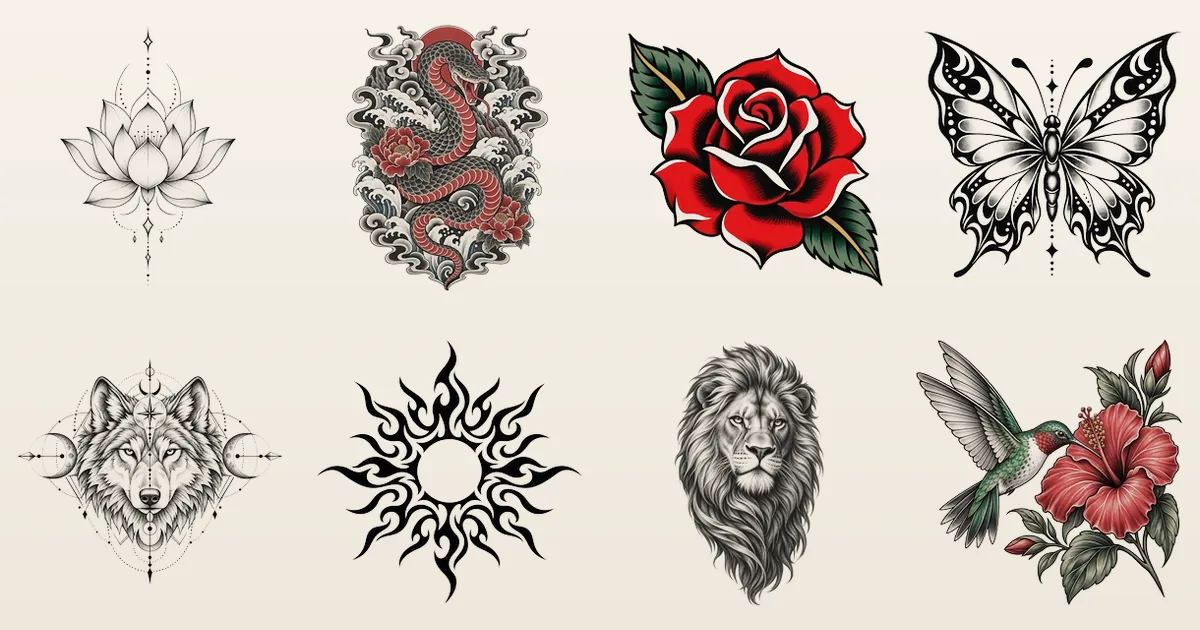
Three roses: one with a bold black outline and flat red petals, one in soft grey that looks photographed, one drawn in a single thread-thin line. Same flower, three different tattoos. What changed is the style, and tattoo styles decide how a design is drawn, how it sits on the body and how it ages. Here are sixteen, side by side, with deeper guides where we have them.
Four things that tell tattoo styles apart
You don't need to memorize names to recognize a style. Look at four things, in this order:
- The outline. Thick and black (traditional, tribal), thin and even (fine line, geometric), or missing altogether (realism, watercolor).
- The shading. Solid black, smooth grey gradients, dots, hatching like an old engraving, or none at all.
- The color. A few flat, saturated colors; soft blends with highlights left in the skin; or black only.
- The composition. Does the design follow the muscles and flow around the limb, as Japanese and Polynesian work does, or sit on the skin like a badge, as flash does?
Once you can describe a tattoo you love in those terms, you can find its style, the right artist and the words to ask for it.
Sixteen tattoo styles at a glance
| Style | What defines it | Read more |
|---|---|---|
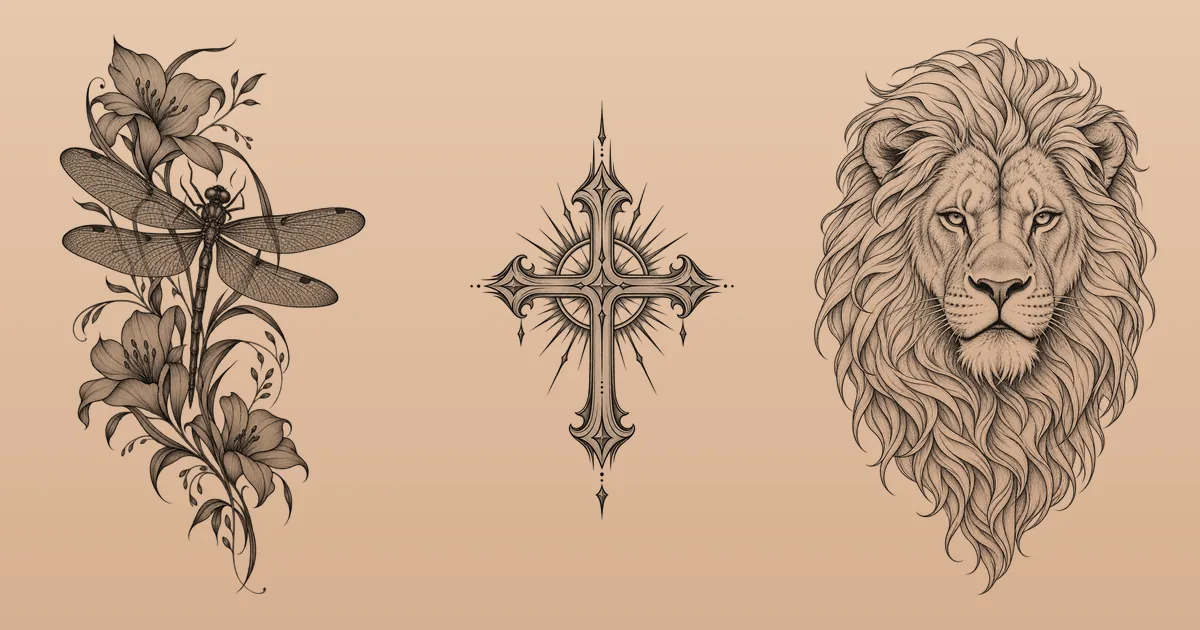
| Fine line | Thin single-needle lines, delicate detail, soft shading | Fine line tattoos |
| Minimalist | The fewest marks the idea needs, plenty of bare skin | Minimalist tattoos |
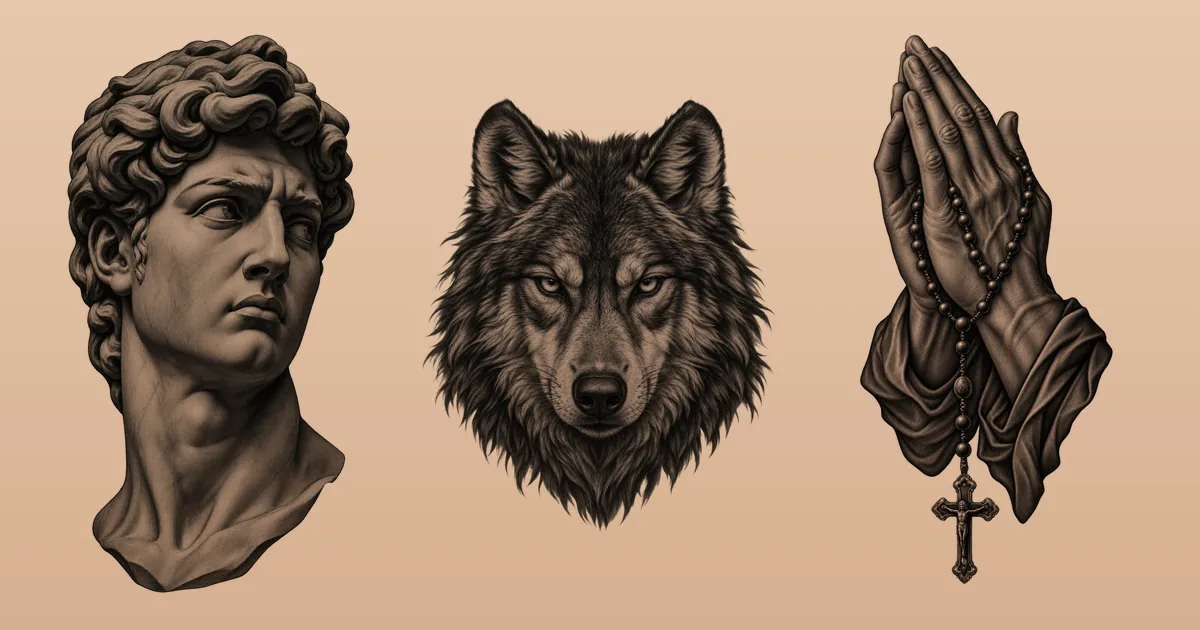
| Black & grey realism | Smooth grey gradients that read like a photograph | Realism tattoos |
| Color realism | Blended color and depth, little or no outline | Realism tattoos |
| American traditional | Bold outlines, a few bright colors, solid black | Flash tattoos |
| Neo-traditional | Traditional's bold bones with richer color and more detail | Below |
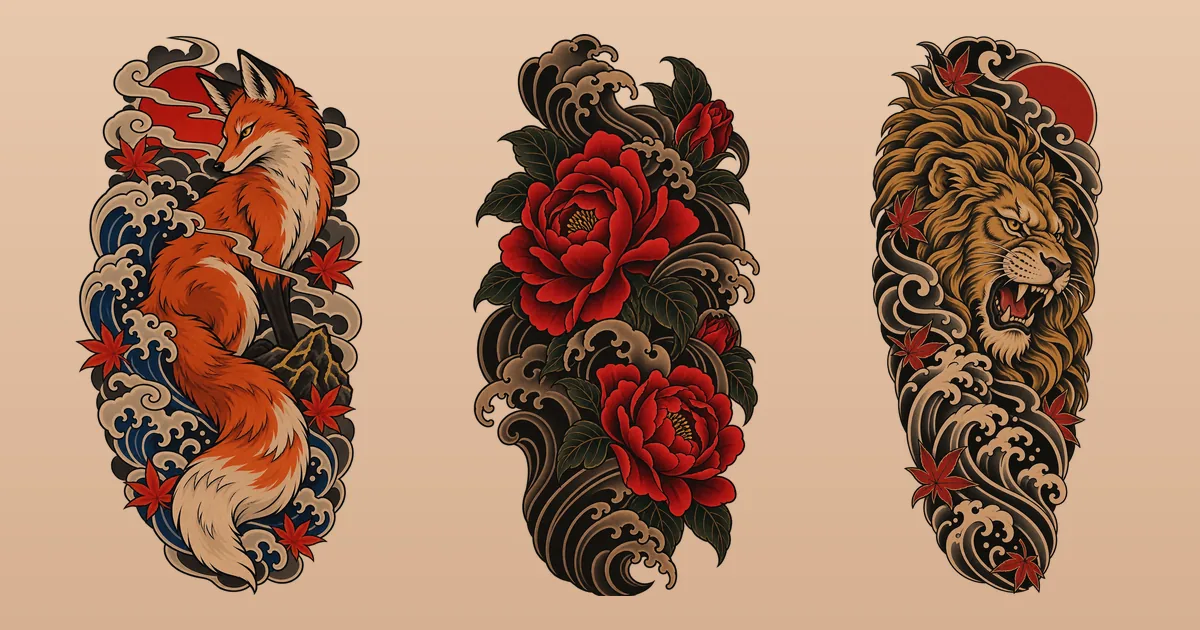
| Japanese | Koi, dragons, tigers and peonies framed by waves and wind bars | Japanese tattoos |
| Blackwork | Solid black areas, patterns and bold silhouettes | Cover-ups |
| Dotwork & mandala | Images built from dots, radial symmetry | Mandala tattoos |
| Geometric | Precise lines, shapes and symmetry | Geometric tattoos |
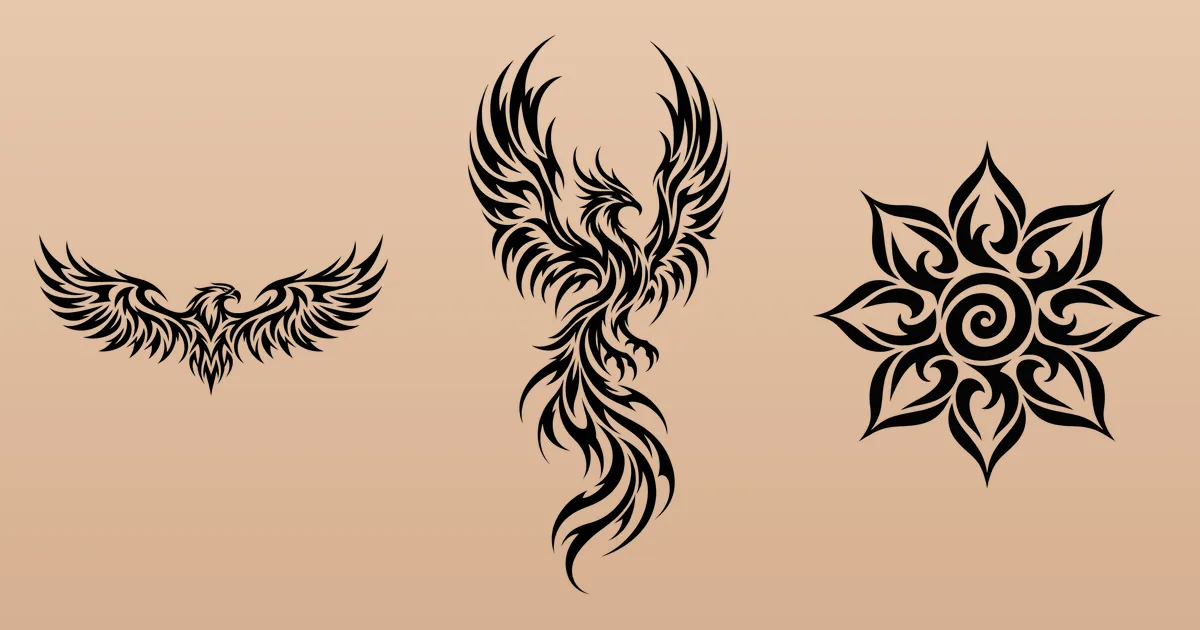
| Tribal | Bold, flowing black shapes | Tribal tattoos |
| Polynesian & Māori | Patterns with deep cultural meaning, built to the body | Māori and Polynesian |
| Illustrative etching | Hatching and cross-hatching like an old engraving | Below |
| Lettering & script | The words are the design | Name tattoos |
| Ornamental | Jewelry-like filigree, lace and henna-inspired patterns | Below |
| Biomechanical | Machinery seen through opened skin | Below |
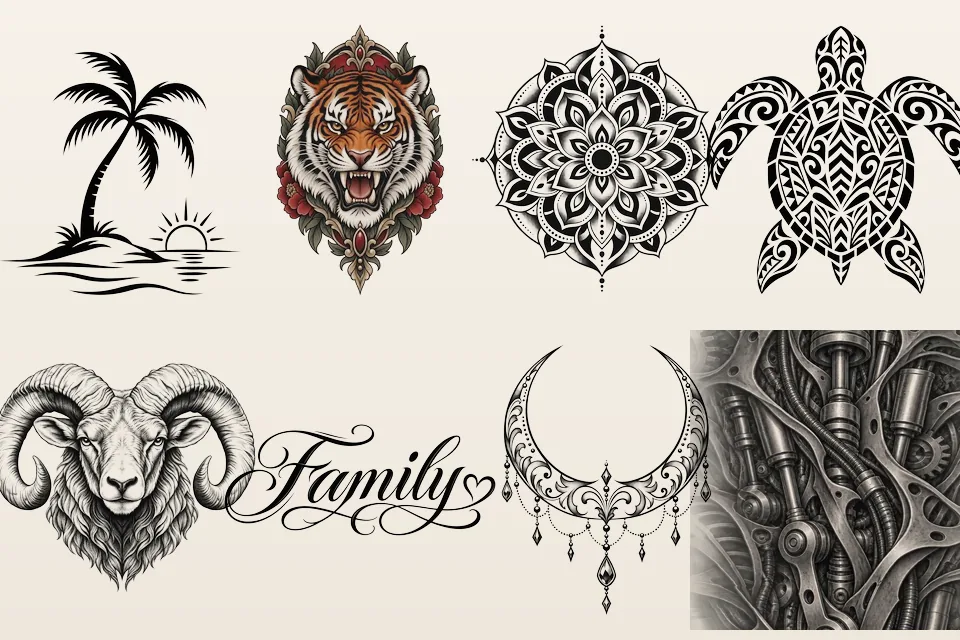
Those sixteen are the styles you can pick in click2ink, each with an example picture, but they aren't the whole story. Watercolor, with its soft washes and missing outlines, has its own watercolor tattoo guide, and Chicano black and grey, new school and trash polka are worth looking up too.
Bold styles built to last
American traditional, neo-traditional, blackwork and tribal share one strength: heavy black that keeps its shape as skin ages. Traditional grew up on the flash sheets of street shops, with a small palette and solid shading meant to read from across a room; our flash tattoo guide tells that story. Neo-traditional keeps the bold outline but adds richer, more blended color, varied line weights and ornament. Blackwork goes further, with whole areas of solid black, which also makes it one of the strongest options for covering old ink.
Tribal, as the word is often used in Western studios, means bold, flowing black shapes, and it borrows from cultures whose patterns have histories and meanings of their own. Our tribal tattoo guide untangles the two.
Fine styles that need the right size
Fine line, minimalist, dotwork, geometric and ornamental work trade boldness for delicacy. The thinner and closer the lines, the more size matters, because very fine lines can soften over the years and details that sit too close may merge. Ornamental lace and filigree need room for the same reason. Geometric designs also want flat, steady skin: a perfect circle on a curved shoulder can look oval from the side. Read our guides to fine line, minimalist and mandala and geometric tattoos before you shrink anything.
Shaded and painterly styles
Black and grey realism builds depth from smooth grey gradients and color realism from blended color, and both need size: a face the size of a coin can't hold its detail for long. Illustrative etching borrows the hatching of old engravings, so it reads well in black alone. Biomechanical tattoos imagine machinery under opened skin, a look shaped by the Swiss artist H. R. Giger, who called his blend of bodies and machines "biomechanical" and whose art has influenced tattooists worldwide. Our realism tattoo guide covers what holds up in skin over time.
Styles that belong to living cultures
Some styles aren't only looks. Irezumi, Japanese tattooing, grew into an art form in the Edo period alongside woodblock prints, with its own motifs, from koi and dragons to peonies and waves, and its own logic for how a design fills the body. In Japan, tattoos still carry a stigma in some settings, and many public baths and hot springs turn tattooed guests away. Our Japanese tattoo guide goes deeper.
Polynesian tatau and Māori tā moko carry genealogy, status and identity. A moko is made with consent and from the wearer's own history; kirituhi, "skin writing," is the term for Māori-inspired designs that anyone can wear. When a style comes from a living culture, look for artists from that tradition and let them guide what's appropriate. Our Māori and Polynesian tattoo guide explains more.
How to choose your style
- Start with what you've saved. Scroll through the tattoos you've screenshotted and look for the common thread: the outline, the color, the amount of bare skin.
- Match the style to the size and spot. Bold styles work small; delicate and photographic ones need room.
- Think about the long run. Bold black holds; fine lines and pale colors soften sooner.
- Find a specialist. Most artists are known for one or two styles, so look at their healed work, not only fresh photos.
You can also test tattoo styles on your own idea. In click2ink a new tattoo starts with four questions, and the second is the style: sixteen choices, each with an example picture, or "Let the artist choose." Once a design lands on the 3D figure, one tap asks for Black & grey, Add colour or Another version (a credit each), so you can compare the same idea in different looks on your own body. See how it works.
Tattoo styles: quick answers
How many tattoo styles are there?
There's no official count. Styles blend, split and pick up new names all the time, so you'll find lists of a dozen and lists of dozens. Most artists would recognize a core set like the sixteen in this guide, and most of what's left is a blend or a regional take on them. What matters is finding the one that matches the tattoos you keep saving.
What's the difference between traditional and neo-traditional?
Both use bold outlines and strong color, but neo-traditional loosens the rules. Traditional sticks to a small palette, simple shading and classic flash subjects. Neo-traditional adds varied line weights, richer and more blended colors, more detail and ornament, and a wider range of subjects, from detailed animal portraits to decorative frames around a face.
Which tattoo styles hold their shape longest?
Styles with bold black outlines and solid black shading, such as American traditional, blackwork and tribal, keep their shape longest, because each line has ink to spare as it softens. Very fine lines, tiny details and pale colors tend to change sooner. Placement, sun exposure and the artist's skill matter as much as the style itself.
Can I mix tattoo styles in one piece?
Yes, and some of the most striking tattoos do: a realistic portrait inside a geometric frame, a traditional rose with fine line script, an ornamental pattern around a blackwork silhouette. Mixing works when one style leads and the other supports. Choose an artist comfortable in both, and plan the whole design before the first session.
What style is best for a first tattoo?
The one you love, at a size it can handle. A small traditional or blackwork piece is forgiving and quick; a fine line design looks delicate but needs a careful artist and a sensible size. Avoid choosing a style only because it's everywhere right now. Pick the look you've kept coming back to for months, and if you're torn between two, draw the same idea in both in click2ink and compare them on the figure.
Do tattoo artists work in every style?
Most don't, and the best rarely claim to. Artists usually specialize in one or two styles and build their reputation on them. Look through a portfolio for several healed examples of the style you want. If an artist's page is all bold traditional work, that's who to see for a panther, not for a tiny photo-real portrait.
What is blackwork?
Blackwork is tattooing in black ink only, built from solid black areas, patterns and bold silhouettes rather than soft shading and color. It ranges from geometric patterns and botanical silhouettes to heavy blacked-out sleeves. It reads clearly on every skin tone and is one of the strongest choices for covering an old tattoo.
What is illustrative etching?
It's a style that imitates old engravings and woodcuts, with shading built from fine parallel lines and cross-hatching instead of smooth grey. Skulls, animals, flowers and mythological scenes suit it well. Because its shading is made of lines rather than soft gradients, it often stays crisp, as long as the lines aren't packed too tightly for the size.
Which tattoo styles work best for cover-ups?
Dark, dense styles hide old ink best: blackwork, Japanese, neo-traditional and bold illustrative work. Fine line and pale watercolor rarely can. The new design usually has to be larger and darker than the old one. Our tattoo cover up guide explains how artists plan around what's already there.