Tattoo cover up ideas: designs that can hide old ink
Before you fall for any design, know who gets the final word on a tattoo cover up: the tattoo artist who looks at your old ink in person. A design from a gallery or an AI is a starting point for that conversation, not a promise. What it can do is show you which ideas tend to work, and why some never will.
Cover, rework, lighten or black out?
"Cover-up" gets used for four different routes. Knowing them helps you ask an artist the right question:
| Route | What happens | When it fits |
|---|---|---|
| Cover-up | A new design is placed so its dark, busy areas sit over the old lines | The old tattoo isn't too dark or too big for the space |
| Rework | The old tattoo is re-lined, re-shaded or built into a bigger piece | You still like part of it, or it has simply faded |
| Lighten first | Laser sessions fade the old ink, then the new tattoo goes on | Dark, heavy old work, or you want a lighter new design |
| Blackout | The area is filled with solid black or heavy blackwork | You like bold black and want the old tattoo gone from view |
Lightening is laser treatment, not tattooing, and it belongs with a trained health care professional. A cover-up artist may suggest a few sessions to give themselves more freedom, but the clinic decides how many your skin needs. There's more on lasers at the end of this guide.
Why some designs hide old ink and others don't
New ink doesn't erase old ink. Both end up in the same skin, and the old lines show through anything lighter than they are. So a cover-up works by camouflage, not by painting over:
- Dark where the old lines are. The new design's deepest blacks and darkest colors have to land on the old tattoo's heaviest parts.
- Texture that breaks up shapes. Feathers, fur, scales, petals and leaves hide stray lines far better than smooth gradients or clean geometry.
- Organic outlines. Flowing shapes can bend around the old tattoo; a perfect circle or straight lettering can't.
- Usually a bigger footprint. The new design normally extends past the old one, so the eye reads the new shape instead of the old edges.
- No white. White ink is far too light to hide darker ink. Conveniently, click2ink's designs leave white out unless you ask for it, with the light parts coming from bare skin, which is how a cover-up has to work anyway.
Tattoo cover up ideas that often work
These subjects come up again and again in cover-up work because they're dark, dense and forgiving. Whether one suits your old tattoo is your artist's call.
Dark florals
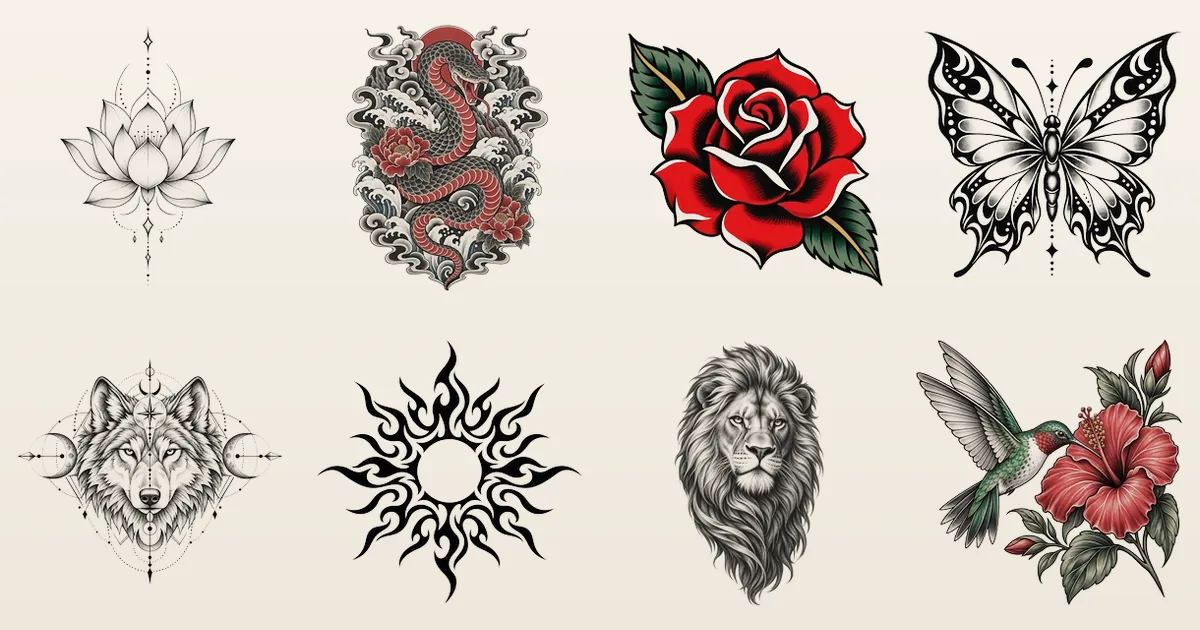
Peonies, roses and chrysanthemums stack petals and deep shadows exactly where you need them, and their leaves can reach out to cover stray edges. Black and grey, or deep reds and purples, will hide more than pastels.
Animals with fur or feathers
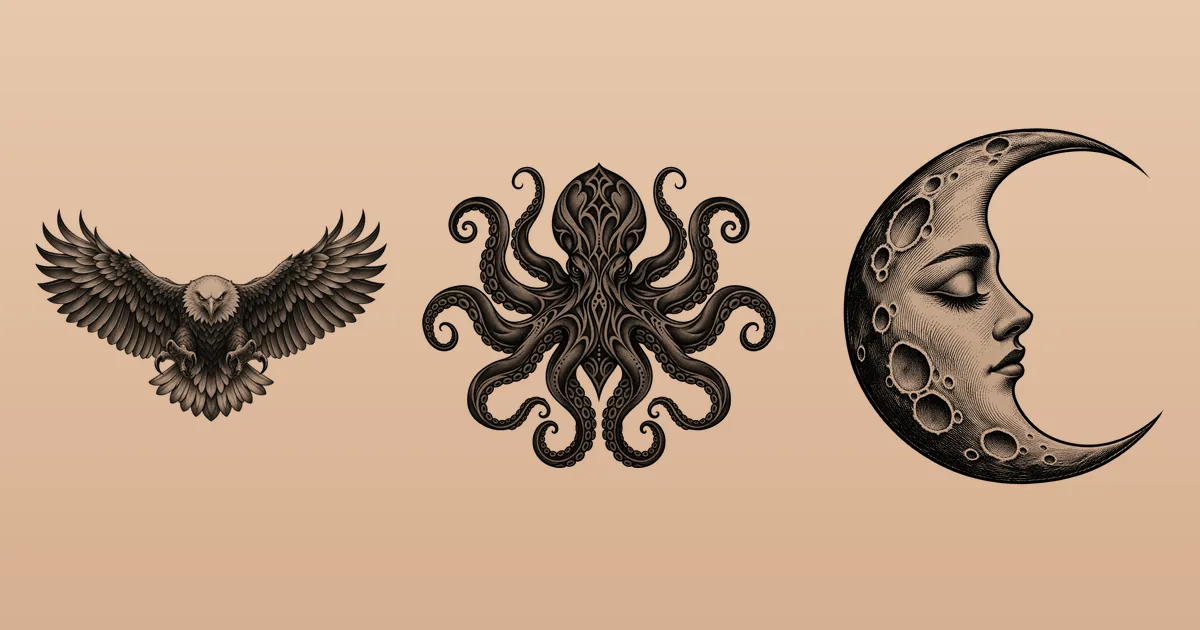
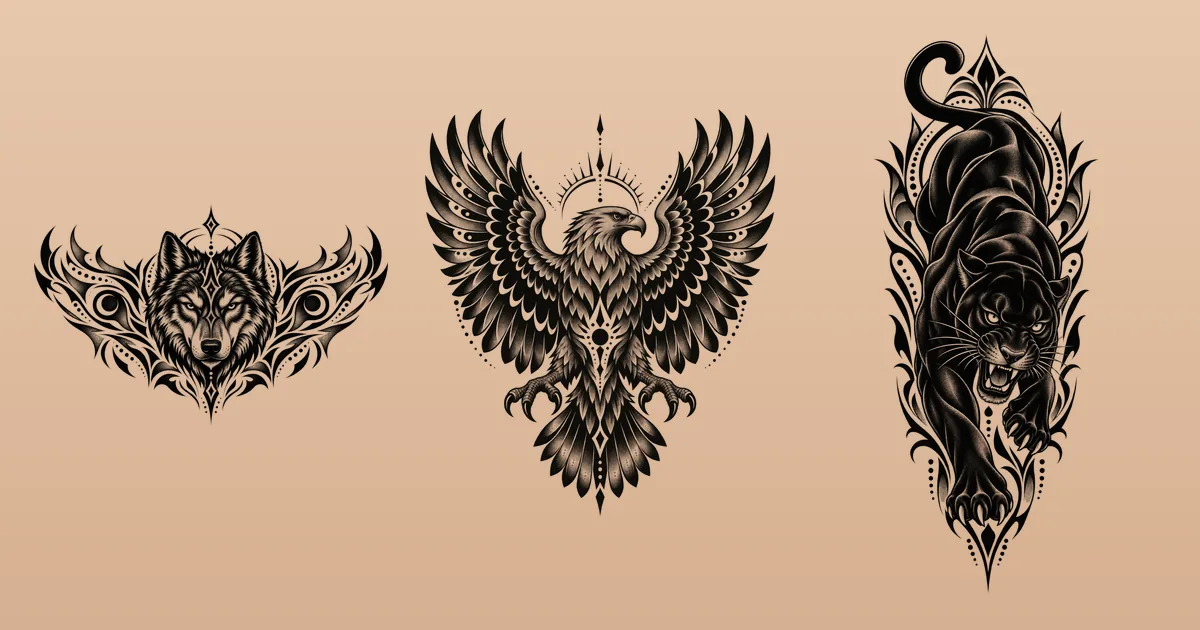
A wolf, a panther, an eagle or an owl gives an artist dark masses and plenty of texture. The black panther is a classic for good reason: a large solid area that still reads clearly as an animal.
Japanese elements
Koi scales, waves and wind bars are dense and flowing, which is why they work so well over old ink. Irezumi has its own history and rules of composition, so for a true Japanese piece, look for an artist who knows the tradition. Our Japanese tattoo guide explains more.
Blackwork and ornamental patterns
Bold black shapes, heavy ornamental frames and dense patterns can swallow an old design whole. They suit people who like a graphic, high-contrast look and don't mind a lot of black.
Black and grey with deep shadows
Realism with a dark background, such as a skull in shadow or a face emerging from black, hides old work in its darkest areas while the light parts sit on clear skin.
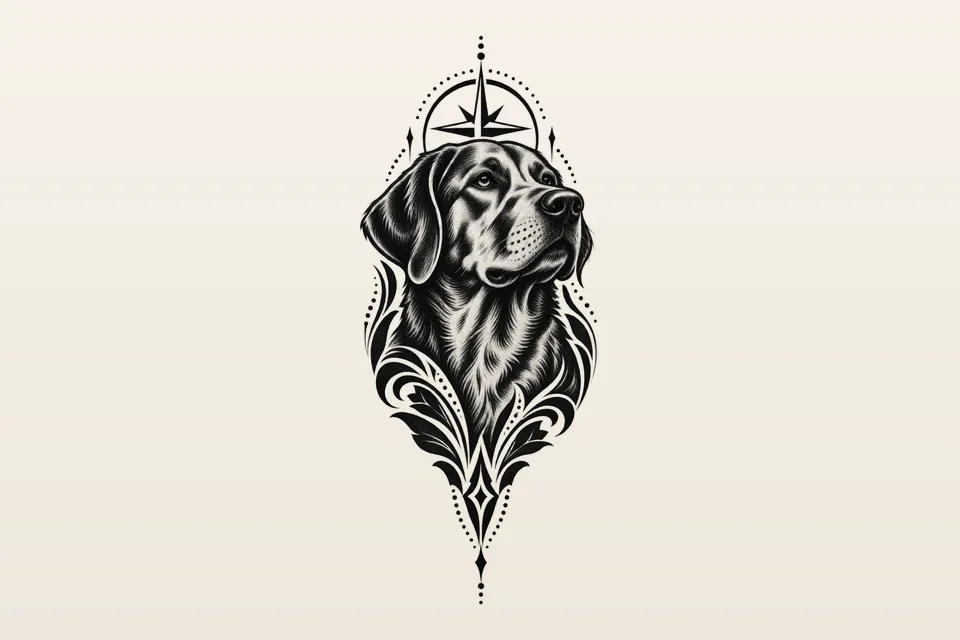
For more directions, browse the tattoo styles guide with one question in mind: where would the darkest parts go?
What makes a cover-up harder
Some old tattoos are easy to hide, some can only be hidden by a big, dark design, and a few are better lightened first. These usually make the job harder:
- Very dark or heavily saturated old ink, especially large solid black areas.
- An old tattoo that already fills the space, leaving no room to go bigger.
- Raised lines or scarring from the first tattoo.
- A wish for something light: fine line, minimalist, pastel or watercolor designs leave too much open skin.
- Wanting the new tattoo to be the same size as the old one, or smaller.
- An old tattoo that hasn't fully healed. Any new work waits until it has.
None of these means "impossible." They mean more compromise: a bigger design, a darker palette, laser sessions first, or a rework instead of a full cover.
Planning a tattoo cover up with your artist
Look for an artist whose portfolio shows healed cover-ups, with before-and-after photos. Then send them what they need to judge yours:
- Clear photos in daylight, straight on and from the side, with a ruler or tape measure in the frame.
- What bothers you about the old tattoo: the name, the style, the blur or the placement.
- What you're open to: subjects you'd like, colors you'd accept and how much bigger you're willing to go.
- An honest question: would they cover it, rework it or suggest lightening first?
Expect the artist to redesign whatever you bring. Many cover-up artists draw the final layout over a photo of your old tattoo or straight onto your skin, because the old lines decide where every dark area goes. If two artists give you different answers, that's normal; ask each one to explain why.
Using click2ink to prepare
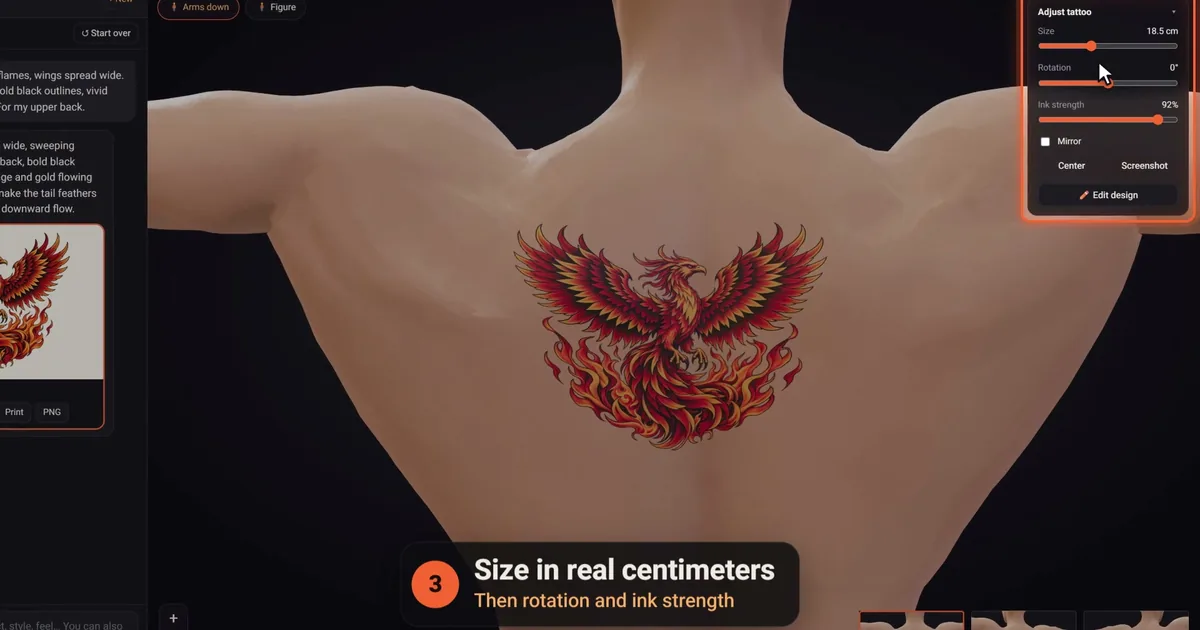
click2ink, the studio we make, can't tell you whether a design will cover your tattoo. It can help you prepare. Attach a photo of the old tattoo and the AI lifts the design from the photo as clean artwork, a precise outline for you and your artist to discuss; our photo-to-tattoo guide explains how that works. Put that outline on the 3D figure at its real size and spot, and you can see how much skin a cover will need. Then describe candidates with the constraints spelled out: "a dense blackwork panther, about 16 cm tall, dark enough to hide an old 8 cm name on the inner forearm." Each of those messages is one credit, and new accounts start with 3 free (see pricing).
Size is the big lever here, so read our tattoo size guide before you settle on a number.
When removal makes more sense
If you want something light, small or delicate in the same spot, or simply clear skin, covering may be the wrong tool. According to the FDA's guide to tattoo removal, laser removal is the most common method health care professionals use to remove or lighten tattoos; dark blue and black are the easiest colors to remove, and green, red and yellow the hardest. Complete removal can take many treatments and isn't always possible, and the FDA has not approved do-it-yourself removal creams, ointments or kits.
The American Academy of Dermatology notes that lasers have largely replaced other removal methods and that a tattoo should lighten after each treatment. For anything medical, from lightening for a cover-up to full removal, talk to a board-certified dermatologist or another qualified health professional.
Straight answers about a tattoo cover up
Can any tattoo be covered up?
Many can, but not always with the design you have in mind. Light, small or faded tattoos are the easiest. Very dark, large or saturated ones may need a much bigger, darker design, a few laser sessions first, or a blackout. Only an artist looking at the old tattoo in person can tell you which applies to yours.
How much bigger does a cover-up need to be?
There's no fixed ratio. It depends on how dark and dense the old ink is, the shape of the new design and the room around it. Some cover-ups extend only a little past the old edges; others need to be much larger. Your artist will tell you after seeing it, and laser lightening can reduce how much bigger you need to go.
Can white ink cover an old tattoo?
Not on its own. White is too light to hide darker ink, so the old lines show through. The light areas in a cover-up come from bare skin left between dark shapes, or from skin that was lightened first with a laser. Be wary of any promise that a pale design will hide a dark tattoo.
What colors cover old tattoos best?
Black, and deep colors such as dark blues, greens, purples and reds, because they're darker than most old ink. Light colors like yellow, pale pink or soft pastels let the old lines show through. The right palette depends on your old tattoo's colors and darkness, and your artist will plan where each one goes.
Can a fine line tattoo cover an old one?
Rarely. Fine line work is mostly open skin with thin lines, so there's almost nothing to hide the old tattoo under. If you love the fine line look, ask about lightening or removing the old tattoo first, or putting the new piece on fresh skin and reworking the old one separately.
Do I need laser sessions before a cover-up?
Not always. Plenty of cover-ups are done without any laser work. Lightening helps when the old tattoo is very dark, when you want a lighter or smaller new design, or when the artist needs more freedom. How many sessions your skin needs is for a laser professional to judge, after seeing the tattoo.
How long after a tattoo can I get it covered?
Wait until the old tattoo is fully healed, and longer if the skin is still sensitive. If you've had laser sessions, the clinic and your artist will tell you how long to wait before tattooing over the area. Rushing new work onto irritated skin helps neither the healing nor the result.
Can I use AI to plan a tattoo cover up?
Yes, as preparation. AI can explore dark, dense ideas, lift your old tattoo from a photo as a clean outline, and show a design on a 3D figure at real size. It can't see your skin or how deep your old ink sits, so it can't promise coverage. Bring the ideas to your artist and let them decide.
Is a cover-up more expensive than a new tattoo?
Often, because a cover-up is usually bigger and slower than a tattoo on clear skin, and it takes more planning. Laser sessions, if you need them, are a separate cost. Prices vary widely by artist and region, so ask for a quote with photos and measurements of the old tattoo.