Tattoo placement: how to choose where your tattoo goes
A 15 cm rose is three different tattoos on the outer forearm, the ribs and the back of the calf. Tattoo placement changes how a design reads, who sees it, how it feels to get and how it ages. Before you commit to the artwork, decide where it lives. Here's how to weigh each spot, and how to test one before it's permanent.
Five questions that settle tattoo placement
- Who should see it, and when? Every day, only in summer, or only when you choose. Think about work, family and the clothes you actually wear.
- What shape is the design? Tall and narrow, wide, or round. The body has a spot for each, and forcing a design into the wrong one always shows.
- How big does it need to be? Detail needs room. A portrait or a busy scene won't survive on a wrist, and our tattoo size guide explains why.
- Do you want to see it yourself? A forearm piece is in your eyeline all day; an upper back piece lives in mirrors and photos.
- What's around it, now and later? Existing tattoos, scars, moles, and the tattoos you might want next.
Which shapes fit which body areas
Muscle and bone give each area a natural shape, and good tattoo placement follows it. Designs that go with the body look like they belong there; designs that fight it look stuck on.
| Area | Natural shape | Suits | Keep in mind |
|---|---|---|---|
| Forearm | Tall, narrow, wraps | Animals, flowers, script along the arm | Gets lots of sun; decide whether it faces you or others |
| Upper arm and shoulder | Rounded | Roses, medallions, animal heads, the start of a sleeve | Easy to cover; the shoulder cap curves two ways |
| Chest | Wide, symmetrical | Birds with spread wings, ornaments, a piece on one side | Follows the pecs, which can pull a design lower than planned |
| Ribs and side | Tall, curved | Long flowers, script, tall animals | Often described as one of the more intense spots |
| Stomach | Wide, soft | Large, flowing pieces | Skin changes with weight and pregnancy |
| Upper back | Wide, flat | Wings, mandalas, big scenes | You'll mostly see it in photos |
| Lower back | Wide, low | Symmetrical and ornamental designs | Sits right by the waistband |
| Back of the neck | Small, vertical | Small symbols, short ornaments | Hair and collars hide or show it |
| Hand | Small, curved | Bold, simple designs | Always on show; washing and wear fade it sooner |
| Thigh | Large, tall or wide | Big animals, florals, portraits | Lots of room, easy to cover |
| Calf | Tall, rounded | Tall subjects, figures, bold vertical pieces | Wraps around the muscle; check it from the side |
| Ankle and foot | Small, bony | Small symbols, bands | Shoes rub; tends to fade sooner |
Pain and healing: general guidance only
Pain is personal, and no chart predicts yours. As a general rule, spots with more padding and muscle, such as the outer upper arm, the outer thigh and the calf, are often described as more comfortable. Spots over bone or with thin, sensitive skin, such as the ribs, spine, sternum, feet, ankles and hands, are often described as more intense. Long sessions are harder anywhere.
Healing has a practical side too. Hands and feet are used and washed all day, and waistbands, bra straps and shoes rub. If you're nervous, a smaller piece in a fleshier spot is a gentle start. Your tattoo artist can tell you what to expect for a given spot, and if you have a medical or skin condition, talk to your doctor before you book.
On show or easy to hide
- Covered by most everyday clothes: the upper arm, shoulder, chest, stomach, ribs, back and thigh.
- Visible in short sleeves or shorts: the forearm, calf, ankle and, with short hair, the back of the neck.
- Hard to hide: the hands, and anything on the front of the neck or the face.
Direction is part of tattoo placement as well. Text on the inner forearm can be written to read for you or for the person in front of you, and a figure on the outer arm can face forward or back. There's no right answer, only a choice to make before the stencil goes on.
How tattoo placement affects aging
Where a tattoo sits shapes how it looks in twenty years. Three things do most of the work:
- Sun. The American Academy of Dermatology notes that UV light can fade some tattoo inks, and its advice on caring for tattooed skin includes sunscreen. Forearms, hands and the back of the neck see the most sun.
- Friction. Hands, fingers and feet are washed and rubbed constantly, which is why tattoos there tend to need touch-ups sooner.
- Stretch. The stomach, upper arms and thighs change with weight, muscle and pregnancy. Moderate changes rarely matter; big ones can alter a design's proportions.
Moles count too. The AAD suggests asking your tattoo artist to work around moles, freckles and other spots, so they stay easy to check. Placement is the moment to plan for that.
Test the spot before the needle
You can't judge tattoo placement from a flat picture. Try it on a body first:
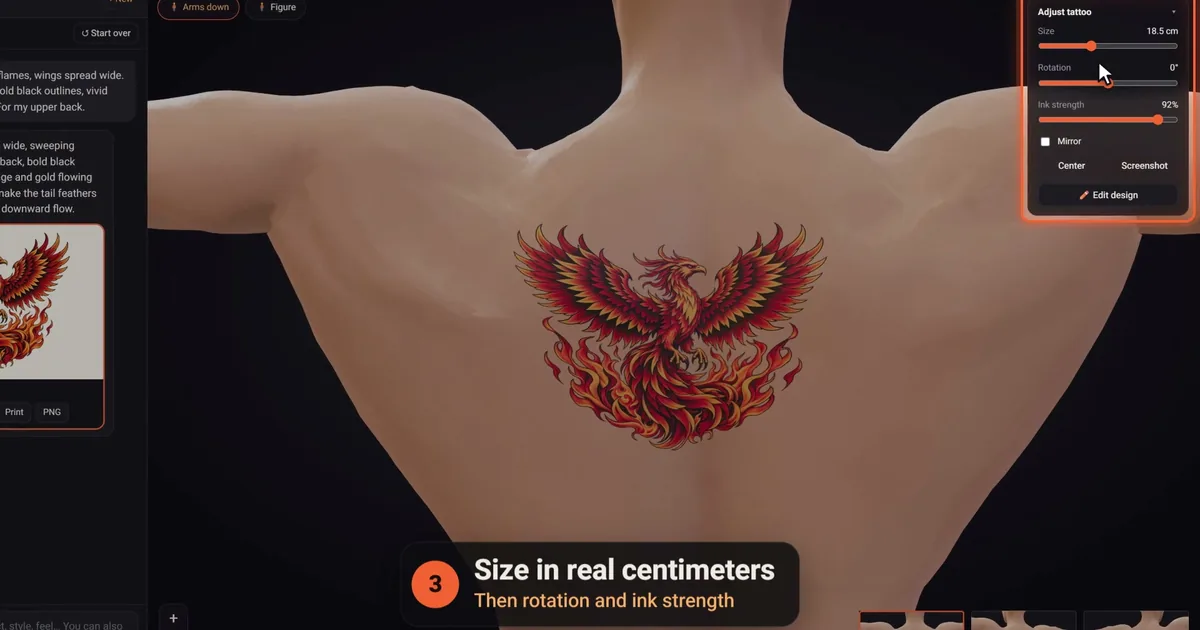
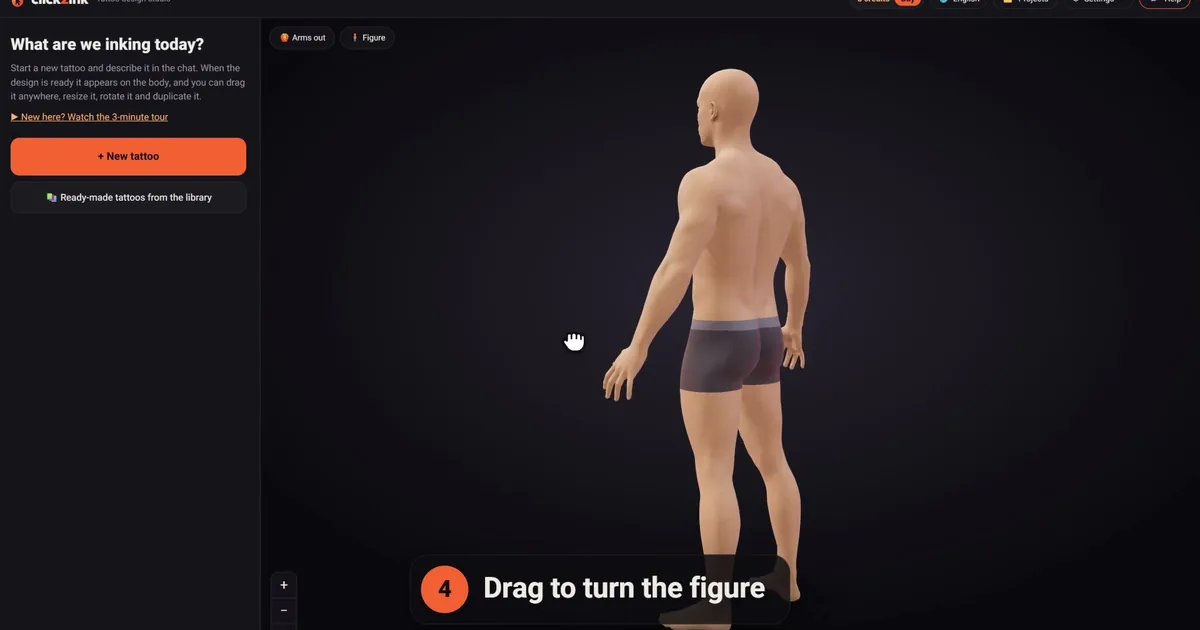
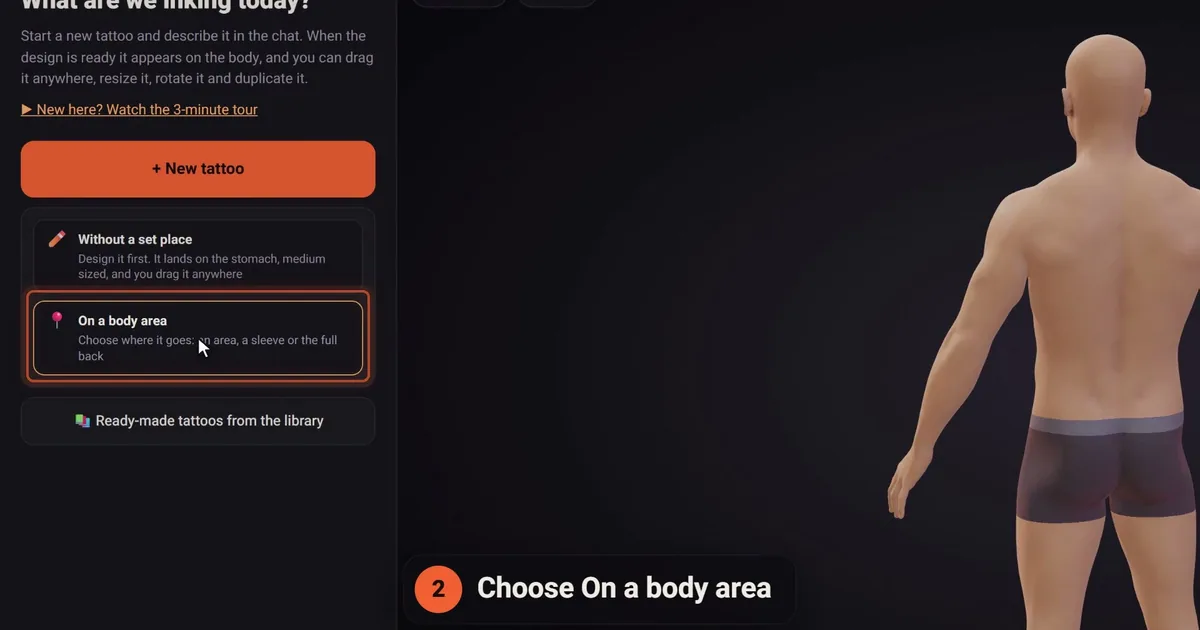
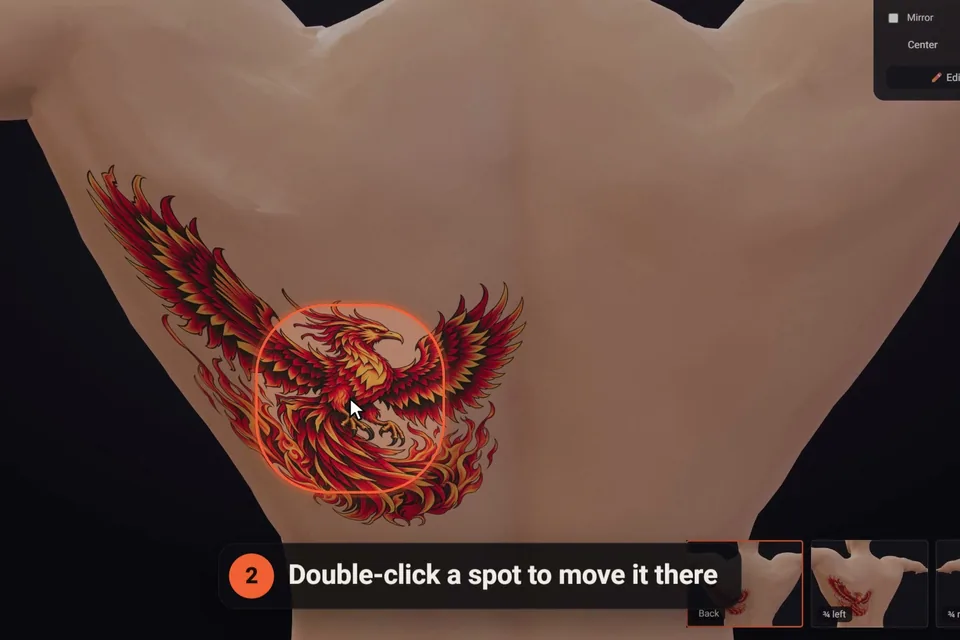
- On a 3D figure. In click2ink you pick the spot when you start a tattoo: tap it on a small figure, front or back, choose a whole sleeve or the full back, or start without a set place and drag the design anywhere later. Once it lands, double-click any spot on the skin to move it there, and resize or rotate it.
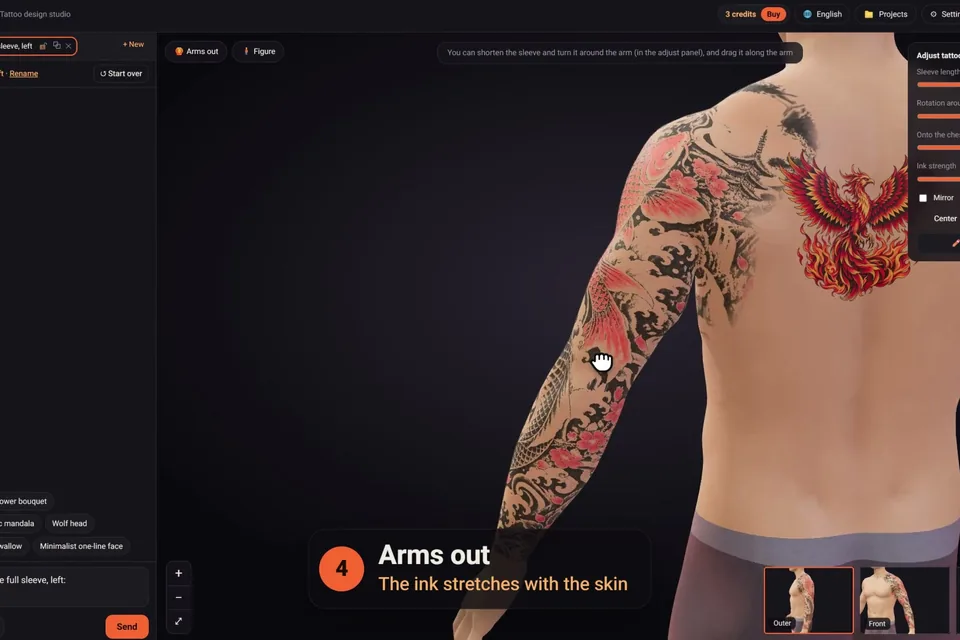
- From every angle. Small views jump to each side, and "Arms out" opens up the inner arms and both sides of the torso, where most placement surprises hide.
- On a body like yours. click2ink's "Make it look like me" matches the figure to your height, weight, build and skin tone, and every tattoo is measured in real centimeters for your height.
Then do the analog version in front of a mirror: a true-size printout taped in place, checked while you reach, sit and turn. For an angle-by-angle checklist, see the tattoo simulator guide; the how it works page walks through the studio itself.
Leave room for the next tattoo
If there's any chance you'll want more tattoos, plan each tattoo placement with its future neighbors in mind. A small piece in the middle of the forearm can make a future sleeve awkward, and a chest piece placed off-center can leave the other side hard to balance.
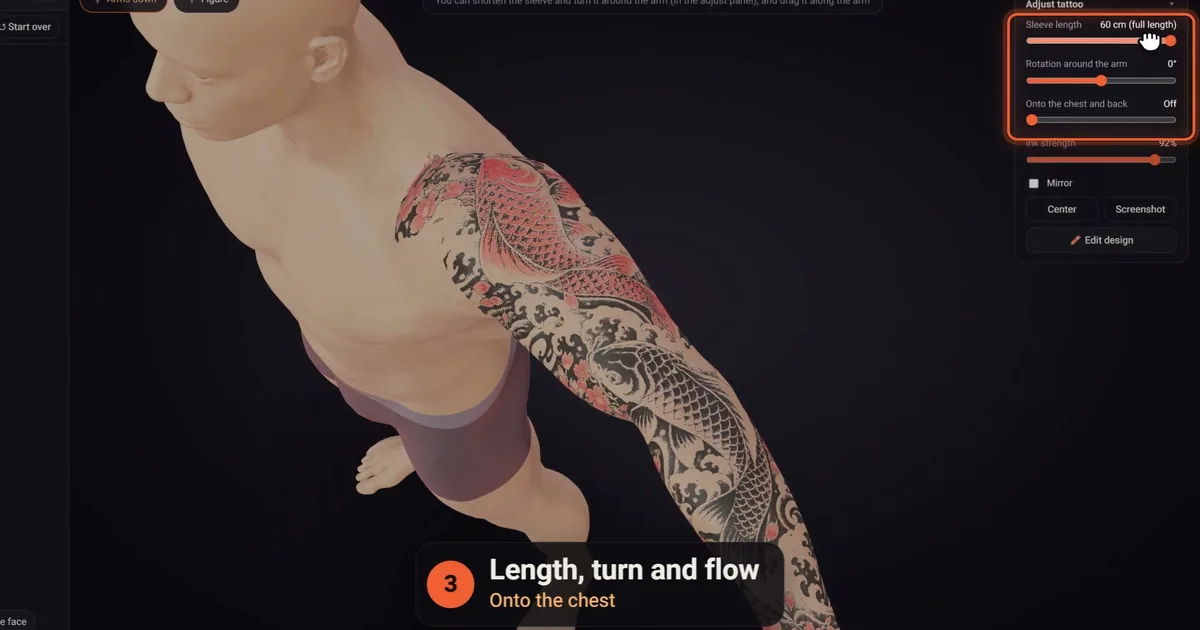
When a big project might come later, place the first piece where it can grow into one: the outer upper arm can start a sleeve, and the shoulder blade can become part of a back piece. A sleeve tattoo covers most or all of the arm, and it reads best when it's planned as one design. Our guide to sleeve tattoos covers that planning, and on the click2ink figure a sleeve circles the whole limb and can flow onto the chest or back.
Tattoo placement questions people ask before booking
What is the least painful place to get a tattoo?
Fleshier spots with more muscle, like the outer upper arm, the outer thigh and the calf, are generally described as more comfortable than bony or thin-skinned areas such as the ribs, feet and hands. Everyone feels it differently, though. Ask your artist about a specific spot, and talk to a doctor first if you have a medical or skin condition.
Where should I put my first tattoo?
Somewhere you can easily cover, with enough room for the design, and on the fleshier side. The outer upper arm, the shoulder, the outer forearm and the calf are popular first spots for those reasons. Pick a place you'll be happy to see, and think about how it might connect to tattoos you add later.
Where do tattoos fade the fastest?
On the hands, fingers and feet, mainly because of constant washing, friction and wear, and on spots that get a lot of sun, such as the forearms and the back of the neck. Fading is gradual and touch-ups are common. Sunscreen on healed tattoos helps, and your artist can tell you what to expect for each spot.
Which tattoo placement is easiest to hide at work?
The upper arm, shoulder, back, chest, ribs, stomach and thigh are covered by most office clothes. The forearm and calf show in short sleeves and shorts, the back of the neck depends on your hair and collar, and the hands are almost impossible to hide. Check your workplace's dress code if it matters to you.
Should a forearm tattoo face me or other people?
It's your choice, and both are common. Text or an image oriented toward you is easy to read when you look down at your arm; oriented outward, it reads correctly for the person facing you. Tell your artist which you want before the stencil goes on, because turning it around afterwards isn't possible.
Will gaining weight or muscle distort my tattoo?
Moderate changes rarely make a visible difference. Large or fast changes, from weight, muscle or pregnancy, can stretch skin and change a design's proportions, most often on the stomach, upper arms and thighs. If you expect big changes, a design with flexible, organic shapes forgives more than precise geometry or long straight lines.
Can I get a tattoo over a mole or a freckle?
The American Academy of Dermatology suggests asking your artist to work around moles, freckles and other spots, so you and your dermatologist can keep an eye on them. A good artist can design around a mole or leave it as bare skin within the piece. If a spot looks unusual or has changed, see a dermatologist first.
Can I change the placement once the stencil is on?
Yes. That's what the stencil is for: it lets you check the spot in the mirror before anything is permanent. If it sits too low, too far around or at the wrong angle, say so. Any good artist would rather reapply a stencil than tattoo a placement you're unsure about.
Does it matter whether I choose the left or right side?
Sometimes. Some people pick the side that faces others most, at a desk, behind the wheel or in photos. Practical points count too: a fresh tattoo on your dominant arm or hand makes the first days of healing less convenient. Some designs also read better when they face toward the center of the body.