Fine line tattoo: delicate ink, honest expectations
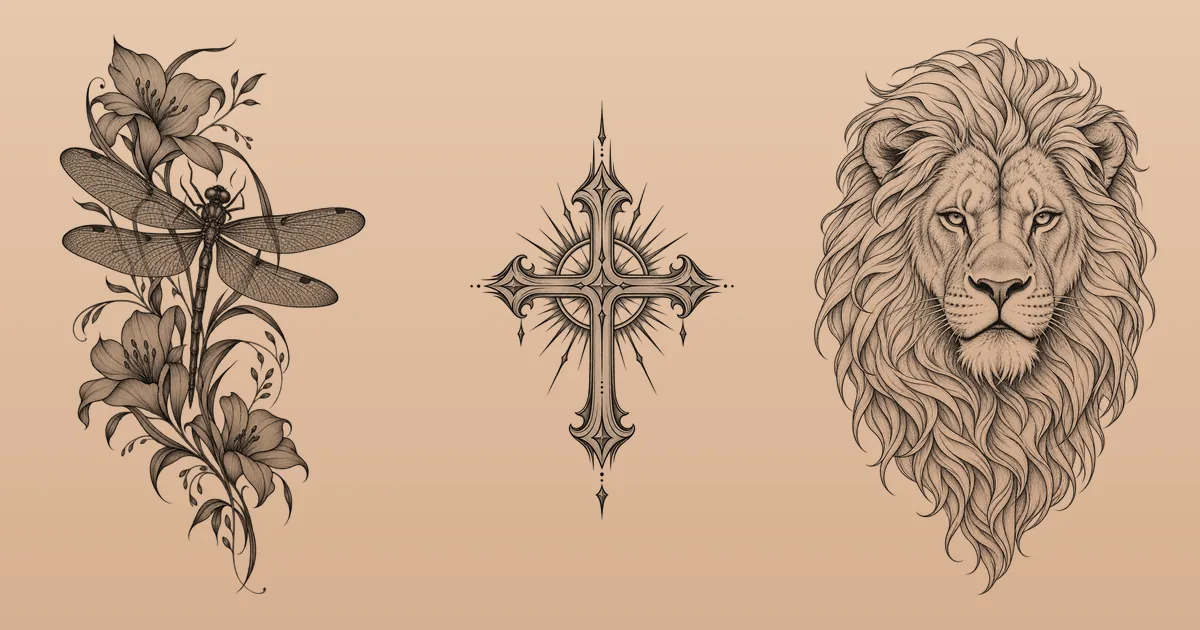
Think of a fine line tattoo as a pencil drawing on skin, where a traditional tattoo is drawn in marker. Thin needle groupings, often a single needle, let a lion's mane or a lily's petals carry detail no bold outline could. The trade-off deserves plain words: thin lines have less ink to spare, so size, placement and your artist's judgment matter even more.
What makes a tattoo fine line
Fine line is about the needle and the hand more than the subject. Artists use a single needle or a small, tight grouping of round liners to pull lines far thinner than a traditional outline, then shade softly, with light whip shading, stippled dots or a pale grey wash, if they shade at all. Most of it is black and grey, though soft color accents are possible.
It isn't the same as minimalism. A fine line lion with every strand of its mane is anything but minimal, and a minimalist ensō can be one heavy brushstroke. Fine line is a technique; minimalism is a way of designing. Our minimalist tattoo guide covers the other side.
Where did fine line come from?
Many artists trace today's fine line work back to black and grey single-needle tattooing in Southern California. After leaving the Marines in 1975, Jack Rudy apprenticed at Goodtime Charlie's Tattooland in East Los Angeles, where clients were asking for a "penitentiary style" of fine, shaded work. He and Charlie Cartwright built a single-needle machine to meet that demand, and Rudy became known for developing the black and grey style, realistic portraits included. The airy botanicals and scripts all over social media today are its lighter-handed descendants.
How a fine line tattoo ages: the honest version
Every tattoo changes a little as the years pass. Ink settles and spreads very slightly in the skin, and sunlight takes its toll: the American Academy of Dermatology notes that ultraviolet light can fade some tattoo inks. A bold outline has ink to spare. A very fine line doesn't, so it's usually the first to soften, lighten or blur at the edges, and tiny details that sit close together can merge.
How much, and how fast, varies with your skin, the placement, the artist's technique and how you look after it, so be wary of anyone who promises a fixed number of years. What reliably helps:
- Take the artist's advice on size. If they want the design bigger or simpler, they're protecting how it will look later, not upselling you.
- Leave space. Lines that sit a little further apart stay separate longer.
- Choose sheltered spots. Skin that sees less sun and less friction holds fine work better.
- Plan for a touch-up. Ask about the artist's policy before you book.
Questions about healing, skin reactions or your own skin belong with your artist and, when needed, a doctor.
Fine line tattoo ideas that suit thin lines
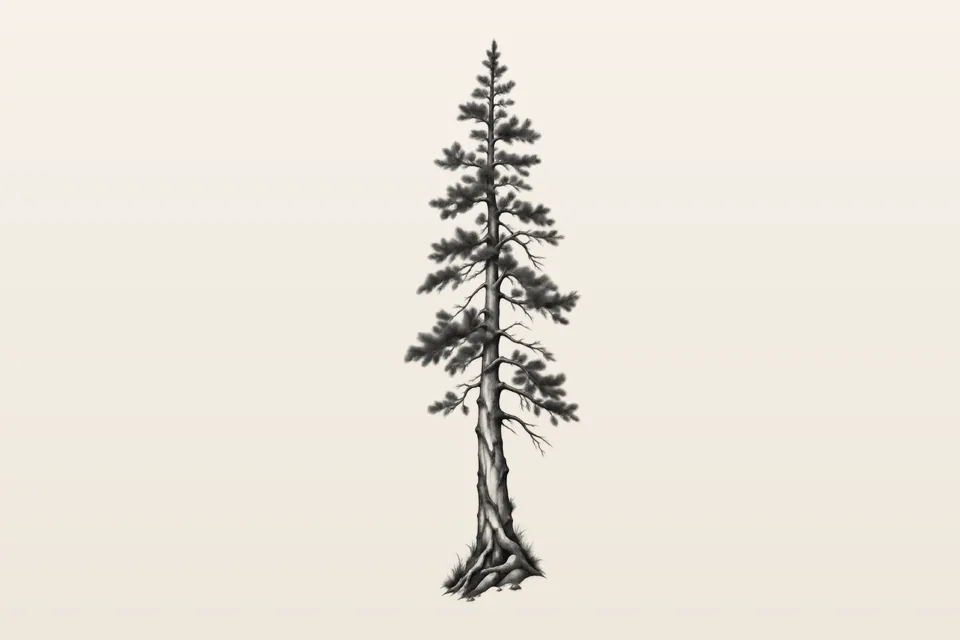
- Botanicals: a single lily stem, an olive branch, lavender, wildflowers, a tall pine.
- Insects: a dragonfly with veined wings, a moth, a bee.
- Celestial: moon phases, a constellation, a small sun.
- Script: names, dates and short words; see our guide to name tattoo designs.
- Ornamental: a slender cross, filigree, a chain that sits like jewelry.
- Animals: a lion or wolf head drawn in fine strands, which needs real size to keep its detail.
When you describe one, name the technique, the shading and the size: a single lily stem with two buds, fine line, light grey shading on the petals only, about 12 cm tall on the inner forearm. That gives your tattoo artist, or click2ink's AI artist, the rules as well as the subject.
Best placements for fine line work
| Placement | Why it works | Watch for |
|---|---|---|
| Inner forearm | Flat, smooth and easy to see | Sun on bare arms in summer |
| Upper arm | Room for detail, little friction | Nothing in particular |
| Thigh | Large and flat, good for detailed pieces | Sun in shorts season |
| Ribs and side | Long, vertical designs | Many people find it an intense spot |
| Shoulder blade | Flat and usually covered | You'll rarely see it yourself |
| Collarbone | Lines that follow the bone | Thin skin that moves |
| Fingers, hands, feet | Small and visible | Constant rubbing and washing; fine lines fade fastest here |
For more on choosing a spot, our tattoo placement guide goes body part by body part.
Planning a fine line tattoo in click2ink
In click2ink, choose fine line from the 16 styles, describe the design and tap the spot on the body. Use the Fast speed setting while you're trying ideas and Detailed for the final design. If a result is busier than thin lines can carry, one tap on Simpler (a credit) asks for fewer elements. The design sits on a 3D figure at its real size in centimeters, so you can judge whether that lion head truly fits a wrist (it usually doesn't). Print the stencil at that size, with its 5 cm check ruler, and take it to your artist along with a share link to the figure. For more ideas, see our small tattoos guide and the wider tattoo styles guide.
Choosing a fine line artist
Beyond healed photos, look for lines that keep the same thickness along their length, smooth curves without wobbles, and shading that sits behind the lines rather than swallowing them. Ask the smallest size they'd tattoo your design at, and what they'd change. An artist who tells you a design is too small or too busy for fine line is doing you a favor.
Fine line tattoos: what people ask
Do fine line tattoos fade faster than bold ones?
Generally, thin lines show change sooner, because each line holds less ink to begin with. They can soften, lighten or blur slightly at the edges, while a bold outline hides the same amount of spread. How noticeable it gets depends on placement, sun, your skin and the artist's technique. Sensible sizing and sun protection are the parts you control.
Does fine line hurt less than bold linework?
Some people find fine line easier to sit through, mostly because the pieces are often small, quick and lightly shaded. But how much a tattoo hurts depends far more on the spot, the length of the session and the person than on the needle grouping. Ribs, feet and hands tend to feel more intense in any style. Your artist can tell you what to expect.
What is a blowout?
A blowout is ink that spreads beyond the line under the skin, leaving a blurry, often bluish halo along it. It usually comes down to needle depth and angle, or to skin that's thin or stretched during tattooing. Any tattoo can have one, but fine lines show it most clearly. Healed portfolio photos are the best way to judge an artist's control.
Can fine line work be done in color?
Yes. Fine line color, from a tiny red berry on a black stem to pastel petals, is common. Keep in mind that light colors in thin lines carry the least ink of all, so they can fade sooner than black. Many people choose black linework with small touches of color, which keeps the structure strong as the color softens.
Will I need a touch-up later?
Possibly. Thin lines sometimes heal a little patchy, and many artists offer a touch-up once the skin has settled. Years later, a refresh can sharpen lines that have softened. Ask about the touch-up policy before you book, and follow your artist's aftercare instructions, since healing affects how evenly the lines settle.
Is fine line the same as single needle?
They overlap. Single needle is one way to make fine lines, using one needle for the thinnest possible line. Many fine line artists also use small groupings of round liners, which give a slightly sturdier line that still looks delicate. Ask your artist which they plan to use and why; the answer often depends on the size of your design.
How can I tell if a design is too detailed for fine line?
Print it at its real size and look at it from arm's length. If areas turn into a grey patch, if lines touch or letters nearly meet, or if a face's eyes are smaller than a fingernail, it's carrying more than thin lines can hold. Ask your artist what they'd simplify, or give the design more room. In click2ink, a tap on Simpler takes the first pass for you.
Can a fine line tattoo show a portrait or a pet?
It can, with enough size. A face or a pet's fur in fine lines needs room for the eyes, the shading and the space between strands, so think palm-sized or larger, on a flat area like the outer arm or thigh, rather than a wrist. Bring a sharp, well-lit photo, and look for an artist with healed portraits in their portfolio.
Do thin lines show up well on deep skin tones?
Yes. Black ink shows on every skin tone, though contrast is softer on deeper skin and very pale greys or colors can read less clearly. Slightly bolder lines and fewer, cleaner shapes often help. Look for an artist whose healed portfolio includes skin like yours, and ask how they'd adapt your design.