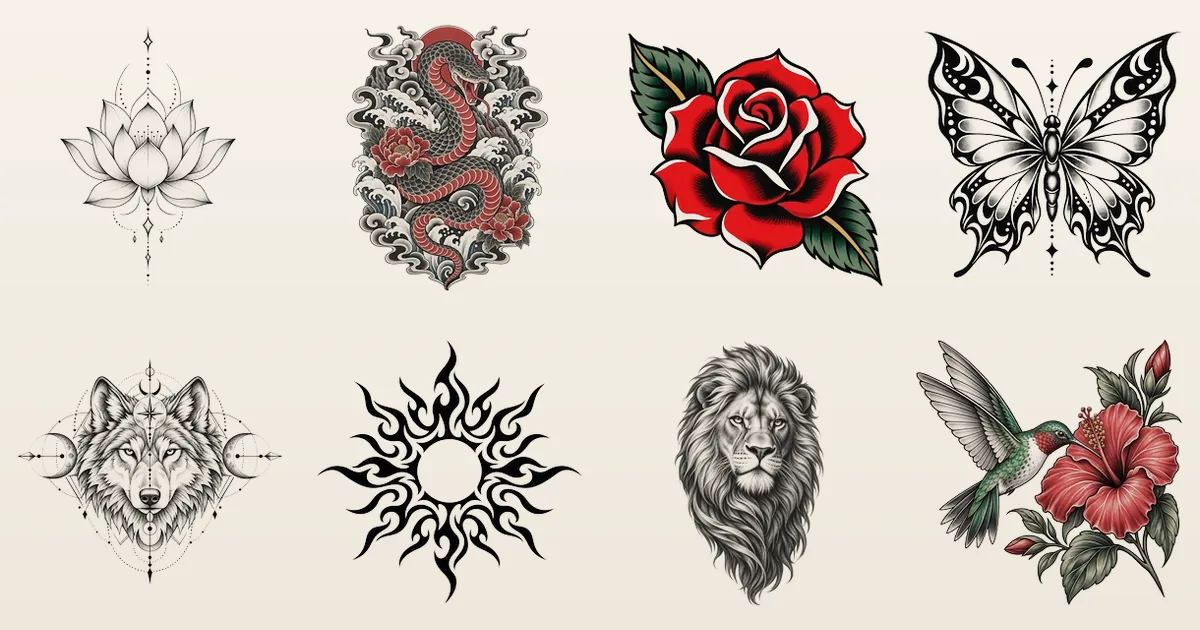
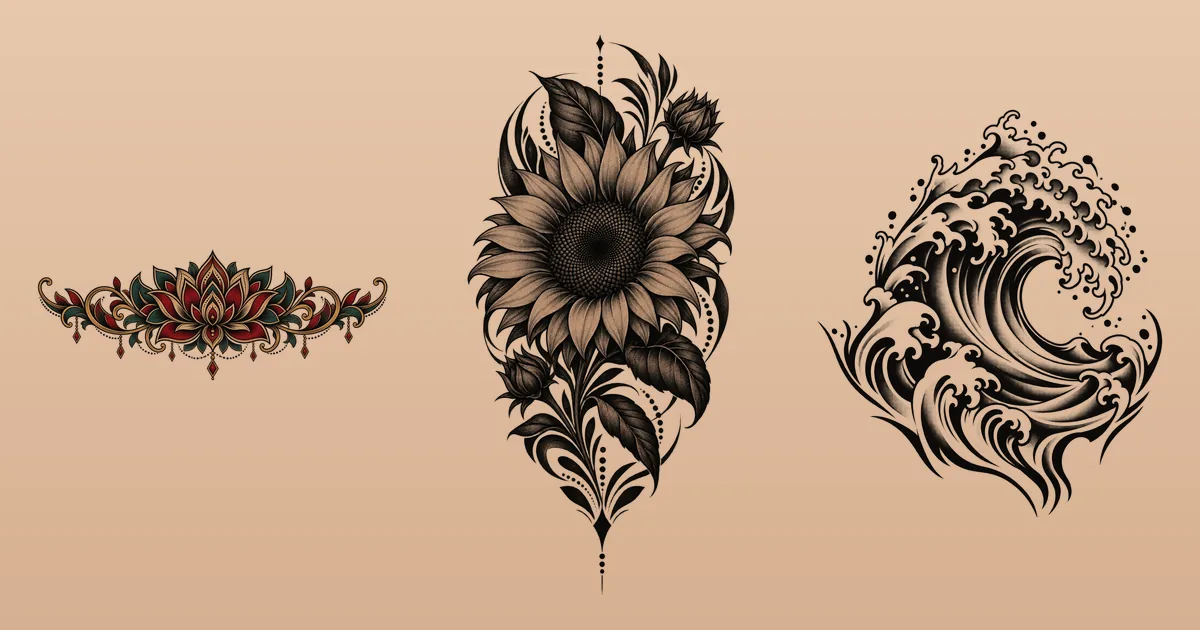
Flash tattoo: the ready-drawn designs on the wall, explained
A flash tattoo is a design drawn before anyone asks for it, usually by the artist who will tattoo it, and chosen from a sheet, a shop wall or a social media post instead of drawn to order. You pick it, often at a price already set, and sometimes you're tattooed the same day. Here's how flash works and how to choose well.
Where flash came from
The word has a fairground story behind it. Wikipedia's history of tattoo flash traces it to the traveling carnivals and circuses of the late 1800s, where an attraction had to catch the eye, and that pull was called flash. Tattooists working those shows hung their designs out front, and the name stuck to the artwork.
Once electric machines let more artists settle into shops, painted sheets of designs were bought, sold and traded between them, sailor designs above all. Lew Alberts drew and sold many of the sheets that classic shop designs grew from. In Honolulu, Norman "Sailor Jerry" Collins became known for his ships, pin-ups and dragons, reworking older designs with influences from Japanese artists. Flash still hangs on shop walls, and now it's posted online just as often; in North America the sheets are commonly printed at 11 by 14 inches.
That history explains the look: bold black outlines, a few strong colors, solid black shading and simple shapes that read from across a room. Tattooers sum it up in three words: bold will hold.
Flash tattoo or custom design: how they differ
| Flash | Custom | |
|---|---|---|
| Drawn | In advance, by the artist | For you, after a consultation |
| Price | Often set up front | Quoted for your design, drawing time included |
| Wait | Sometimes same day, at walk-ins or flash days | Usually a booking, sometimes months out |
| Changes | Small tweaks, if the artist agrees | Built around your ideas |
| Uniqueness | Repeatable designs can be tattooed many times | One of a kind |
| Fit | Drawn for a size and shape | Shaped to your body part |
Neither is the lesser option. Flash is an artist at their most relaxed, drawing exactly what they love to tattoo; custom work is a collaboration. If a design on someone's wall already feels like yours, flash is the shortest path to wearing it.
How to read a flash sheet
Sheets vary from shop to shop, but most tell you the same few things, or should:
- Size and price: many sheets list a price per design at a set size. Going bigger or smaller usually changes both, so ask.
- Repeatable or one-off: some flash is tattooed again and again; some is tattooed once, then retired. Artists label this in different ways, so ask if it isn't marked.
- Wanna-dos: designs the artist especially wants to tattoo, often with some freedom on placement or color.
- Color or black: a sheet may show a colored version next to a line drawing. Ask whether black and grey is possible.
Then there are flash days: events where a shop tattoos from a set sheet, often walk-in, at fixed prices. Friday the 13th has become a tattoo holiday of its own, with shops offering flash built around the number 13.
Classic flash motifs and what people read into them
Traditional flash comes with a vocabulary, but the meanings are lore rather than rules, and they shift from place to place and decade to decade:
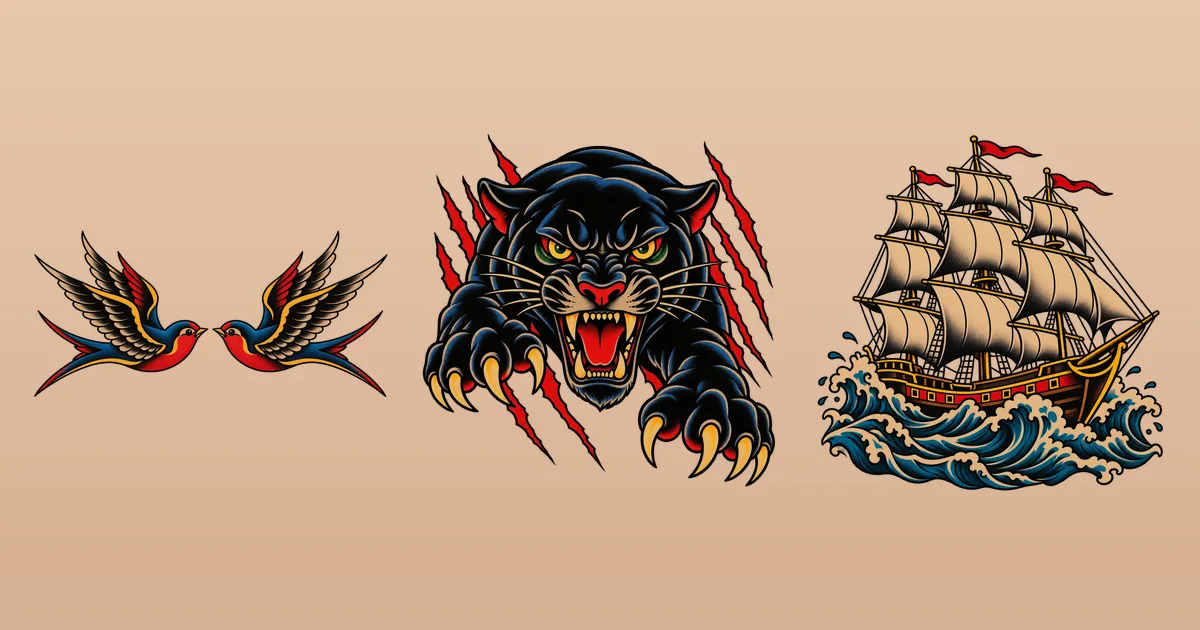
- Swallows: coming home, loyalty, a long journey behind you.
- Panthers: courage with a bit of menace, often clawing through the skin.
- Ships: voyages, adventure, home on the horizon.
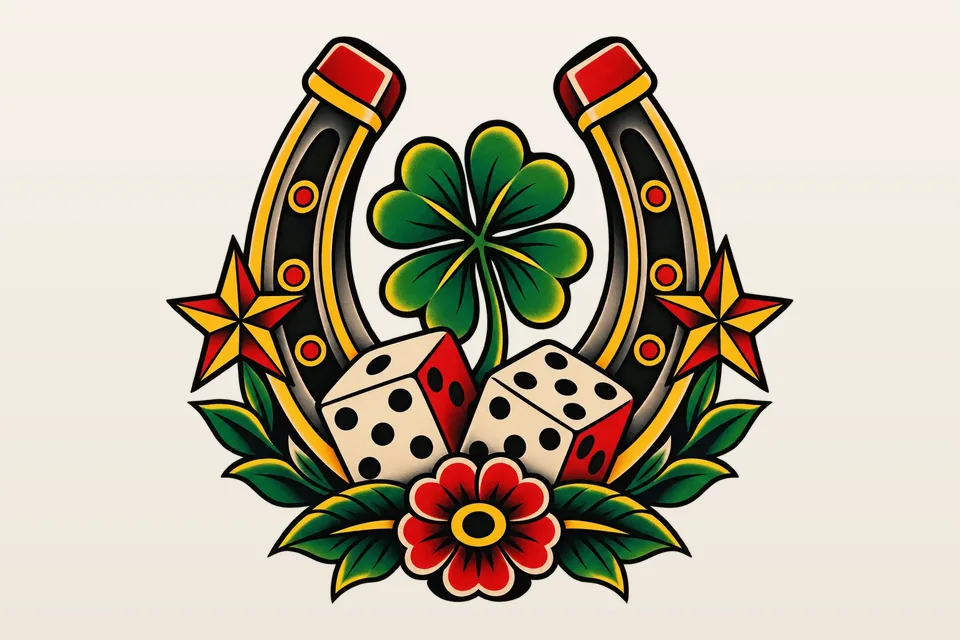
- Horseshoes, dice and clovers: luck, and taking your chances.
- Hearts with banners: love, usually with a name; "Mom" is the classic.
- Roses and daggers, eagles, anchors and skulls: love and loss, freedom, steadiness and mortality.
Pick the image because you love it; the meaning can be your own. Our guide to meaningful tattoos looks at how symbols change from culture to culture.
Trying flash-style designs on your body first
A flash wall works because you see a finished design before you commit. click2ink adds the other half: seeing it on a body. Its library holds 450+ ready-made tattoos drawn especially for click2ink, including traditional pieces like the swallows, panther, ship and horseshoe on this page, and putting any of them on the 3D figure costs nothing. Resize it in real centimeters, turn the figure, try the forearm and then the calf.
Want something no wall has? Choose American traditional as the style and describe it, for example a swallow carrying a banner that reads "home", bold black outline, red, green and yellow, solid black shading, for the chest, and the AI artist draws an original. Print the stencil at its true size or share a 3D link. If the artist you love works mostly from their own flash, respect that and bring the design as a conversation starter. For more subjects, browse tattoo designs or small tattoos, and see the features page for how the library works.
Flash etiquette, from both sides of the counter
- Flash belongs to its artist. Don't take one artist's flash to another to copy. Many artists sell copyrighted prints of their work, and the designs on their wall are the ones they've chosen to tattoo.
- Ask before you change it. Swapping red for blue or putting a name in the banner is usually fine. Redrawing half of it turns flash into custom work, priced like it.
- Claim it the way they ask. Online, flash is often claimed by message, and many artists take a deposit to hold a design. Read their booking rules first.
- Trust the size. Flash is drawn for a size. Shrinking a detailed panther to fit a wrist loses the very things you liked about it.
Questions about tattoo flash
Why do so many flash designs share the same subjects?
Partly history: shops bought, sold and traded sheets for generations, so swallows, panthers, roses and ships passed from wall to wall and were redrawn by each new artist. And partly craft: those subjects read clearly with bold outlines and a few colors, at sizes that fit a forearm or a calf. Every artist still draws them their own way.
Can I change a flash design?
Usually a little. Most artists are happy to swap a color, add a name to a banner or adjust the size within reason. Bigger changes, like a different animal or a new composition, turn it into a custom piece with custom pricing. Ask politely, and accept a no; some artists keep their flash exactly as drawn.
Can someone else get the same flash tattoo?
If the design is repeatable, yes, and that's part of flash's charm: it connects you to everyone else wearing that swallow. If you want to be the only one, look for one-off flash, which the artist tattoos once and then retires. When a sheet isn't marked either way, ask before you book.
What is a flash day?
An event where a shop tattoos designs from a set sheet, often walk-in, first come, first served, at fixed prices. Friday the 13th is a well-known date for them, but shops also hold flash days for anniversaries, holidays and charity. Expect a queue, bring ID, and pick two favorites in case your first choice is taken.
What does "wanna-do" mean on a flash sheet?
A wanna-do is a design the artist especially wants to tattoo, often something outside their usual requests. Artists sometimes offer them at a friendly price or with more freedom on placement, because they're excited to make it. If a wanna-do catches your eye, that's a good sign: you and the artist want the same tattoo.
Can I take another artist's flash to my tattoo artist?
It's considered poor form. Flash is an artist's own work, often sold as copyrighted prints, and most tattooers won't copy a colleague's design. If you love someone's flash, get it from them. If they're out of reach, ask your artist to draw something original in the same spirit.
Is a flash tattoo the same as a metallic temporary tattoo?
No. "Flash tattoos" is also a name used for the metallic, jewelry-like temporary tattoos that stick on and wear off within days. Tattoo flash means permanent designs drawn in advance by tattoo artists. If you once had gold chains on your wrist that were gone by the weekend, that was the sticker kind.
Is flash always American traditional?
No. Traditional is the classic look because it grew up alongside flash, but artists post flash in fine line, blackwork, neo-traditional, Japanese-inspired and almost every other style. What makes a design flash is that it's drawn in advance and offered as it is, not its line weight or palette. Our tattoo styles guide shows those looks side by side.
Where can I find tattoo flash?
On shop walls and in shop binders, on artists' social media, at tattoo conventions and in books that reprint historic sheets. Sailor Jerry's flash has even been shown in museum exhibitions. When you find an artist whose flash you love, follow them; many announce new sheets and flash days ahead of time. To try flash-style designs on a body first, click2ink's library of ready-made tattoos is free to browse.