Maori tattoo: tā moko, kirituhi and the Polynesian tatau around them
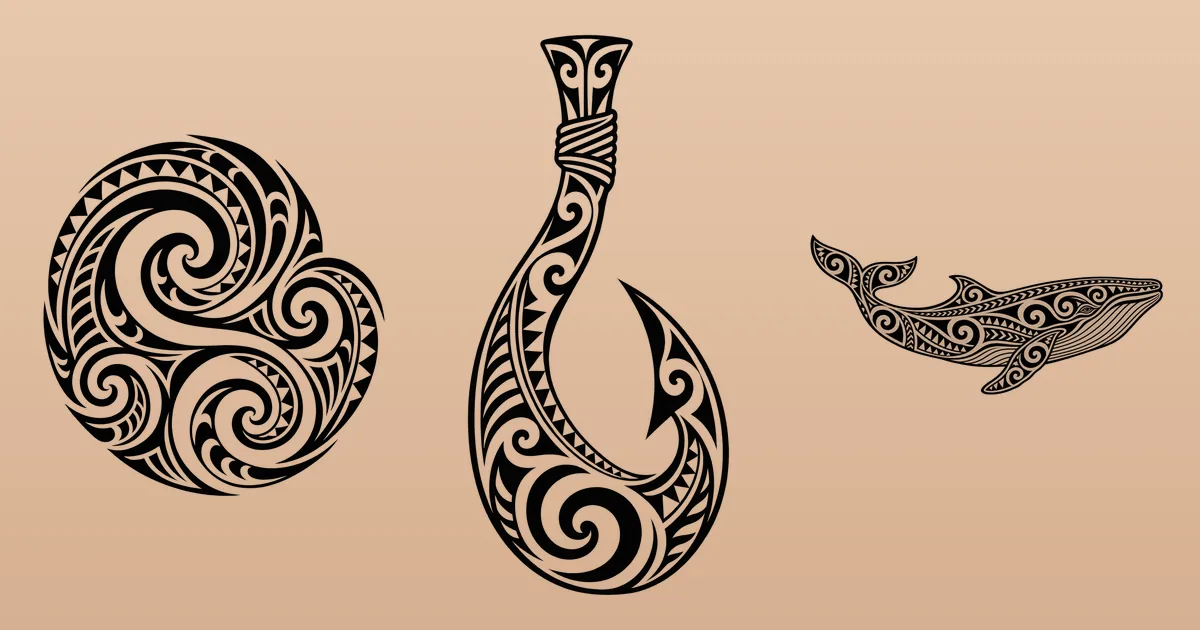
A Maori tattoo, in the full sense, is tā moko: customary Māori marks that speak of the wearer's identity and whakapapa (genealogy), made through a process of consent and knowledge. People who are not Māori can respectfully wear kirituhi, Māori-inspired skin art made outside those protocols. Here is the difference, how both relate to the wider Polynesian tatau, and how to approach an artist.
Tā moko: carved into the skin, not only inked
Māori brought tattooing with them from Eastern Polynesia, where the work was done with combs called uhi, struck into the skin with a mallet. In Aotearoa it developed its own way. As the national museum, Te Papa, explains in its page on tāmoko history, practice and meanings, Māori made narrower uhi without teeth that cut grooves into the skin before the pigment went in, so moko on the face became a form of scarification much like wood carving.
The art has its own origin story. Te Papa tells how Mataora followed his wife Niwareka to the underworld and returned with the knowledge of tā moko; his name means "living face." The motifs form a visual language of identity and role: spirals on the nose, cheeks and jaw, curved lines on the forehead, and other elements chosen to suit each person's features. Men traditionally wore moko on the face, buttocks and thighs; women on the lips and chin, the moko kauae.
The tohunga tā moko, the experts who applied it, were considered tapu, sacred. Colonization and the adoption of Christianity disrupted the practice from the mid-19th century, and Te Papa notes that the last men tattooed in that era died in the 1920s. Since the 1990s tā moko has returned strongly for both men and women, with Sāmoan relatives sharing their knowledge along the way.
Kirituhi: the Maori tattoo made for everyone else
The Te Aka Māori Dictionary defines kirituhi as skin art: non-traditional tattooing that is not done using Māori protocols or imagery. In other words, it can echo the feel of Māori art without reproducing moko or its rituals. The word was promoted by Te Uhi a Mataora, a collective of tā moko artists, as a culturally sensitive answer to the demand for Māori designs. As the tā moko article on Wikipedia summarizes their view, moko involves consents, genealogy and history, while kirituhi is a design with a Māori flavor that anyone can wear.
Views differ. Non-Māori wearing moko has been called cultural appropriation, and opinions about kirituhi vary too. Māori tattoo artist Cody Hollis told 1News he has no problem with non-Māori wearing kirituhi, but that facial moko should be for Māori only. In practice, that means:
- Never wear facial designs, and never copy someone else's moko. A moko belongs to its wearer and their whakapapa.
- Bring your own story: your family, the places that shaped you, the journeys you have made.
- Work with a Māori artist where you can. They can turn that story into kirituhi and tell you what isn't appropriate.
- Expect a conversation before any drawing, and respect a no.
Polynesian tatau: the wider family
Each island group of the Pacific developed its own tattoo language, and the English word tattoo itself is believed to come from the Sāmoan tatau. Sāmoa's tradition is the best documented: the men's pe'a covers the body from the waist to the knees in symmetrical lines, arrows and dots, and the women's malu is lighter, closer to filigree. Both are made by master tattooists, the tufuga ta tatau, with bone combs tapped into the skin, and both are worn with deep pride as a mark of adulthood. Missionaries tried to stamp the pe'a out in the 1830s; it survived.
| Tā moko | Sāmoan tatau | |
|---|---|---|
| Where | Aotearoa New Zealand | Sāmoa and its diaspora |
| Look | Curving spirals and flowing lines | Symmetrical lines, arrows and dots, with large solid areas |
| Classic forms | Moko kanohi (face), moko kauae (women's chin), pūhoro (thighs) | Pe'a for men, malu for women |
| Traditional tools | Uhi combs, then narrow uhi that carved grooves | Bone combs tapped with a mallet |
The traditions are related, but they are not interchangeable. Images labeled "Polynesian" online often blend Sāmoan, Marquesan, Hawaiian and Māori elements into something that belongs to none of them, and Hollis noted that searches for Māori designs often turn up Sāmoan or other Polynesian work. If you are drawn to Tongan, Tahitian, Marquesan or Hawaiian tattooing, look for an artist from that island tradition.
Reading the motifs
When people search for a Maori tattoo, they usually find the same handful of motifs. Here is what each one is, and the associations you will most often hear. Meanings vary between iwi and between artists, so treat this as the start of a conversation, not a dictionary.
| Motif | What it is | Often linked with |
|---|---|---|
| Koru | A spiral like a fern frond unfurling | New life, growth, strength and peace |
| Hei matau | A stylized fish hook | Good luck, safe travel over water, and Māui fishing up the North Island |
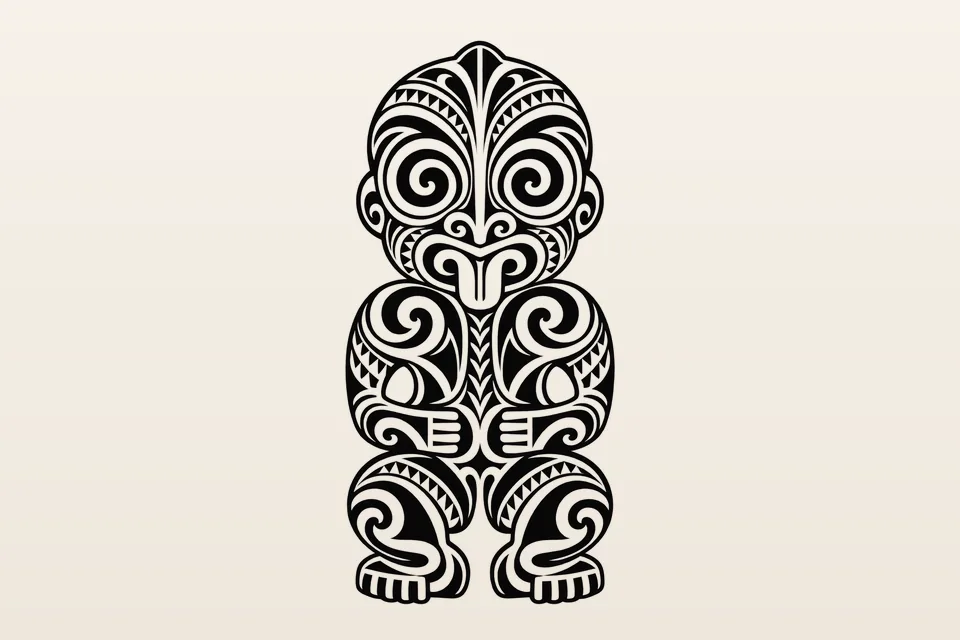
| Hei-tiki | A human figure, traditionally a greenstone pendant | A taonga (treasure), linked with ancestors and fertility |
| Sea creatures | Whales, turtles, rays and sharks in many Pacific designs | Depends on the people and the story; ask |
How to approach a Māori or Pacific artist
- Start with your story, not a motif list. What do you want the piece to hold: children, ancestors, the sea, a move across the world?
- Look for an artist from the tradition, and ask how they work. Many begin with a long conversation before they draw anything.
- Bring references as ideas, never as a design to copy, and expect the artist to draw it themselves.
- Ask what is appropriate for you, from the motifs to the placement, and accept the answer.
- Think about flow. Pacific-inspired designs follow the body, so the shoulder and upper arm, the upper back, the thigh and the calf are natural canvases.
Our guide to meaningful tattoos has more on putting a personal story into a design, and our look at tribal tattoos covers the wider question of borrowing from living traditions.
Where an AI sketch fits, and where it doesn't
An AI cannot know your whakapapa, follow tikanga (customary practice) or stand in for a Māori artist. What it can do is help you think before that first conversation. click2ink has a Polynesian & Maori style, and it draws a new design for each request rather than pulling one from the internet. Describe the story and the shape, for example: "Māori-inspired kirituhi for the left shoulder and upper arm, koru spirals for my two children, a fish hook for my father who fished, bands of pattern following the muscle."
In click2ink the design appears on a 3D figure in your skin tone, at real size, so you can judge the density and the flow on the shoulder before anything is fixed. Then take it to the artist as a starting point. They may redraw it entirely or start over, and that is the point. Our article on AI tattoo designs and tattoo artists covers how to bring a design to a consultation, and how it works shows the studio step by step.
Questions people ask about a Maori tattoo
Is it Maori or Māori?
Māori, with a macron over the a, is the standard spelling in New Zealand: the macron marks a long vowel in te reo Māori. "Maori" is the same word typed without it, which is why so many people search for a Maori tattoo that way. This guide uses the macron except where it quotes that search phrase or a style name.
Can I get a Maori tattoo if I'm not Māori?
You can wear kirituhi, Māori-inspired skin art designed for you, ideally by a Māori artist who knows where the lines are. Tā moko itself, and facial moko above all, is for Māori. Views vary among Māori about how far kirituhi should go, so ask the artist what suits you and accept the answer, even when it's no.
What is the difference between tā moko and kirituhi?
Tā moko is the customary practice: its marks speak of the wearer's identity and genealogy, and it involves consents and knowledge passed through families and experts. Kirituhi means skin art. It can echo the visual feel of Māori design without the protocols of moko or its customary marks, which is why it can be made for anyone.
What is a moko kauae?
Moko kauae is the moko worn by Māori women on the chin and lips. Like men's facial moko, it was disrupted under colonization and has come back strongly in recent decades; politician Nanaia Mahuta, for example, received hers in 2016. It is a Māori practice, so it is not a design for anyone outside the culture to wear.
How is a Māori design different from a Sāmoan one?
Māori work is famous for its curving spirals and flowing lines, and historically it was carved into the skin with narrow chisels. Sāmoan tatau is built from symmetrical lines, arrows and dots, applied with bone combs, in set forms such as the pe'a and the malu. Each has its own names, rules and masters.
What does the koru mean in a tattoo?
The koru is a spiral shaped like a fern frond as it unfurls. In Māori art it is usually linked with new life, growth, strength and peace, and its shape suggests constant movement. It appears in carving and painted patterns as well as in moko. If you want one in a kirituhi design, ask your artist how it would sit with the rest of your story.
Can I copy a Māori design I found online?
Please don't. A photo of a moko shows someone's identity and whakapapa, and it belongs to them. Many images labeled Māori online are also Sāmoan, Marquesan or invented designs. Use pictures only to show an artist what you like, and let them draw something new for you.
Can non-Sāmoans receive a pe'a or a malu?
It is extremely rare. The pe'a and the malu are tied to Sāmoan identity and pride, and earning one is a demanding rite of passage, often with the family present, guided by a tufuga ta tatau. If you are not Sāmoan, a Pacific-inspired design drawn for you by an artist from that tradition is the respectful route.
Do Polynesian tattoo symbols have fixed meanings?
Not really. Lists online give each symbol one meaning, but meanings differ between islands, families and artists, and the same motif can carry a different story depending on where it sits and what surrounds it. Ask your artist what a symbol means in their tradition, and why they would place it where they suggest.