Tribal tattoo: the traditions behind the word, and how to design one well
The most common mistake with a tribal tattoo happens before any ink: treating "tribal" as one style. The word lumps together dozens of living traditions, from Sāmoa and Aotearoa to Borneo, the Philippines and the Arctic, along with the bold, all-black designs Western artists built from them. Knowing which one you mean changes the design, the artist you choose and what you owe the culture behind it.
One word, many traditions
"Tribal" is an outsider's label. The peoples it groups together each have their own word for the practice, their own tools and their own rules about who may wear which mark. A few of them:
- Polynesian tatau, from Sāmoa, Tonga, Tahiti, the Marquesas and Hawaiʻi. The English word "tattoo" comes from it.
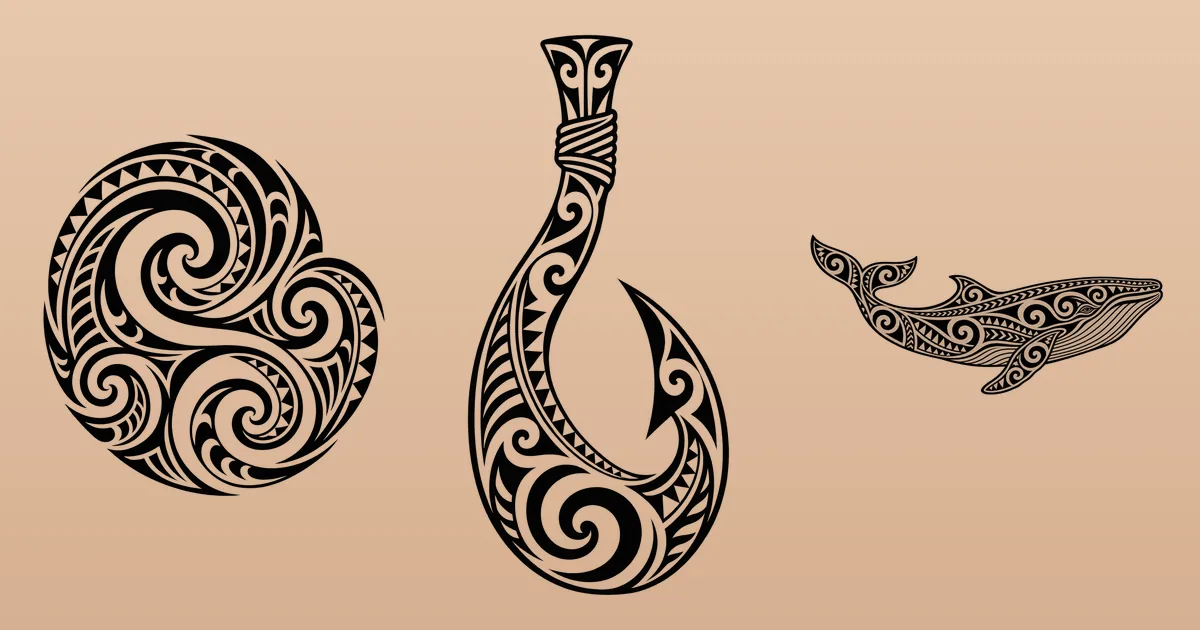
- Māori tā moko in Aotearoa New Zealand, which carries identity and genealogy (our guide to Māori and Polynesian tattooing explains it).
- The tattoo traditions of Borneo's peoples. The Sarawak Tourism Board, for example, describes the Iban bungai terung, an eggplant-flower rosette tattooed on a young man's shoulders as a sign of coming of age, before he set out on bejalai, a journey in search of knowledge and wealth.
- Batok, the hand-tapped tattooing of the Philippines, which marked identity and kinship as well as bravery, beauty and status.
- Inuit kakiniit and tunniit, body and face tattoos that Inuit artists are reviving today.
In many of these traditions a mark was earned or given rather than picked from a wall of flash. It could record a rite of passage, a family line, a deed or a protection. That is why copying a specific traditional design from a photo can mean wearing someone else's story.
Where the modern tribal tattoo came from
The black curves and points most Westerners picture are much newer. The Grand Rapids Art Museum, which gave an exhibition to the work of Leo Zulueta, describes modern tribal tattooing as a trend that took root in the United States in the late 1970s, and calls Zulueta largely responsible for its popularity. An artist of Filipino heritage with roots in Hawaiʻi, he studied the designs of Sāmoa, Micronesia, Borneo, Fiji and the Marquesas and drew his own from them. The museum notes that he made an original design for every client, because he considered it disrespectful to copy traditional designs exactly without a personal connection to the cultures they come from.
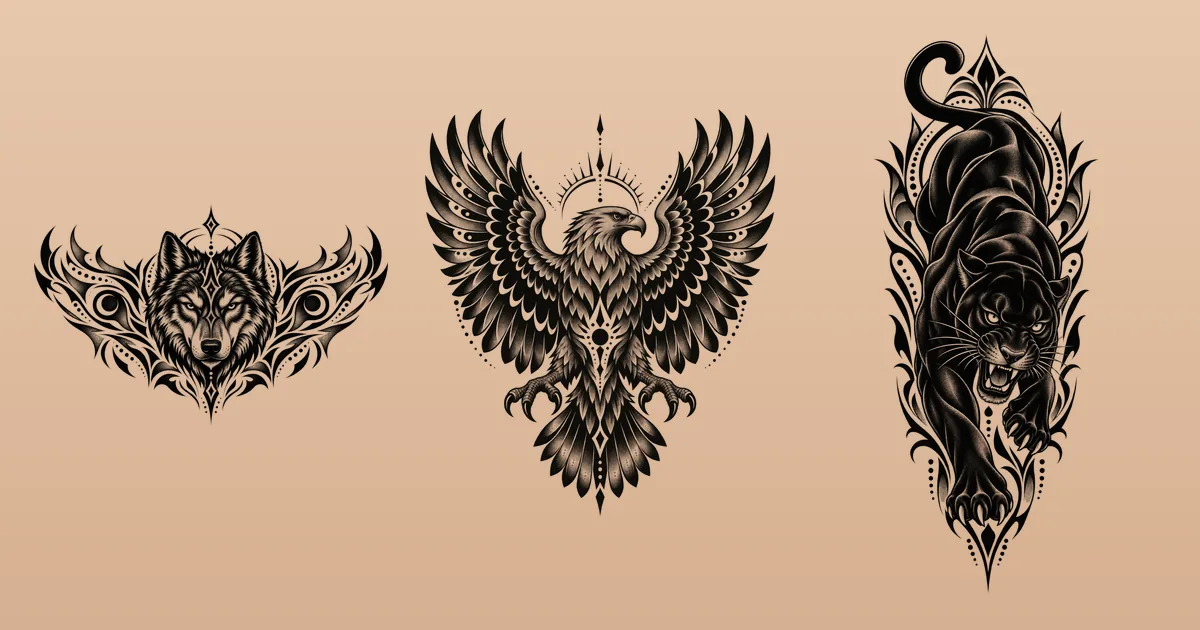
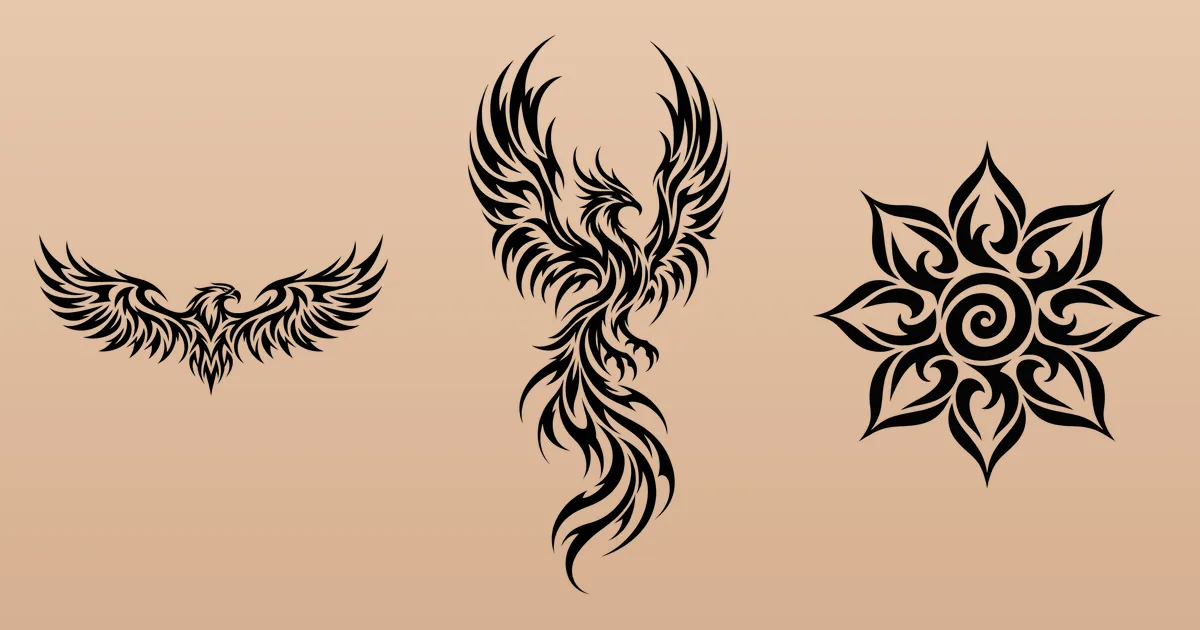
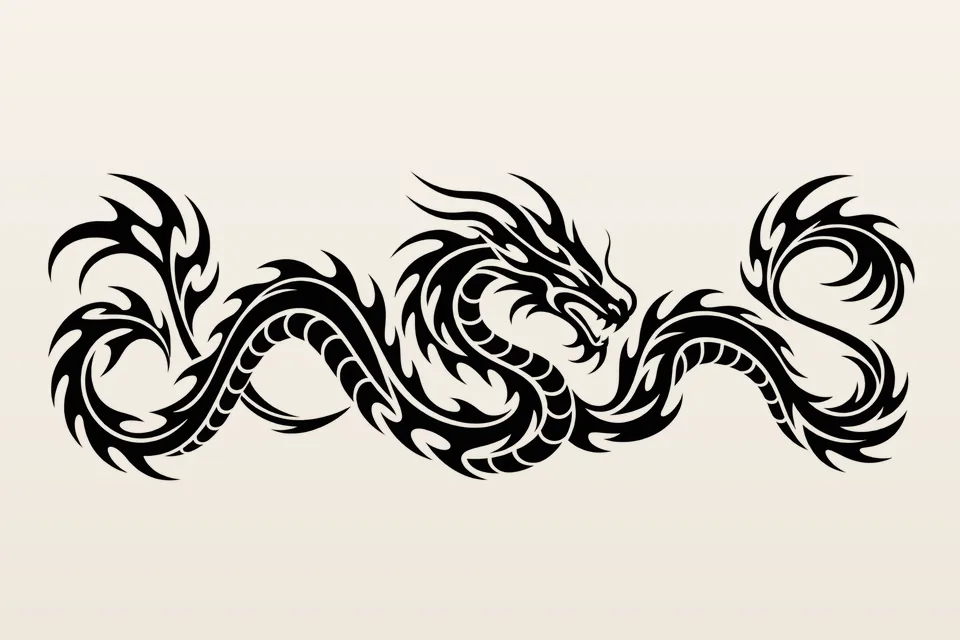
What grew out of that is often called neo-tribal: solid black shapes with no outlines, sweeping curves, sharp tapering points, and bare skin doing half the work. It borrows the look, not any one culture's meanings; its whole point is shape and flow. The eagle, phoenix and dragon pictured on this page are neo-tribal in exactly that sense. The rosette echoes Borneo's flower designs, which is all the more reason to treat a design like it as inspiration rather than a copy of someone's tradition.
How a good tribal tattoo flows
Neo-tribal looks simple, which is why weak versions are everywhere. The strong ones follow a handful of rules:
- Follow the muscle. The main curves should trace the shoulder, the pec, the shoulder blade or the calf, so the piece moves when you do.
- Balance black and skin. The gaps are part of the design. Without breathing room, a tribal piece reads as a blob from across the room.
- Taper with purpose. Points should end where the body ends a line: the collarbone, the elbow, the spine. Dozens of tiny points crowded together tend to blur into each other over the years.
- Stay bold at its size. A sliver of black that looks crisp on a screen needs real width on skin. Scale the piece up or simplify it.
- Choose symmetry on purpose. Chest and upper back pieces usually mirror across the sternum or spine; wraps and shoulder pieces can flow freely.
Then run the squint test: from a few steps away, the silhouette should still be clear.
Where tribal work sits best
Because it lives on flow, tribal work suits places where the body itself curves:
- Shoulder cap onto the chest, the classic: curves wrap the deltoid and sweep across the pec.
- An upper arm band: a repeating pattern that has to close neatly on the inner arm.
- The forearm: long vertical shapes, or a wrap that spirals toward the wrist.
- The upper back: wings or a symmetrical spread across the shoulder blades.
- The calf: tall, flame-like shapes that follow the muscle.
- Ribs and side: long curves running from under the arm toward the hip.
For the trade-offs of each spot, from visibility to how the skin moves, see our guide to tattoo placement.
Wearing a tribal tattoo with respect
Admiring these traditions is not the problem. Taking their marks without asking is. A few habits keep you on the right side of that line:
- Don't copy traditional designs from the internet. A pattern that looks decorative to you may belong to a family, a rank or a rite.
- Let the culture draw its own lines. Among the Butbut Kalinga of the Philippines, for example, the designs given to visitors are distinguished from the culturally significant ones reserved for respected elders.
- If a tradition is your own heritage, look for a practitioner from it. Revivals are often led by community artists; in Kalinga, Apo Whang-od has taught younger tattooists to carry the practice on.
- If it isn't, choose an original neo-tribal design, or ask an artist from that culture what would be appropriate for you.
Drafting a tribal piece on a 3D figure
Flow is hard to judge on a flat screen, so it helps to see the design on a body. In click2ink, choose the tribal style for neo-tribal work (or Polynesian & Maori for Pacific-inspired pieces, after reading up on them), pick the spot, and describe the shapes and where they go: "a tribal piece from the left shoulder cap onto the chest, sharp points following the collarbone, plenty of skin between the shapes."
The design lands on a 3D figure in your skin tone, sized in real centimeters. In the Adjust panel, wrap around the limb curves a band around the arm, mirror flips its direction, and the arms-out view shows whether a wrap closes neatly on the inner arm. If the first version is too busy, the one-tap Simpler change cuts it back. When it looks right, print the stencil at its real size for your artist; the features page shows each tool.
Living with an old tribal tattoo
Plenty of people carry an armband or a lower-back piece they chose years ago. You have more options than you might think:
- Refresh it: re-blacking faded areas and cleaning up blurred points can make an old piece look intentional again.
- Extend it: grow it into a larger blackwork, ornamental or Polynesian-inspired piece so the old shapes become part of something new.
- Cover it: solid black is the hardest thing to cover, so the new design must be darker and larger, and some people lighten the old ink with laser sessions first. Ask a laser professional whether that suits your skin.
Our guide to tattoo cover-up ideas goes deeper. In click2ink you can also photograph the old tattoo and attach it with 📎: the AI lifts it off the skin as a clean design, and you can ask it to build something new around it, such as "turn this armband into a half sleeve with ornamental filigree."
Tribal tattoo FAQ
What does a tribal tattoo mean?
It depends on which kind you mean. In traditional cultures, marks could record identity, family, rank, a rite of passage or protection, and their meaning belongs to that culture's own rules. A neo-tribal design is mostly about shape and flow, so its meaning is whatever you bring to it: a personal symbol hidden in the shapes, or simply a strong design that fits your body.
Is it offensive to get a tribal tattoo?
An original neo-tribal design is a Western style in its own right, drawn for you rather than copied. The problem starts with copying specific traditional designs, or sacred and status marks, from cultures you have no connection to. If you love a particular tradition, talk to an artist from it, and accept the answer if some designs are not for you.
What is the difference between tribal and blackwork?
Blackwork is the wider family: any tattoo built mainly from solid black, from geometric patterns and ornamental designs to heavy illustration. Tribal is one branch of it, defined by flowing curves, tapering points and no outlines. Many modern pieces blend the two, setting tribal-style flow next to dotwork, linework or large blacked-out areas.
Are tribal tattoos out of style?
Trends come and go, and a thin armband from decades ago can look dated now. But bold black work that follows the body never really disappears, and modern tribal looks fresher: more negative space, cleaner points, and blends with ornamental or fine-line elements. Choose it because it suits you and your placement, not because of a trend either way.
Can an old tribal tattoo be covered up?
Often, but solid black limits the options. A cover-up must be darker and usually larger than the original, so many people extend or rework a tribal piece instead of hiding it. Laser sessions can lighten the old ink first; ask a laser professional whether that suits your skin, and bring a clear photo of the old tattoo to your artist.
Does a tribal tattoo have to be symmetrical?
No. Pieces centered on the chest or upper back usually mirror across the middle of the body, because uneven sides read as a mistake there. Shoulder-to-chest pieces, calf designs and forearm wraps can flow freely, as long as their main curves follow the muscle. Decide which you want before the design is drawn.
How do I make a tribal tattoo personal?
Start from your body and your story rather than a picture. Choose a placement, then fold in something of yours: an animal that matters to you, a shape echoing a place, or an initial hidden in the negative space. A design drawn for your shoulder or calf will feel more personal than any pattern copied from a page.
Can I get a tattoo from my own ancestors' tradition?
Many people do, and there are active revivals in places such as the Philippines, the Arctic and the Pacific. Look for a practitioner from that community, ask family or elders what they know, and expect the process to take time. Some designs come with responsibilities, so learn what yours means before it is applied.
How do I size a tribal armband?
Measure the arm where the band will sit, and remember the design must meet itself on the inner arm without an awkward seam. A band too thin for a muscular arm looks like a bracelet, and one too wide can swallow the shoulder. Try it wrapped around a 3D arm first, then let your artist adjust it on your skin.