Watercolor tattoo: soft color that still holds its shape
A watercolor painting glows because the paper shows through the paint. A watercolor tattoo works the same way, except the paper is your skin: soft washes of color, edges that bleed, a splash or two, and plenty of bare skin left untouched. Here is how the style is built, how soft color ages, and how to plan a design that keeps its shape.
What makes a watercolor tattoo look painted
Tate describes watercolour as a semi-transparent paint: the white of the paper gives the washes their glow, and white areas are often simply left unpainted. Painters lay it wet-on-wet, so colors blend softly, or wet-on-dry, for crisper edges. Tattooers borrow those effects:
- Washes: color that fades from saturated to nothing.
- Bleeds: color running past the edge of a shape, as if the paint had spread on damp paper.
- Splatters and drips: small dots and runs that suggest a loaded brush.
- Brushstrokes: broad, loose marks behind or around the subject.
- Open skin: the lightest areas are simply untouched.
That last point matters more than it seems. On skin, the brightest thing available is the skin itself, so watercolor artists use it the way a painter uses paper. click2ink designs follow the same idea: no white ink unless you ask for it, because the highlights are left as bare skin.
Outline or no outline: three ways to build one
The biggest decision in a watercolor tattoo is how much dark structure it has. There are three broad approaches:
| Approach | What it looks like | Trade-off |
|---|---|---|
| Pure watercolor | Color only, no black lines; the most painterly | Relies on color alone to hold its shape |
| Sketch lines | A loose, pencil-like drawing with color washed over and past it | Some structure without heaviness |
| Hybrid | A firm outline or illustrative linework, with washes and splashes around it | Keeps its shape best as the color softens, but looks less like paint |
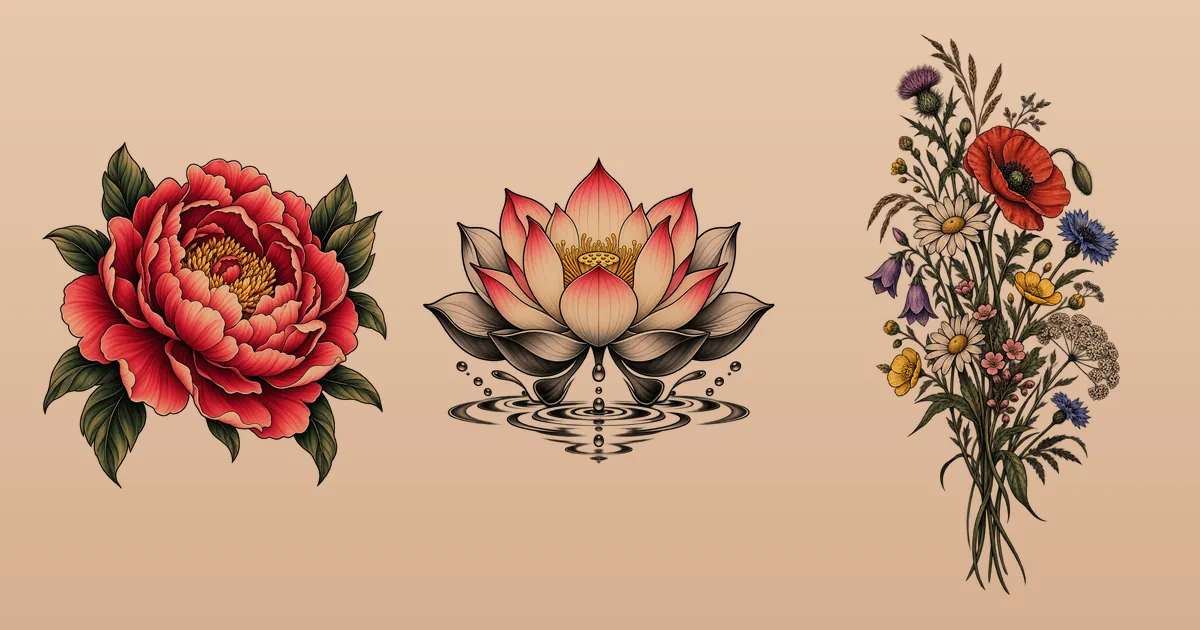
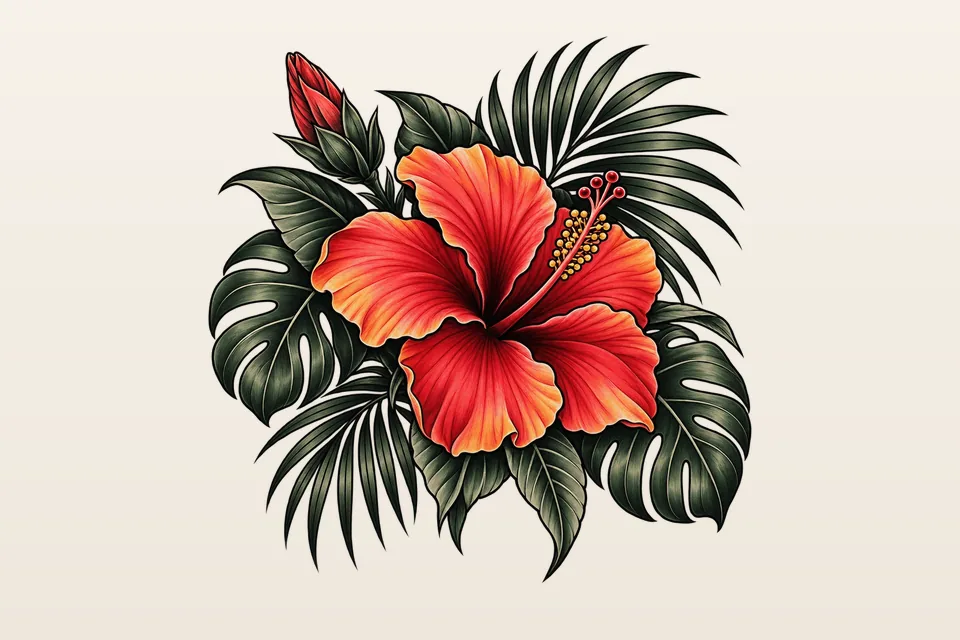
If longevity matters to you, ask for at least some dark structure: a sketch line, a few black accents, or a full outline that the color can drift beyond. You still get the painted feel, and the design has something to hold on to when the softest tints mellow. The flowers at the top of this page sit at the hybrid end of the scale: they are soft color designs from the click2ink library with firm outlines, not true watercolor.
How soft color ages
All tattoos soften over the years. A watercolor tattoo starts with less contrast than most styles, with pale tints, feathered edges and no black to frame them, so a design with no dark structure can look faded or blurry sooner, and its shape can become harder to read. Pale tints are usually the first to mellow, while saturated colors and black stay put longer.
None of that is a reason to avoid the style. It is a reason to plan for it:
- Give the design enough size that the washes have room to fade out gracefully.
- Keep a few deep tones or dark accents somewhere in the piece.
- Ask your artist about touch-ups, since color can often be refreshed later.
- Protect it from the sun once it has healed. The American Academy of Dermatology notes that UV light can fade some tattoo inks and recommends sunscreen on tattooed skin.
For healing and aftercare, follow your tattoo artist's instructions, and see a doctor about any skin concern.
Color, skin tone and placement
Because watercolor depends on skin showing through, your skin tone shapes the palette. On lighter skin, pastels and pale washes read clearly. On deeper skin, very pale tints show less, so artists usually choose richer, more saturated colors and build more contrast into the design. Whatever your tone, ask to see healed watercolor work on skin like yours.
Placement matters too. Washes need open space to fade, so broad, flat areas suit them best: the shoulder blade, the upper back, the outer forearm, the thigh, the ribs and the calf. Hands, fingers and feet rub against everything and tend to wear faster, which is hard on soft color. A tiny watercolor piece also loses the effect, because there is no room for the color to fade out.
Subjects that suit the style
Watercolor suits subjects that are soft or alive by nature:
- Flowers of every kind, from peonies and lotuses to loose wildflower bouquets.
- Birds and feathers, especially hummingbirds and swallows, with color trailing behind them.
- Animals drawn with a few lines and a wash behind them: a fox, a whale, a deer.
- Landscapes such as mountains, waves or a moon over water.
- Abstract brushstrokes behind a word, a date or a small symbol.
It pairs naturally with fine line tattoos: a delicate drawing with a wash behind it is one of the most popular hybrids. For more floral and delicate ideas, see our collection of tattoo designs for women.
Briefing a watercolor design (there is no preset for it)
Watercolor is not one of the 16 preset styles in click2ink, so the words do the work. Pick fine line as a base or let the artist choose, then spell out the effects you want: "a fine line hummingbird with loose watercolor washes of teal and violet spreading past the lines, a few splatters, soft edges, lots of bare skin." If you already have a black design you like, the one-tap Add colour change is a quick way to try color on it, and the library's soft color designs are free to place on the body for comparison, keeping in mind that they are outlined designs, not true watercolor.
On the 3D figure, switch between the six skin tones to see how the palette reads on each, and turn the ink strength down for a rough feel of a lighter, softer version. That is a way to imagine it, not a prediction of how it will heal or age. Then take the design to an artist who specializes in watercolor work, and ask to see their healed pieces. How it works shows the studio step by step.
Watercolor tattoo: quick answers
Do watercolor tattoos fade faster than other tattoos?
They can look faded sooner, mostly because they start with less contrast. Pale tints and soft edges without a dark outline have little to hold their shape as every tattoo softens over the years. Size, placement, sun protection and the artist's skill all make a big difference, and a few dark accents help a lot.
Does a watercolor tattoo need a black outline?
No, but it needs some structure. A pure watercolor piece with no lines is the most painterly and the most dependent on color alone. Sketch lines or a full outline give the design something to hold on to as the color mellows. Many people choose a hybrid: a fine outline with washes drifting beyond it.
Do watercolor tattoos work on darker skin?
Yes, with the right palette. Very pale pastels show less on deeper skin, so artists lean on richer, saturated colors, stronger contrast and sometimes dark linework. The best guide is an artist's healed watercolor work on skin like yours, so ask to see it before you book.
Can a watercolor tattoo be touched up?
Usually, yes. Artists can refresh faded washes, strengthen colors or add dark accents to restore contrast once the tattoo has fully healed. Ask your artist how they handle touch-ups when you book, and wait until they tell you the skin is ready before going back for more color.
Is white ink used in watercolor tattoos?
Sometimes, for small highlights, but many watercolor artists rely on bare skin for the lightest areas instead, the way a painter leaves paper unpainted. That is also how click2ink draws designs: no white ink unless you ask for it, with the highlights left as skin. Ask your artist how they handle highlights in healed work.
Where should a watercolor tattoo go?
Somewhere with room for the washes to spread and fade: the shoulder blade, upper back, outer forearm, thigh, ribs or calf. Areas that rub constantly, like the hands, fingers and feet, are hard on soft color. Very small spots also limit the effect, because the color has nowhere to fade out.
Can I add watercolor to an existing black tattoo?
Often, yes. A wash of color behind a black linework piece, or splashes around a fine line drawing, can refresh an older tattoo and give it a painted feel. Your artist will check whether the existing lines are crisp enough and whether the skin around them can take new color.
Can a watercolor tattoo be covered up later?
Light, soft color is generally easier to cover than solid black, so watercolor pieces leave more options open. The new design still needs to be darker or denser where the old color sits. Bring a clear photo of the existing tattoo to a cover-up artist and ask what would work over it.
How do I keep a watercolor tattoo bright?
Follow your artist's aftercare while it heals. After that, sun protection is the main habit: the American Academy of Dermatology advises protecting tattooed skin from the sun and avoiding tanning beds, which may also fade ink. For any irritation or change in the skin, see a doctor.