Shark tattoo ideas: choosing the species, the pose and the spot
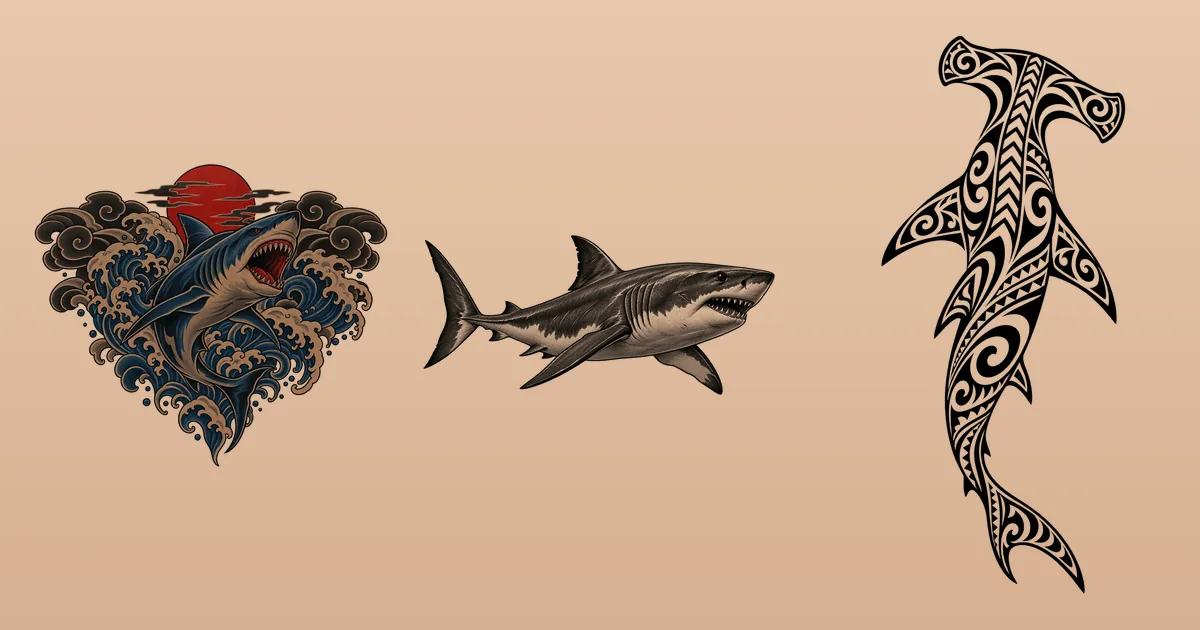
Great white, hammerhead or whale shark? Each gives a shark tattoo a completely different outline on skin: a heavy torpedo, a T-shaped head on a slim body, a spotted giant. Pick the species and its silhouette first, and the style, pose and placement follow from it.
Five species, five shark tattoo shapes
Get the shared features right, a tall first dorsal fin, an asymmetrical tail and gill slits on the side (Wikipedia's shark article gives five to seven on each side), and even a tiny outline reads as a shark, not a dolphin.
Great white
Wikipedia's great white shark page describes a stocky, torpedo-shaped body with a short, cone-shaped snout, dark grey on top and white underneath. That split between dark back and pale belly is a gift in black and grey: shade the top, leave the belly as bare skin.
Hammerhead
The flat, wide head (a "cephalofoil") with an eye at each end makes the hammerhead the one shark nobody mistakes for anything else. Seen from above it becomes a strong symmetrical shape: a T on top of a long tapering body, ideal for a spine, a sternum or a forearm running wrist to elbow.
Tiger shark
Named, according to Wikipedia's tiger shark article, for the dark stripes down its body, which fade as it matures. Those stripes are built-in pattern: bold bars in traditional, soft bands in realism.
Whale shark
The largest known living fish, with a broad, flattened head, a wide mouth at the front and pale spots and stripes over dark skin, per the whale shark page. The spots read beautifully in dotwork, and the gentle shape suits anyone who wants a shark without teeth.
Mako
Slim and streamlined with a pointed snout and a metallic blue back over a white belly, as the shortfin mako article describes it. It's the shark for speed: draw it at an angle, mid-turn, or breaking the surface.
What a shark tattoo can mean
There's no fixed meaning. People often read a shark as strength, fearlessness, survival or staying in motion; some surfers, divers and people who grew up by the sea wear one simply because sharks belong to their world. Some pick the hammerhead for its odd, unmistakable look and nothing more. These are readings, not rules.
Some cultures give sharks a specific place. The hammerhead article notes that in Hawaiian tradition sharks are seen as sea gods and protectors, with the hammerhead (mano kihikihi) among the most respected, and that for Torres Strait Islanders it is a common family totem. If a design draws on a particular culture's art, learn what it carries there and, ideally, work with an artist from that tradition.
Styles, from flash to Polynesian
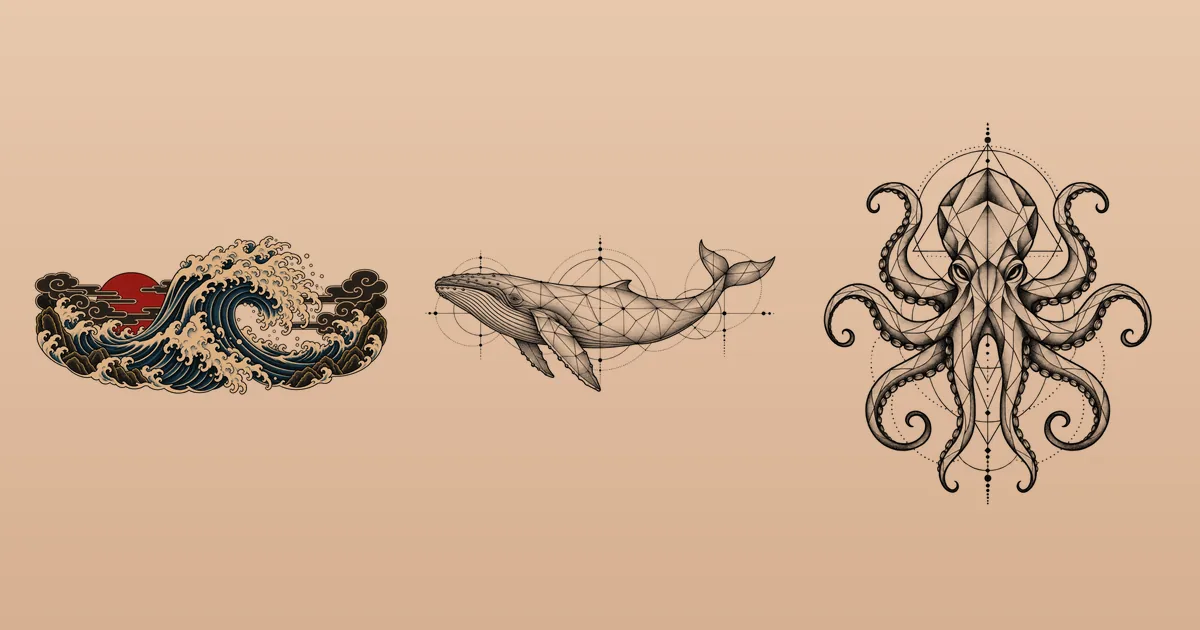
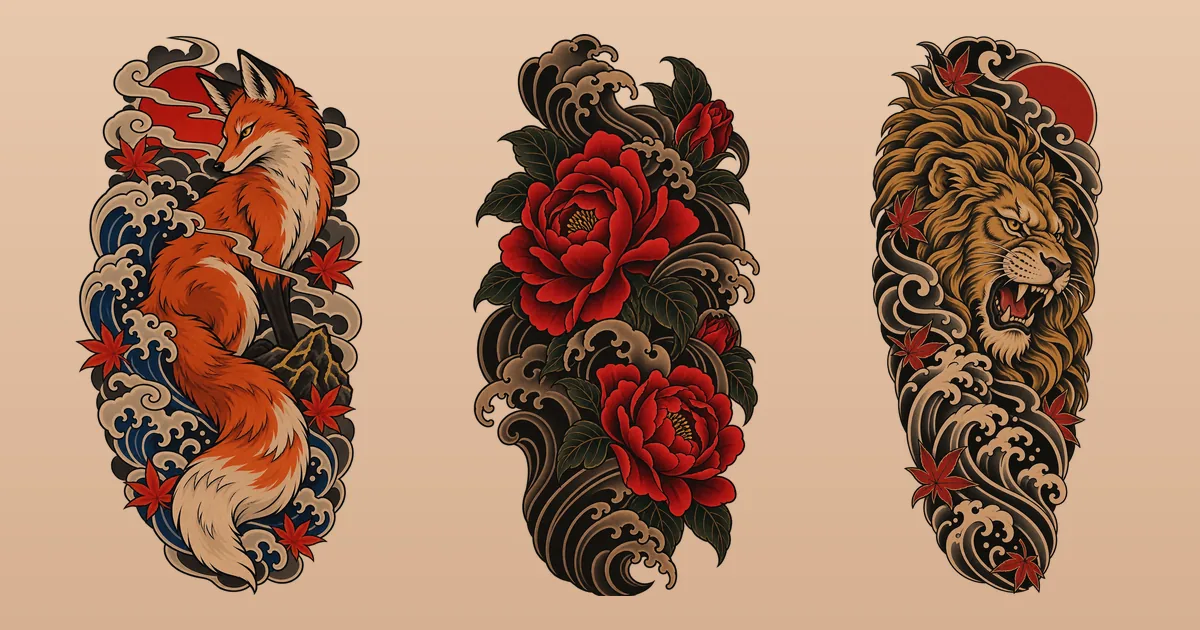
- Japanese: a shark bursting through dark waves before a red sun, as in the picture at the top. The background makes it a wide piece; see our Japanese tattoo guide.
- American traditional: a bold outline, a few flat colors (grey-blue, red for the mouth, yellow for the eye) and a heavy black shadow under the belly. It holds up small. See the traditional tattoo guide for the style's roots.
- Black and grey realism: no hard outline, smooth gradients, scars and texture on the skin. Needs palm size or more to stay readable; the realism tattoo guide explains why.
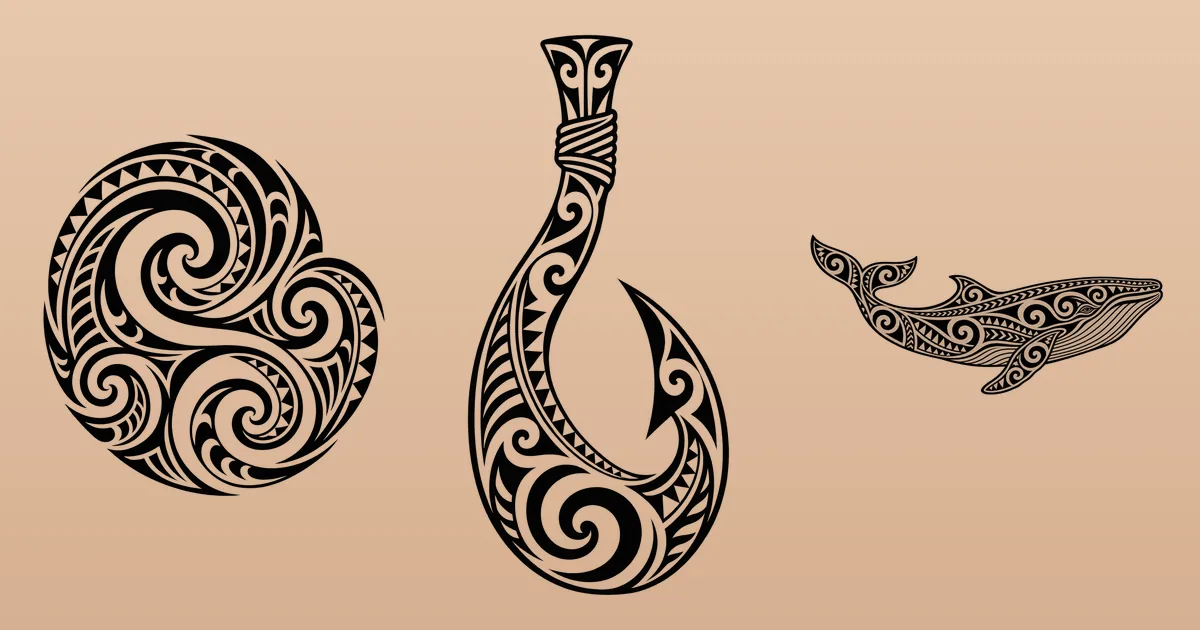
- Polynesian style: a hammerhead or a shark seen from above, its body filled with patterns, as in the third design above. Polynesian and Maori art carry genealogy and identity; a design in that style for someone outside the culture is a matter of respect, so read our Maori tattoo guide and look for an artist from the tradition. For bold black shapes in the modern tribal style, see the tribal animal tattoo guide.
- Fine line and minimal: a single unbroken line from snout to tail, or a dorsal fin cutting a wavy line. Keep it a little larger than feels necessary; the fine line guide explains spacing.
Poses and composition
Side-on
The classic profile shows every part and lies naturally along a long limb. It's the clearest pose at small and medium sizes.
From above
Seen from the top, a shark becomes symmetrical: head, two pectoral fins, a long body and the tail. It's the natural view for a hammerhead and for patterned styles, and it lines up with a spine or the center of a chest.
Jaws open toward you
Head-on, mouth wide, rows of teeth. Dramatic but hard: the teeth need space or they merge, so save it for 12 cm and up.
Shark with shadow
A small shark with its cast shadow on the sand or skin below it, as if the tattoo were floating. The shark is drawn crisp; the shadow is a soft grey shape offset slightly down and to the side. It works from about 5 cm and reads as playful.
Circling and simple outlines
A shark curved into a ring, nose to tail, fits a shoulder cap and can frame a date. A simple outline, just body and fins, suits a tiny piece.
Pairing a shark with other sea life
A second animal or a background turns a shark into a scene. Keep the shark the leader and the rest smaller.
- Waves: the obvious frame, from Japanese breakers to two fine wave lines under a fin.
- Rays: a ray gliding above or below the shark gives a wide shape next to a long one.
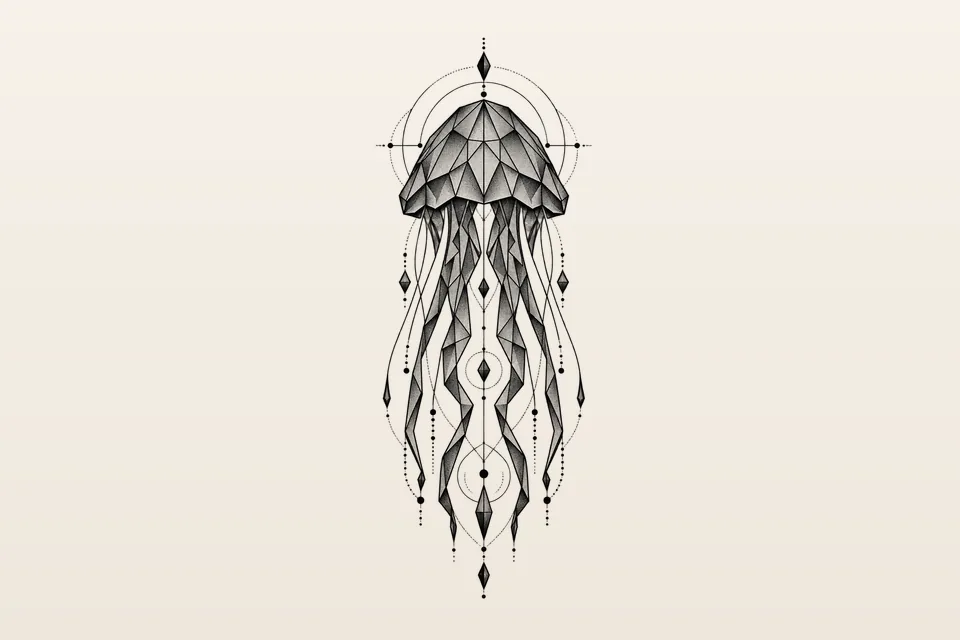
- Jellyfish: soft trailing tentacles against a hard, fast body.
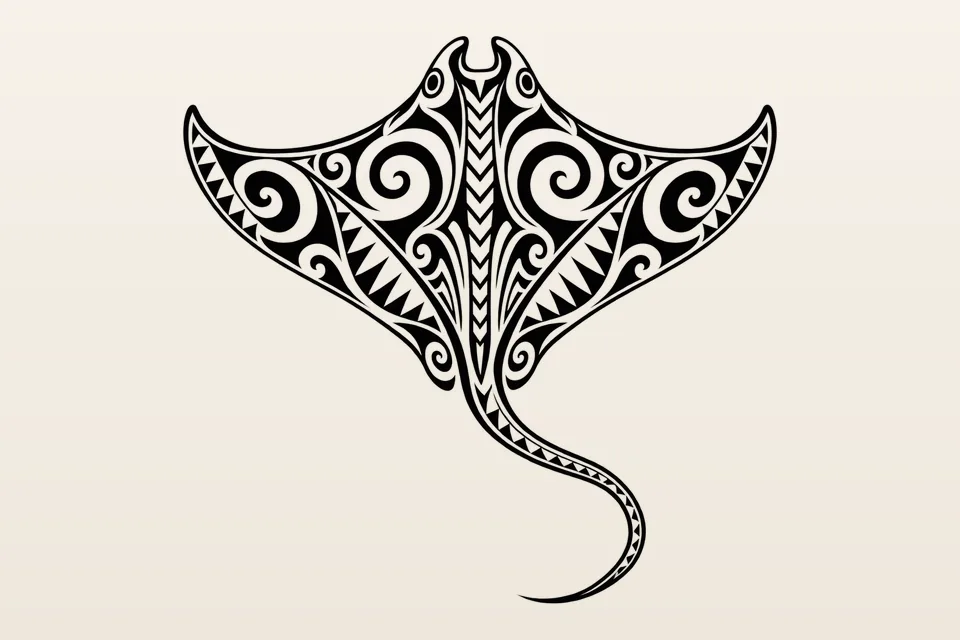
Shark teeth themselves are a pattern too: a row of triangles as a band around the arm, explained in our armband tattoo guide. For a whole sea, whales, turtles and an ocean sleeve, see the ocean tattoo guide.
Placement and size for a long body
A shark is long and narrow, so it suits the places that are too: let the body follow the length of the limb or torso.
| Spot | What fits | General starting size |
|---|---|---|
| Forearm | A side-on shark or a hammerhead from above, nose toward the wrist or elbow | 10 to 18 cm |
| Calf or shin | Side-on, swimming up the leg | 12 to 20 cm |
| Ribs | A shark diving down the side, or curving with the ribs | 15 to 25 cm |
| Upper back or full back | A Japanese shark in waves, several sharks circling | 25 cm and up |
| Wrist, ankle, behind the ear | A fin, an outline, a shark with shadow | 3 to 6 cm |
The rib tattoo guide covers placing a design on the side and what to expect there, and the back tattoo guide covers big scenes. For tiny pieces, see our small tattoos guide. These sizes are starting points; your artist sets the real limits.
Briefing your shark design
Name the species, the pose, the style, extras, the size and the spot. For example:
- A great white side-on, jaws slightly open, black and grey realism, dark back and bare-skin belly, 16 cm, along the outer left forearm.
- A hammerhead seen from above, American traditional, grey-blue with a black outline, 10 cm, back of the right calf.
- A small shark with its shadow below it, fine line, soft grey shadow, 5 cm, inside the left ankle.
In click2ink, our own studio, a project's first tattoo starts with four questions: where on the body, the style (Japanese, American traditional, black & grey realism, Polynesian & Maori, fine line and more among the 16), your description and an optional picture. The design lands on a 3D figure sized in real centimeters to your height, so you can drag the shark along your forearm and see where the tail ends. Change one thing at a time ("taller fin, keep the shadow") and print a true-size stencil for your artist. How it works shows the steps, and the animal tattoo guide helps if you're still choosing an animal.
Shark tattoo questions
What does a shark tattoo mean?
It means what you give it. Common readings are strength, confidence, survival and constant movement, and some people wear one for a love of the sea, diving or surfing. Some cultures, including Hawaiian tradition, give sharks a specific spiritual place, so if your design borrows from a culture's art, learn what it means there first.
What does a hammerhead shark tattoo mean?
There's no single meaning. People often choose the hammerhead for its unusual, unmistakable head, or read it as a broad outlook, since its eyes sit at the ends of that wide head. In Hawaiian tradition the hammerhead is described as one of the most respected sharks, and for Torres Strait Islanders it can be a family totem.
What does an American traditional shark tattoo look like?
Thick black outlines, a limited palette (often grey-blue body, red mouth, yellow eye), solid black shading under the belly and a simple, readable side-on pose, sometimes with a wave or a banner. It's built to stay legible small, so it works from around 6 to 10 cm on a forearm, calf or hand.
Is the ribs a good spot for a shark tattoo?
It can be. A shark's long body follows the tall, narrow side of the torso well, diving down or curving with the ribs. Plan the stencil standing in a natural pose, since the skin moves as you breathe, and ask your artist what to expect from the spot.
What is a good shark design for men?
The same as for anyone: pick the species and style you like. Bolder choices, such as a great white with open jaws on the forearm or a Japanese shark in waves across the back, suit people who want impact; a fine-line fin suits people who want something quiet. The shark itself doesn't belong to one group.
What is a small or simple shark tattoo idea?
A single-line shark outline, a dorsal fin cutting through two wave lines, a tiny hammerhead from above, or a shark with its shadow, around 3 to 6 cm. Skip teeth and gill detail at that size; the silhouette carries it. Ankle, wrist and behind the ear suit these.
What does "shark with shadow" mean in a tattoo?
It's a small shark drawn with its cast shadow beneath it, offset slightly, so the shark seems to hover above the skin. The shark is crisp and outlined, the shadow is a soft grey or dotted shape with no outline. It's a simple trick that adds depth without making the piece bigger.
Can I get a funny hammerhead tattoo?
Yes. Cartoon hammerheads holding a hammer, wearing a hard hat or used as a pun on a trade are all fair game. Keep the lines bold and the joke simple, because small comic details are the first to blur. Show your artist a clear sketch so the expression lands.
Should a shark tattoo face up or down the arm?
Either works. Swimming toward the wrist reads as forward motion when your arm hangs down; toward the elbow reads as climbing when you raise it or look down at it. Try the stencil both ways before deciding, or move the design on a 3D figure to compare.