Animal tattoo: how to choose the right animal, and the right spot for it
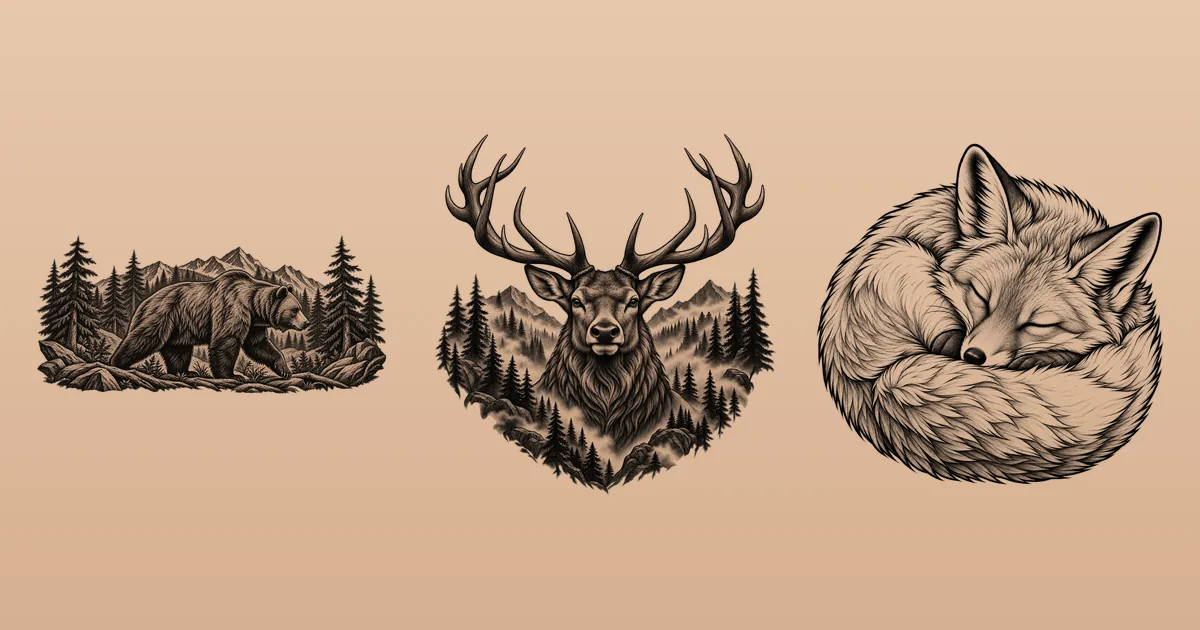
The most common mistake with an animal tattoo isn't the animal. It's a horse squeezed onto a shoulder cap, or a curled-up cat stretched down a forearm until it looks like a ferret. Every animal has a natural shape, and the body has shapes too. Pick the animal for what it means to you, then let its silhouette choose the spot.
Choosing your animal: meaning first, then shape
Start with why: an animal that belonged to you, a trait you want to carry (patience, loyalty, nerve), a place (the deer of a home forest), or simply love of how it looks. All are good reasons. Put yours in one sentence; it will steer the pose and the style.
Then look at the animal's outline, because that is what people see from across a room. Long bodies follow long body parts; compact, rounded ones sit on curves.
| Animal's shape | Examples | Spots that suit it |
|---|---|---|
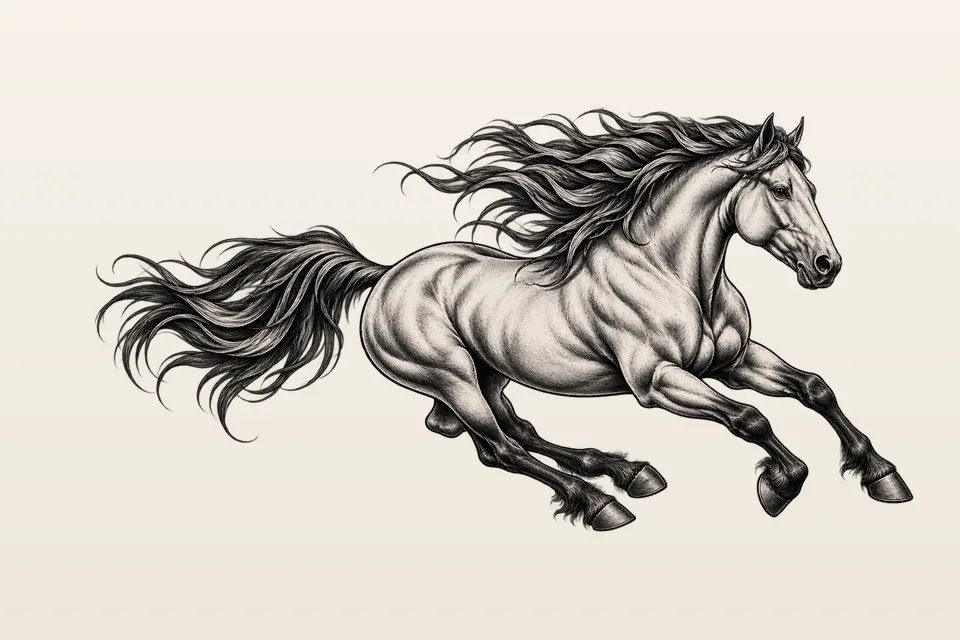
| Long and flowing | Snake, koi, dragon, a leaping horse, a fox with a long tail | Forearm, calf, along the spine, ribs, a full sleeve |
| Tall, head and neck | Stag with antlers, howling wolf, giraffe, heron | Outer forearm, calf, upper arm, thigh |
| Compact and round | Sleeping fox or cat, owl, bear head, turtle | Shoulder cap, back of the calf, chest, shoulder blade |
| Wide | A bear walking, a pack on a ridge, birds in flight, a manta ray | Across the chest or upper back, collarbones, lower back |
| Tiny and simple | Bee, paw print, swallow, small fish | Wrist, ankle, behind the ear, a finger's side |
If the animal doesn't fit the spot, change the pose before the animal: a horse fits a calf if it rears instead of gallops. Our tattoo placement guide covers each body part's trade-offs.
How style changes the same animal
Put one animal through five styles and you get five different tattoos, each with its own minimum size.
- Black and grey realism. Fur and wet eyes from soft shading, no hard outline. A realistic head starts around 12 to 15 cm. See our realism tattoo guide.
- Geometric. Facets and straight lines, often half solid, half open outline. The lines need even spacing to stay apart as the ink settles.
- American traditional. Bold outline, a few solid colors, fur in simple locks. Holds up small; a traditional panther is pure flash. See the traditional tattoo guide.
- Fine line. One thin, even line, little shading: a cat in a single stroke, a tiny bee. Make it slightly bigger than feels necessary.
- Illustrative etching. Crosshatching like an old natural history engraving. Lovely for stags, bears and beetles, at about 10 cm or more.
Animal tattoo ideas by family
Some animals have whole guides of their own. For those, here is a line and a link; for the rest, a few ideas to start from. Meanings below are traditions and popular readings, not rules.
Big cats
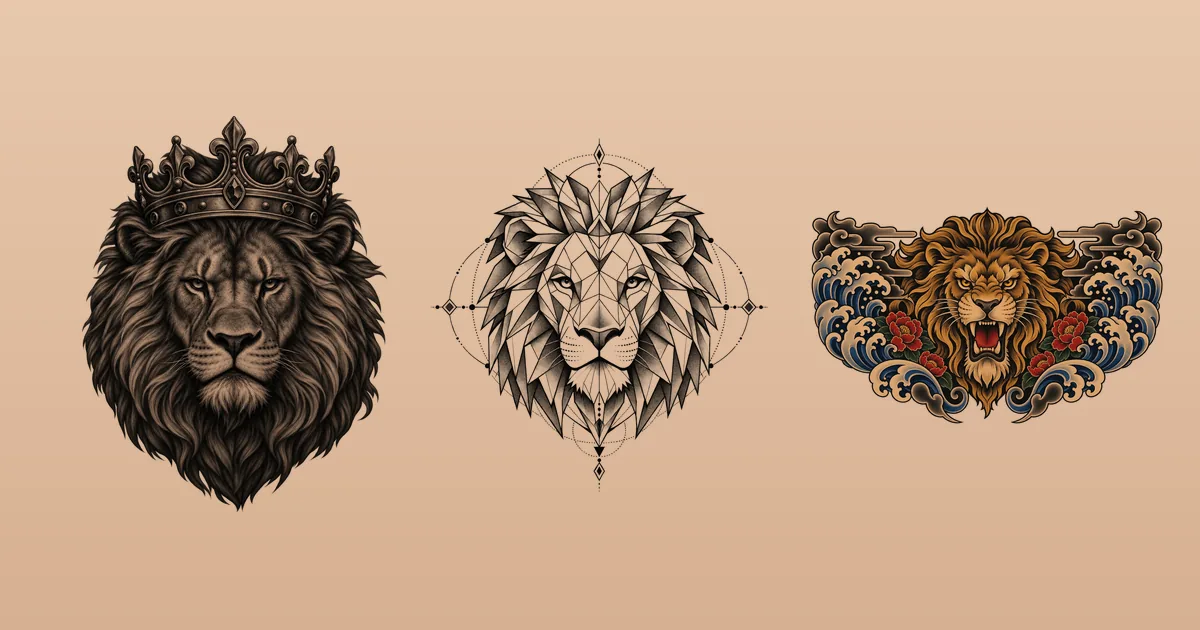
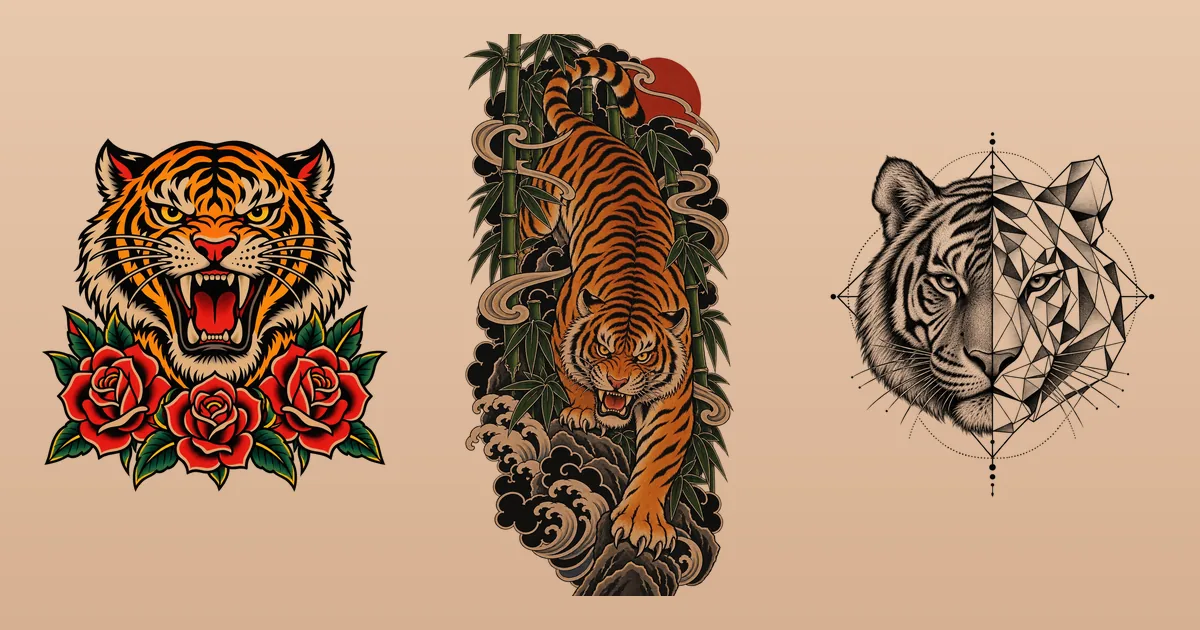
The lion tattoo guide covers manes, crowns and lion families; the tiger tattoo guide covers tigers in Japan, China and Korea. Panthers and leopards are the sleeker option: a crawling panther is a classic of American traditional, and a leopard's spots give realism a pattern to play with.
Wolves, foxes and other canines
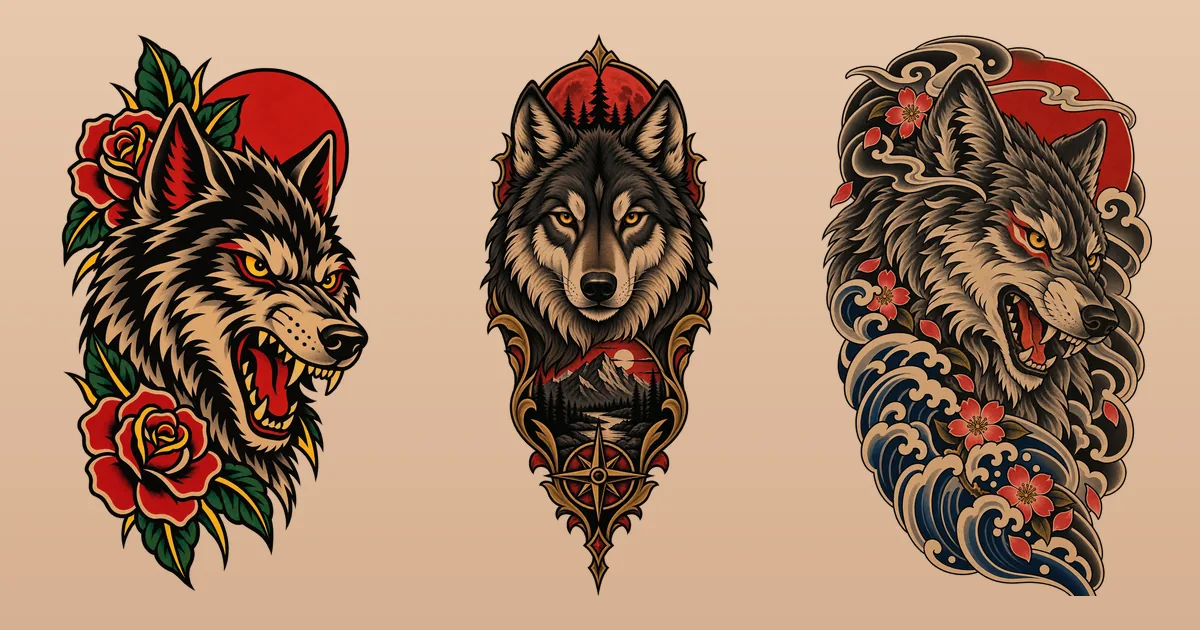
Wolves, packs and the moon have their own wolf tattoo guide. Foxes are lighter and craftier. In Japanese folklore the kitsune was originally a messenger of Inari, the Shinto deity of rice, and could grow as many as nine tails, with more tails for an older, more powerful fox. A fox curled asleep is a perfect round composition.
Bears
Strength and protection are the usual readings. A walking bear past pines and mountains is a wide piece for the upper back; a forward-facing head is compact, for the chest or a shoulder.
Deer and stags
Antlers are the whole design problem. They are shed and regrown each year, and generally only males grow them, except in reindeer and caribou. That yearly regrowth is why many people choose a stag for renewal. A stag head with antlers that branch into tree limbs, or that frame a small landscape, works from about 12 cm on the upper arm or thigh.
Horses
Freedom and movement. A galloping horse is long, a rearing one tall, and a head with the mane blowing back fits the shoulder blade.
Small animals: cats, hares, owls and chameleons
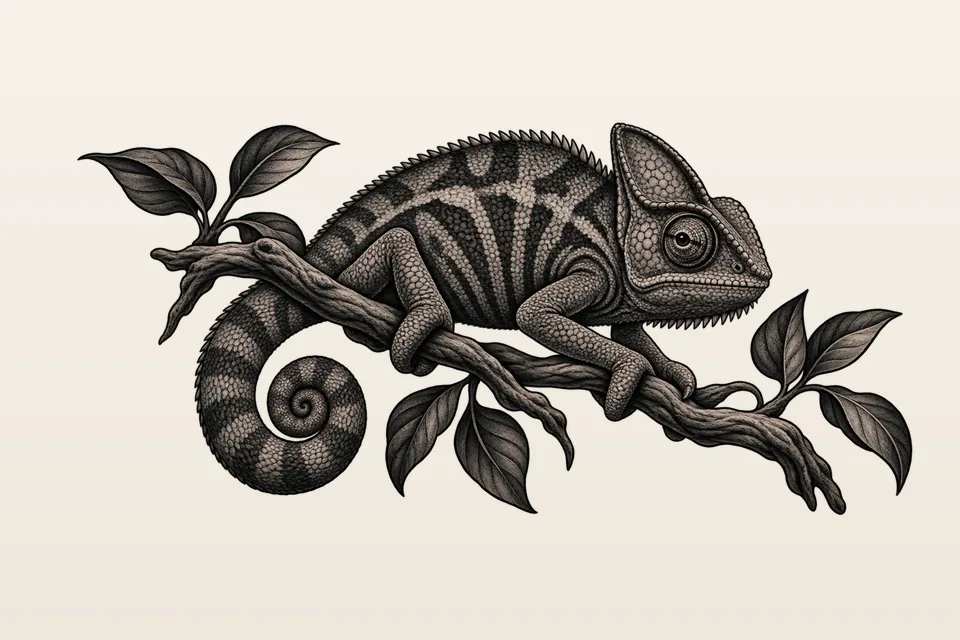
A cat with its tail around its paws, a hare mid-leap, an owl on a branch. The chameleon suits detail lovers: its eyes pivot independently, its tail grips like a fifth limb, and its color change, says Wikipedia's chameleon article, serves social signaling and temperature at least as much as camouflage. People wear one for adaptability.
Sea life
Koi fish tattoos have their own guide. For whales, octopuses, turtles and manta rays, see our new ocean tattoo guide; an octopus is one of the few animals that can fill almost any shape.
Birds
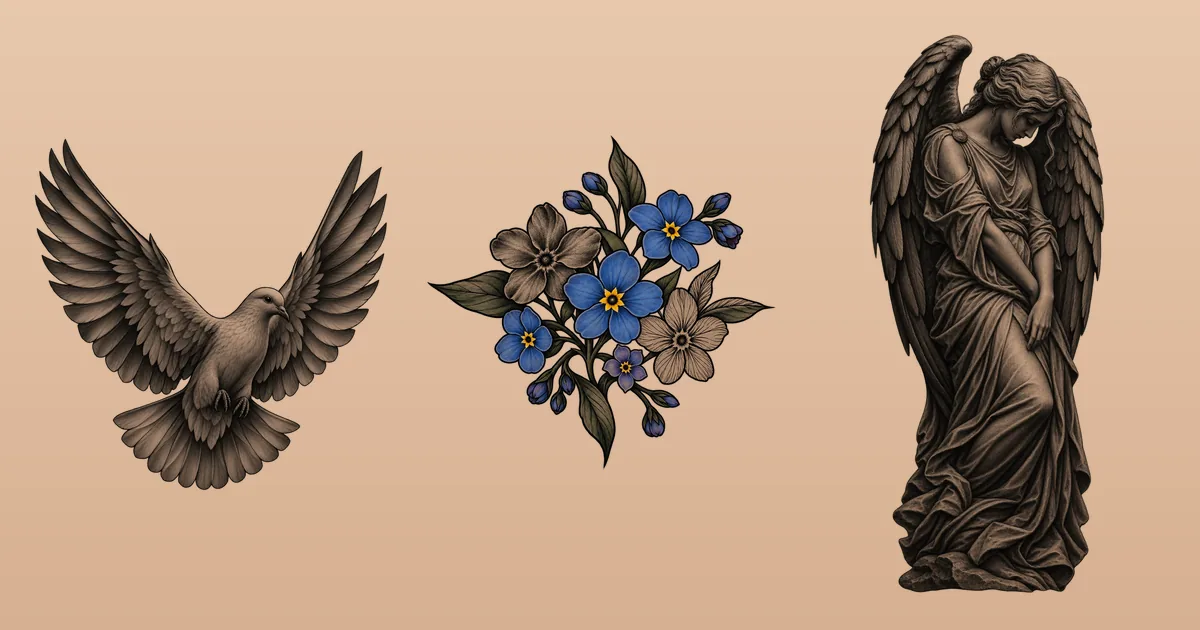
Swallows, eagles, hummingbirds, ravens and cranes are all in the bird tattoo guide, also new today, including how flight and perched poses change the placement.
Insects
Butterfly tattoos have their own page. Moths, bees and beetles make sharp, symmetrical designs for the sternum, the back of the neck or the wrist. The scarab carries an old story: in ancient Egypt it was linked with the god Khepri, who was believed to roll the sun across the sky at daybreak, and the scarab became a symbol of rebirth and regeneration.
Reptiles and mythical animals
The snake tattoo guide covers what snakes mean in different cultures, and the dragon tattoo guide explains why an Eastern dragon is not a western one.
Pet tattoos: paws, names and portraits
Your own animal is a different project from a symbol, because you know exactly what it looks like. Three ways in, from simplest to hardest:
- A paw or nose print. A real print, or a photo of one in mud or snow, kept at true size or a little bigger. Small and unmistakably theirs.
- A name, a date or an outline. The name inside the pet's silhouette, or a single-line drawing of ears and a tail.
- A portrait. A true likeness is a job for a portrait specialist working from your photos. An AI can draw a dog of the same breed and coloring, but not reliably your dog's face.
For a pet you've lost, our guide to memorial tattoos covers handwriting, dates and other quiet ways to remember. In click2ink, you can put your own picture on the body exactly as it is, its background removed, so a scan of a real paw print can be sized and placed on the 3D figure before you see an artist.
How to describe an animal to an AI or an artist
Five details turn "a fox" into a design: the pose, the mood, the angle, the style and the size with the spot. Compare:
| Vague | Clear |
|---|---|
| a bear | a brown bear walking left past three pines and a mountain ridge, calm, side view, illustrative etching, 18 cm wide across the upper back |
| a deer | a stag head in three-quarter view, alert, ears forward, antlers branching into bare winter trees, black and grey, 14 cm, outer thigh |
| a cute cat | a black cat sitting from behind, tail curled into a question mark, fine line with solid black fill, 5 cm, inner ankle |
Name what you don't want too: "no background," "mouth closed," "no color except the eyes." In click2ink, our own studio, a project's first tattoo starts with four questions: where on the body, the style (realism, geometric, American traditional, fine line and etching are among the 16), your description and an optional picture, such as a photo of the animal for the idea. The design lands on a 3D figure sized in real centimeters to your height, so you can see whether a horse really fits the calf. Change one thing at a time ("longer tail, keep the face") and print a true-size stencil for your artist. The how it works page shows each step, and new accounts start with 3 free credits.
Animal tattoo questions
What do animal tattoos mean?
There is no single dictionary. Common readings include loyalty for dogs and wolves, strength for bears and lions, freedom for horses and birds, and renewal for stags and scarabs, but they shift from culture to culture: a fox is a trickster in some stories and a shrine messenger in Japan. Treat any list as a starting point and choose the meaning you want your animal to carry.
How do I choose an animal tattoo with meaning?
Start with something true about you, not a chart: an animal you lived with, one from where you come from, or one whose behavior you admire. Then read about the real animal; facts often make better stories than legends. If you can explain the choice in one sentence, the design will stay yours.
What are good animal tattoos for men?
Anyone can wear any animal, but popular large pieces are lions, wolves, bears, stags and eagles in black and grey realism or etching, on the forearm, chest, upper back or in a sleeve. An American traditional panther is a classic for the arm. Pick the animal first; the style decides how heavy it looks.
What are good animal tattoos for women?
Again, it's personal, not a rule. Popular choices include foxes, cats, deer, hummingbirds, moths and snakes, often in fine line or soft black and grey, on the forearm, ribs, thigh, shoulder blade or ankle. A curled fox or a sitting cat makes a compact piece, while a snake or a fox with a long tail can follow the spine.
What animal tattoos work small?
Animals you can recognize from their outline alone: a cat's silhouette, a swallow, a bee, a whale's tail, a paw print, a fish. Below about 5 cm, skip fur, faces and backgrounds and keep to a clean outline with one or two details. A realistic portrait shrunk to coin size will blur, so simplify the design rather than shrinking it.
Can I combine several animals in one tattoo?
Yes, and it works best with a clear lead. Make one animal the focal point and let the others sit smaller or behind, joined by a shared background such as a forest, waves or a mountain line. Mixing a predator and its prey, or animals from one landscape, tells a story. Keep the style the same for all of them.
How do I plan an animal sleeve?
Choose two or three main animals that share a habitat or a theme, put the largest on the outer upper arm, and fill between them with a background that flows around the arm. Long animals such as snakes or koi can wrap. Our sleeve tattoo guide covers layout, and click2ink can wrap one continuous design all around the arm in 3D.
Where can I get an animal tattoo stencil?
Your tattoo artist makes the final stencil, fitted to your skin and placement. As a starting point, you can design the animal and print it at its size on the body, with a 5 cm check ruler. Our tattoo stencil maker guide explains what artists need.