Traditional tattoo: the American old school style, from sailors to your skin
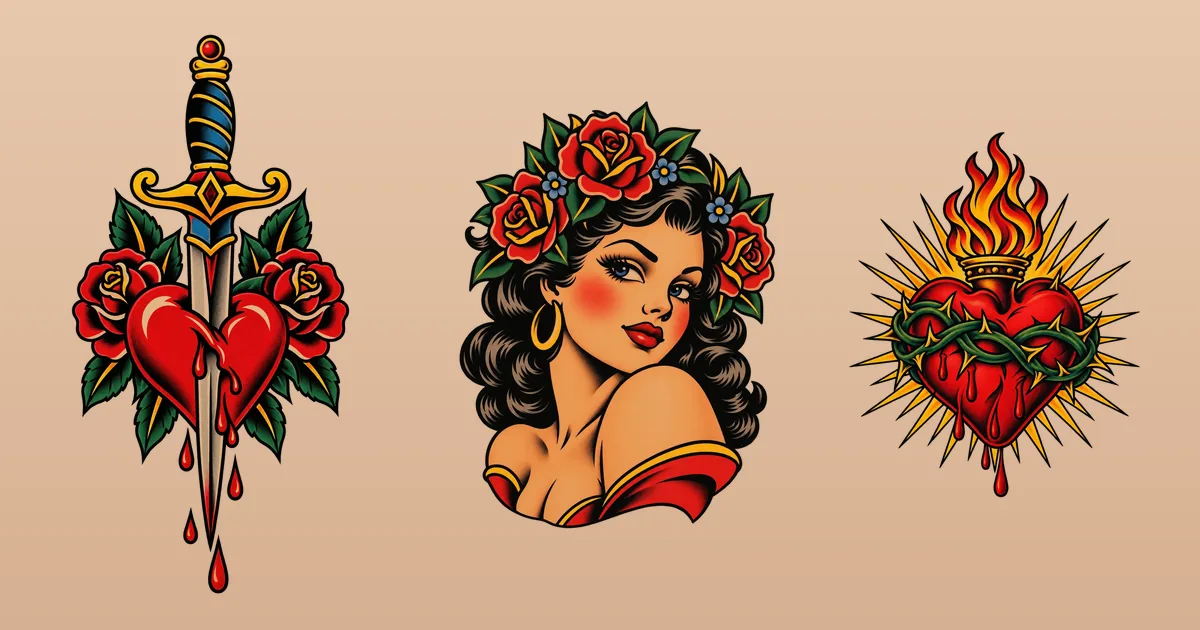
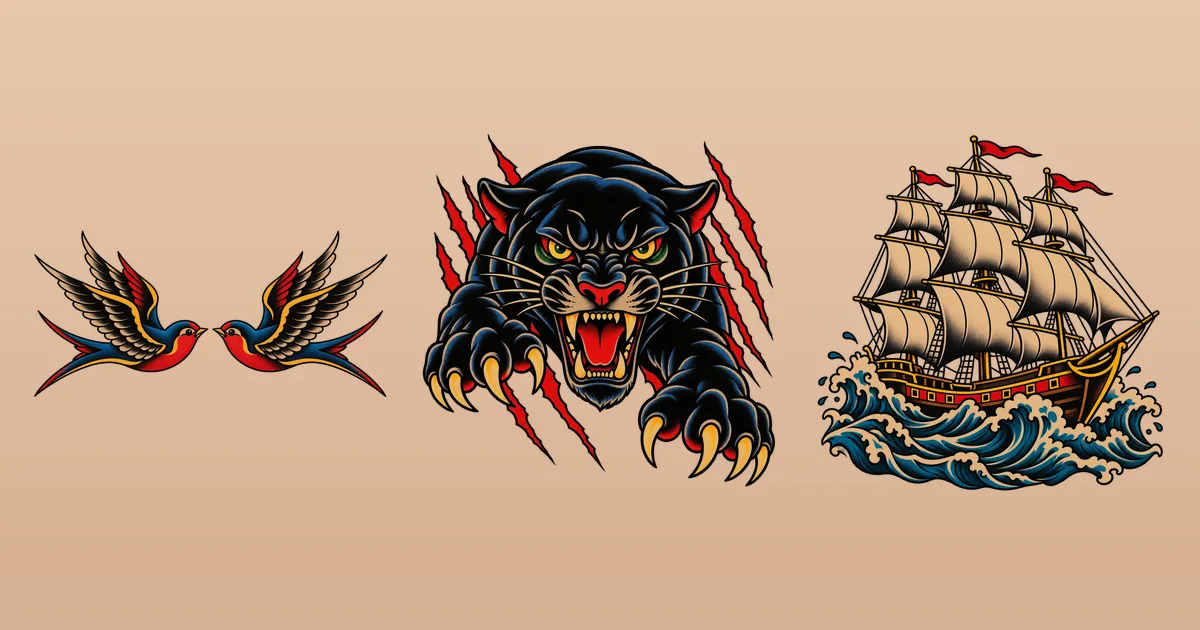
If you want a tattoo that reads from across a street and still looks like itself decades later, a traditional tattoo is hard to beat. American traditional, also called old school, keeps to a few strict rules: heavy black outlines, a handful of saturated colors, solid black shading and subjects simple enough to recognize at a glance.
The rules of American traditional
Wikipedia's article on American traditional sums the style up as bold black outlines and a limited palette of bright, saturated yellow, red and green with black shading, applied so the colors stay clear on the skin over a lifetime. Each rule has a job:
- The heavy outline holds the shape. Ink softens a little in skin over the years. A thick line has room to spare, so the silhouette survives.
- Few colors, packed solid. Flat red, yellow and green read clearly from a distance and don't rely on subtle blends, which are the first thing to soften.
- Black does the shading. Shadows are bold black, often whip-shaded or solid, instead of smooth photographic gradients.
- Bare skin keeps it open. Gaps between shapes stop the design from closing up as it ages.
- The subject reads as a silhouette. A rose, a dagger, an eagle or a swallow is recognizable from its outline alone.
The result looks flat on purpose, a little like a printed badge, and that flatness is the point: every element is big and simple enough to stay legible for decades.
From sailors' arms to street-shop flash
Sailors were tattooing long before the style had a name. Wikipedia's history of the sailor tattoo says European sailors have practiced it since at least the 16th century, and calls the idea that Captain Cook's crew brought it home from Tahiti a myth: Cook brought Europe only the word "tattoo." By the 1920s and 1930s, some American tattooers were drawing and selling pre-drawn flash with black outlines and limited colors, many of them maritime, and that look became known as American traditional, or old school.
World War II added to the vocabulary: many old school motifs, such as eagles, American flags and pin-up girls, come from tattoos popular with service members of that era, and shops displayed the designs out front. The Norwegian-born Amund Dietzel, who began his career as a sailor, became known as the "Master in Milwaukee." In Honolulu, Norman "Sailor Jerry" Collins, who had joined the US Navy at 19, developed his own pigments, was one of the first tattooers to use single-use needles and an autoclave, and reworked older designs with influences from Japanese artists. Later, Don Ed Hardy became a driving force in bringing Japanese tattoo aesthetics and techniques into the style.
Sailor symbols and the stories told about them
Some traditional tattoo motifs came with lore attached, and the sailor tattoo article collects a good deal of it, from tattooers' accounts to old books:
| Motif | What the lore says |
|---|---|
| Swallow or bluebird | The tattooer Doc Webb said a sailor could get a bluebird after 5,000 nautical miles, and a second after 10,000. |
| Anchor | A 1933 book claimed it meant the wearer had made a cruise on the Atlantic. |
| Full-rigged ship | The same book said it meant the sailor had sailed around Cape Horn. |
| Nautical star | Believed to help a sailor find the way back to port; Sailor Jerry popularized a red and black version. |
| Pig and chicken | One on each foot, believed to protect against drowning in a shipwreck. |
| HOLD FAST | Lettered across the knuckles, believed to prevent falls from the masts and rigging. |
| Shellback turtle or King Neptune | Tattooed after the line-crossing ceremony, to mark crossing the equator. |
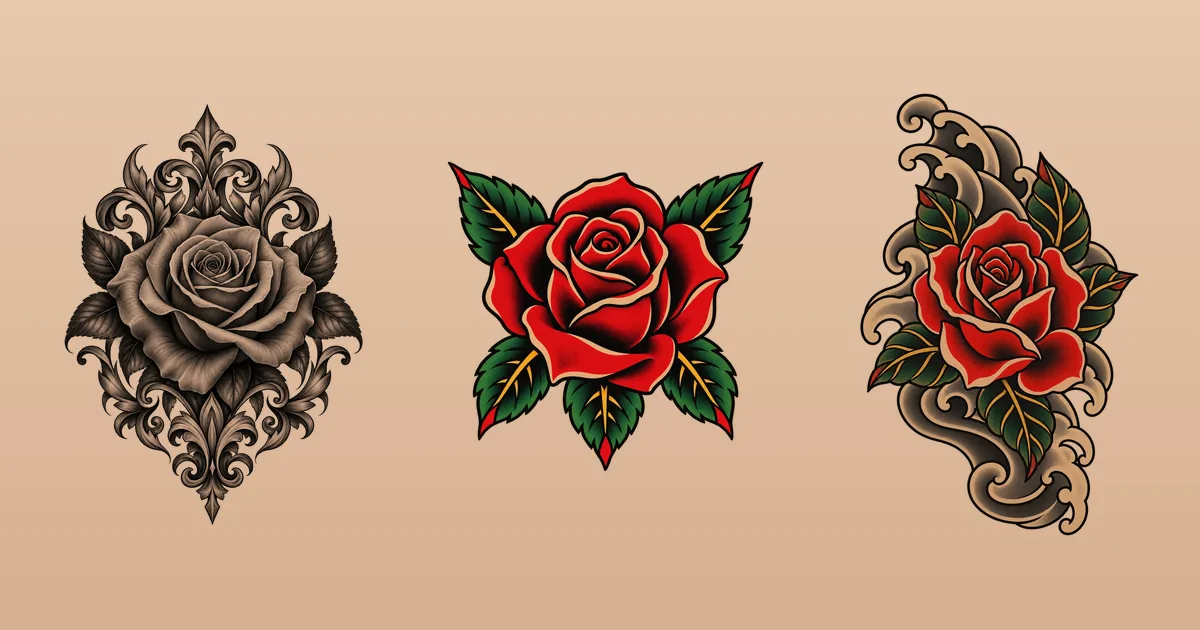
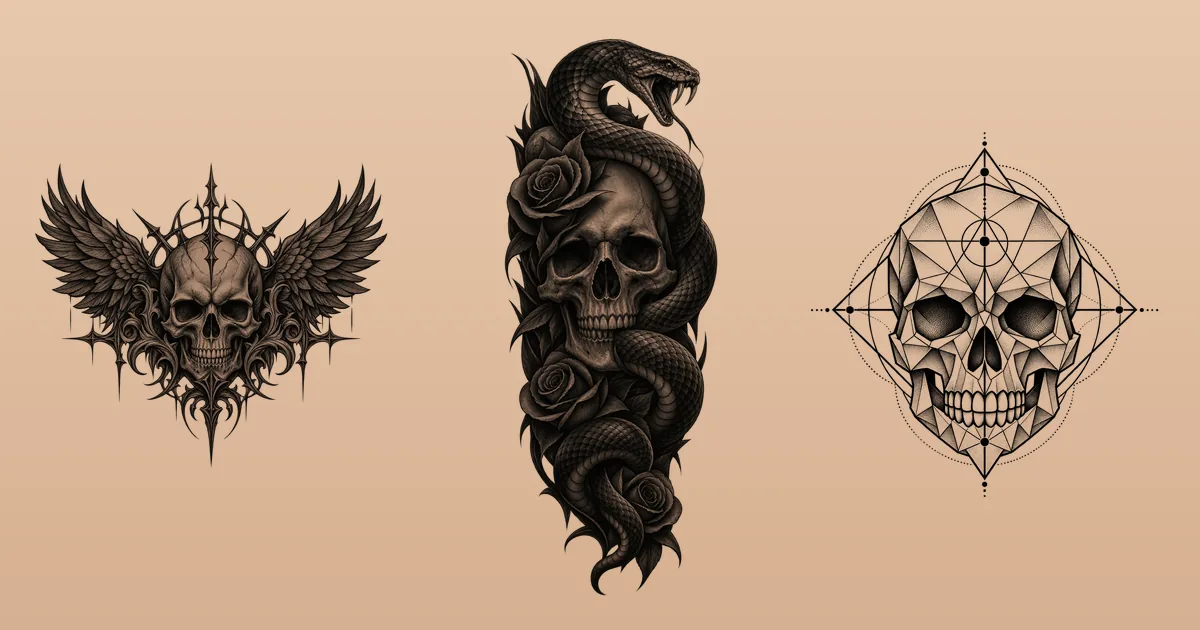
Treat all of this as lore, not rules: some of these stories were published without being checked, and readings varied from place to place. Choose the picture first; you're free to give it your own story. Beyond the sea, the vocabulary runs to roses, daggers, hearts, skulls, snakes, panthers and pin-ups, and our guides to rose tattoos and skull tattoos look at two of them in depth.
Traditional, neo-traditional and other traditions
"Traditional" means different things in different rooms. In many Western shops it means American traditional, but Japanese tattooing, irezumi, is traditional too, with its own history, subjects and full-body compositions; our Japanese tattoo guide covers it. Polynesian tatau and Māori tā moko are living traditions that carry genealogy and identity, and kirituhi is the term for designs made in Māori style for others; see our Polynesian and Māori guide, and look for artists from those cultures. When you ask for "traditional," say which one you mean.
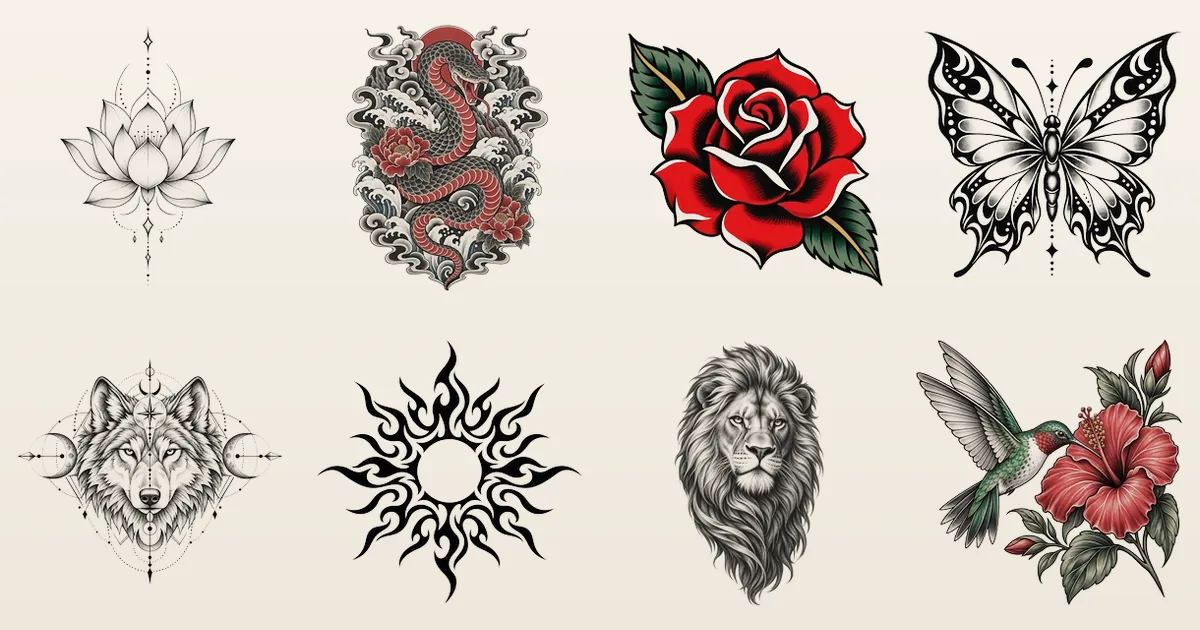
Neo-traditional keeps the heavy outline but adds varied line weights, richer and blended colors, more detail and ornament. New school, the label old school is sometimes contrasted with, pushes shapes and colors further still, often in a cartoon-like way. Our tattoo styles guide shows them side by side.
Planning a traditional tattoo that ages well
- Size it for the outline. Traditional works smaller than most styles because it's so simple, but heavy lines still need space between them. A swallow or a rose at palm size, about 8 to 10 cm, leaves room for every line; shrink it much further and the gaps close up.
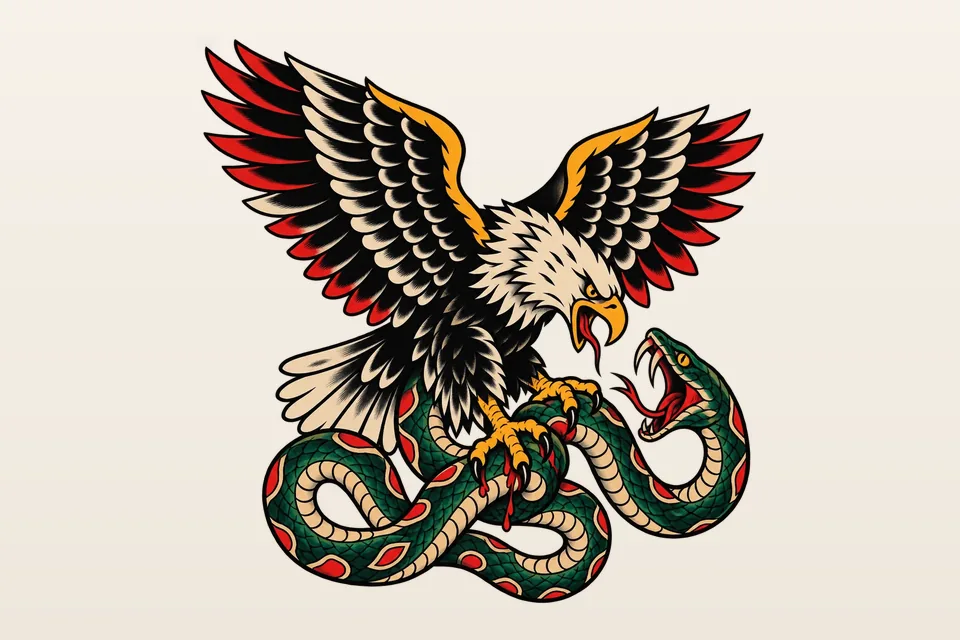
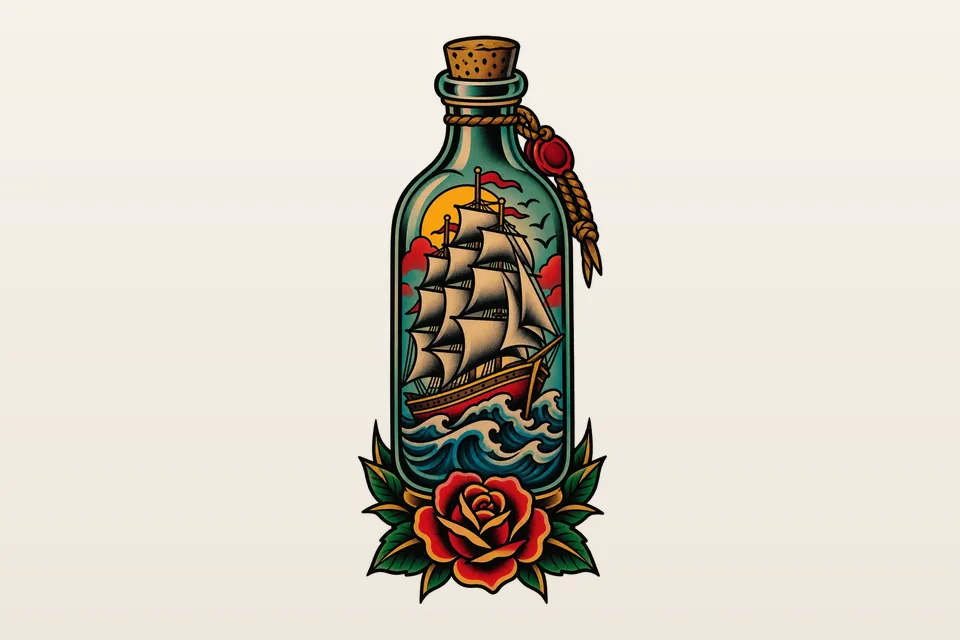
- Use the classic placements. A pair of swallows on the chest, a ship on the forearm, a panther or an eagle on the upper arm, a dagger on the shin, roses on the knees. Each fits the shape of its spot.
- Choose how a sleeve comes together. A traditional sleeve can be a patchwork of separate pieces with bare skin between them, collected over time, or a planned layout whose pieces share a background.
- Get flash from the artist who drew it. Flash is the style's home ground; if a design on an artist's wall is already yours, ask them to tattoo it. Our flash tattoo guide covers the etiquette.
- Look for a specialist. Healed traditional work in a portfolio should show clean, even outlines and solid, saturated color.
Old school, drawn fresh
American traditional is one of the 16 styles you can pick when you start a tattoo in click2ink. Describe it the way a flash painter would plan it: subject, banner text, colors and spot. For example: "a dagger through a red rose with a banner reading EST. 1988, bold black outline, red, green and yellow only, solid black shading, 12 cm tall for the outer forearm." The AI artist draws an original, and it lands on a 3D figure at its real size.
Under the newest design, one tap asks for Simpler, More detail, Black & grey or Another version, a quarter of a credit each, and a written change touches only what you name. The click2ink library of 450+ ready-made designs includes traditional pieces like the dagger heart, the lady head and the sacred heart at the top of this page, free to try on the figure. Print a true-size stencil and bring it to an artist who specializes in traditional work; if they mostly tattoo their own flash, respect that. The features page shows the whole studio.
Old school questions
Is old school the same as American traditional?
Yes, for most purposes. Wikipedia's article on American traditional notes that the style is sometimes called old school and contrasted with new school. Many people say "traditional" on its own for the same thing, though the word can also mean Japanese tattooing or cultural practices such as Polynesian tatau, so be specific when you talk to an artist.
What colors are used in traditional tattoos?
The core palette is bright, saturated red, yellow and green with black shading, and bare skin left open between shapes. Other colors, such as blue, turn up too, but the idea stays the same: a small set of strong colors packed solid, so each one stays clear from a distance and holds up as the years pass.
Why do traditional tattoos have such thick outlines?
Because ink softens a little in skin over the years, and a thick line has room to spare. Fine lines and tight details are the first things to blur, while a bold outline keeps the silhouette readable after decades of sun and stretch. The heavy line also makes the design read from across a room, which is half its charm.
Can a traditional tattoo be black and grey?
Yes. A black-only traditional piece keeps the heavy outline and solid black shading and simply drops the color, which suits a quieter look or an all-black collection. Ask for it from the start rather than leaving the color out of a design drawn for it, so the shading carries the depth. In click2ink, the Black & grey button shows the difference in one tap.
Who was Sailor Jerry?
Norman Keith "Sailor Jerry" Collins (1911–1973) was an American tattoo artist based in Honolulu and one of the best-known names in American traditional. He joined the US Navy at 19, developed his own pigments, was among the first to use single-use needles and an autoclave, and reworked older designs with influences from Japanese artists. His flash has since been shown in museums in Paris and Chicago.
Is it disrespectful to wear sailor symbols if I've never been to sea?
Generally not. These designs left the docks long ago and became the core of a style worn by all kinds of people. A few motifs did once mark a specific feat, such as a turtle for crossing the equator, so if that history matters to you, pick symbols without it, or choose them knowing the story and wear them in that spirit.
What is a traditional tattoo sleeve?
A sleeve in the American traditional style, built either as a patchwork of separate pieces with bare skin between them, collected over time, or as a planned layout whose pieces share a background. Patchwork is a classic look in its own right. Either way, keep the line weight and the palette consistent, so the arm reads as one collection rather than a crowd.
Why do so many traditional tattoos have banners?
A banner gives a name, a word or a date a clear frame, so the lettering stays readable and belongs to the design instead of floating beside it. A heart with a banner reading "Mom" is the classic example, but a banner can hold anything short: a child's name, a place, a year. Keep the text brief, because every letter needs room.
How long does a traditional tattoo last?
For life, like any tattoo, and this style is built to stay readable: the American traditional article notes that its colors are applied so they remain clear on the skin over a person's lifetime. Every tattoo softens a little with sun and age, so sunscreen on healed work helps, and a touch-up years later can bring the colors back up.