Armband tattoo designs: how to plan a band that fits your arm
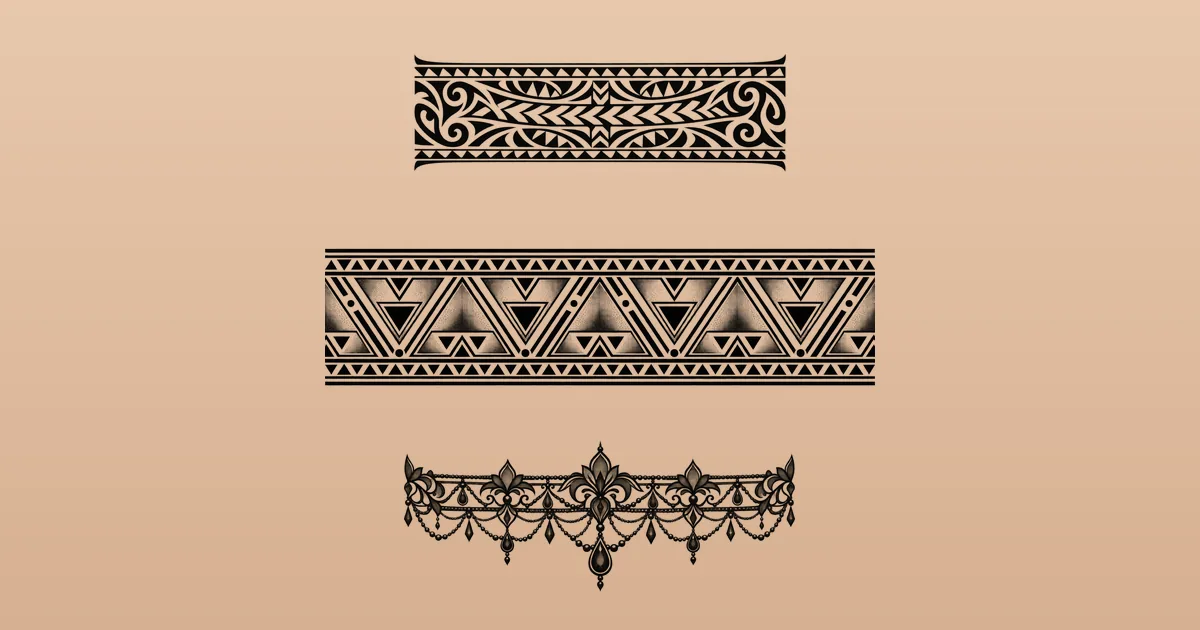
Picture an armband tattoo drawn flat, at a guessed width, then wrapped onto an arm that is wider at the top than the bottom: it ends up crooked. A band is a ring around a tapering, moving cylinder, and it only looks effortless when it's planned that way. Here is how to get the width, the join and the pattern right.
Why a band is harder than it looks
A band is seen from every side, and the eye catches any wobble in a line that should run level. Three things make it tricky:
- The arm tapers. The upper arm is wider near the shoulder than above the elbow, and the forearm narrows toward the wrist. A strip of pattern with parallel edges, wrapped onto a cone, tilts and gapes. The top edge of the stencil needs to be a little longer than the bottom edge.
- The arm isn't round. It's closer to an oval, and it changes shape when you flex.
- Repeats must add up. If a pattern unit is 3 cm long and your arm is 31 cm around, something has to give: the units are resized, one is stretched, or the join hides the leftover.
So good artists measure the arm at that height, draw to the number, and fit the stencil on your skin, adjusting the edges until they sit level.
Width, height and your arm's size
Width (how tall the band is, measured along the arm) changes the whole look more than the pattern does. As a rough way to think about it:
| Band height | How it reads | Suits |
|---|---|---|
| Under 1 cm | A line, graphic and minimal | Single or double plain lines, fine dot rows, small script |
| About 2 to 5 cm | A classic band with room for one repeating motif | Tribal, geometric triangles, waves, a braid, a vine |
| About 6 to 12 cm | A cuff of pattern that covers a real share of the arm | Polynesian-style bands, lace with hanging drops, layered geometric panels |
Scale it to your arm, not to a photo: a 4 cm band looks bold on a slim arm and modest on a muscular one. Taller bands also span more taper, so they need more fitting. Our tattoo size guide compares sizes by spot.
Closed or open, single or double
Closed band
A full ring that meets itself. It reads as one confident line and suits patterns that repeat cleanly. The join is the hard part: ask where your artist plans to put it. The inner arm is the usual place, where it's least seen.
Open band
A band that stops short, ending in points, spirals or a fade. Nothing has to line up, so it's far more forgiving to fit, and the ends become a design feature.
Double and stacked bands
Two plain lines, one thick and one thin, or a patterned band framed by fine lines above and below. Keep a clear gap of skin between them so they don't seem to merge from a few steps away.
Where a band sits
- Upper arm. The classic spot, around the bicep about halfway up or just under the shoulder cap. A band here can later frame the top or bottom of a half sleeve; see our guide to arm tattoos for how the rest of the upper arm is used.
- Forearm. Just below the elbow or a few centimetres above the wrist. Forearm bands are more visible and taper more sharply, which suits thinner bands. The forearm tattoo guide covers the rest of that canvas.
- Calf. A leg band below the knee works like an upper-arm band: plenty of room for a tall Polynesian or geometric pattern.
- Ankle. Small, delicate bands such as an anklet of beads, a vine or a single line.
Pain is personal. Bony, thin-skinned spots such as the ankle are commonly described as more tender, and a band crosses the softer inner skin too. Ask your artist what to expect, and see a doctor first if you have a health or skin condition.
Pattern families for an armband tattoo
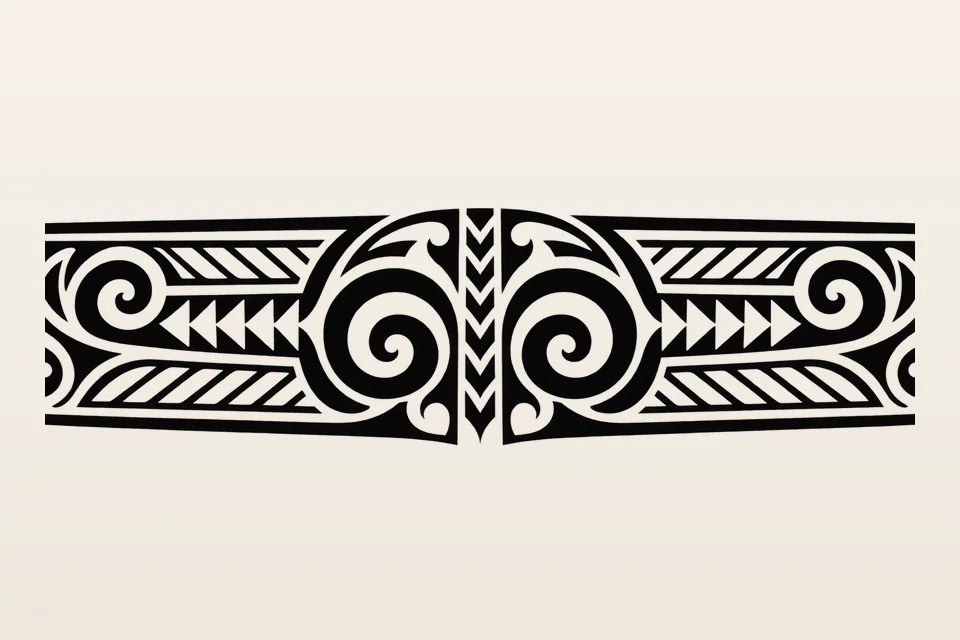
Polynesian and Maori-style bands
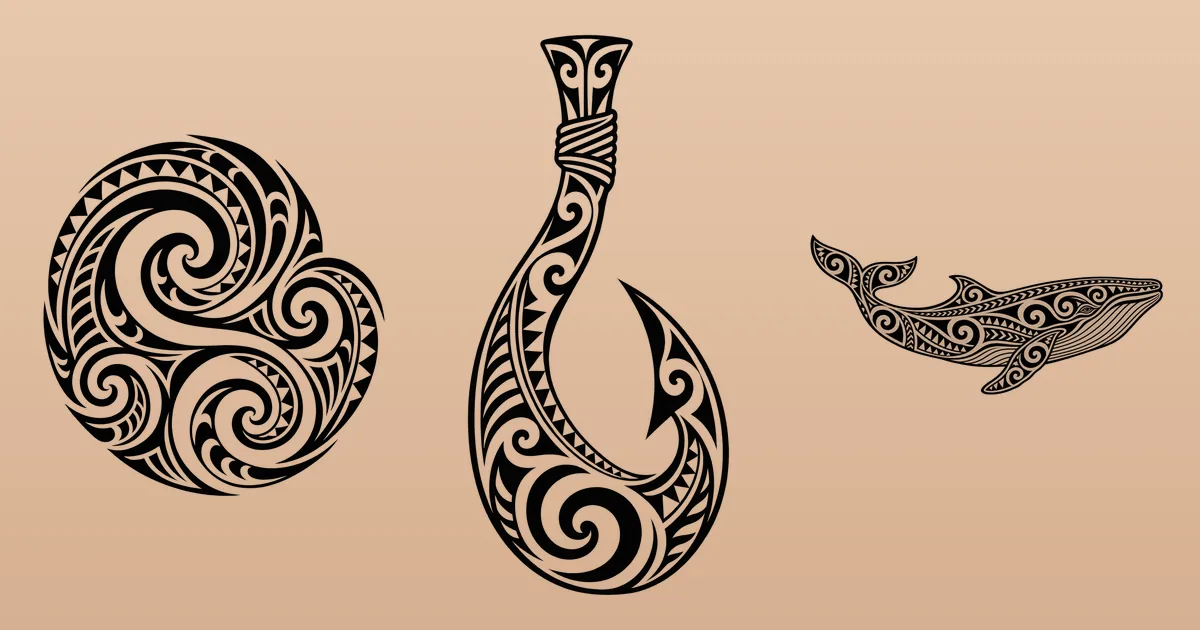
These bands carry living cultural meaning, so they deserve care. The koru, the spiral that recurs in Maori art, evokes a newly unfurling fern frond and is described in the koru article as a symbol of new life, growth, strength and peace in Maori carving and tattooing. Traditional tā moko is tied to identity and requires genealogy and consent, while kirituhi, literally "skin writing", is the term promoted for Maori-style designs that can be made for anyone. The same article notes that non-Maori wearing moko has been called cultural appropriation. If this style draws you, work with an artist from the tradition or one who knows it well, and read our guide to Maori and Polynesian tattoos.
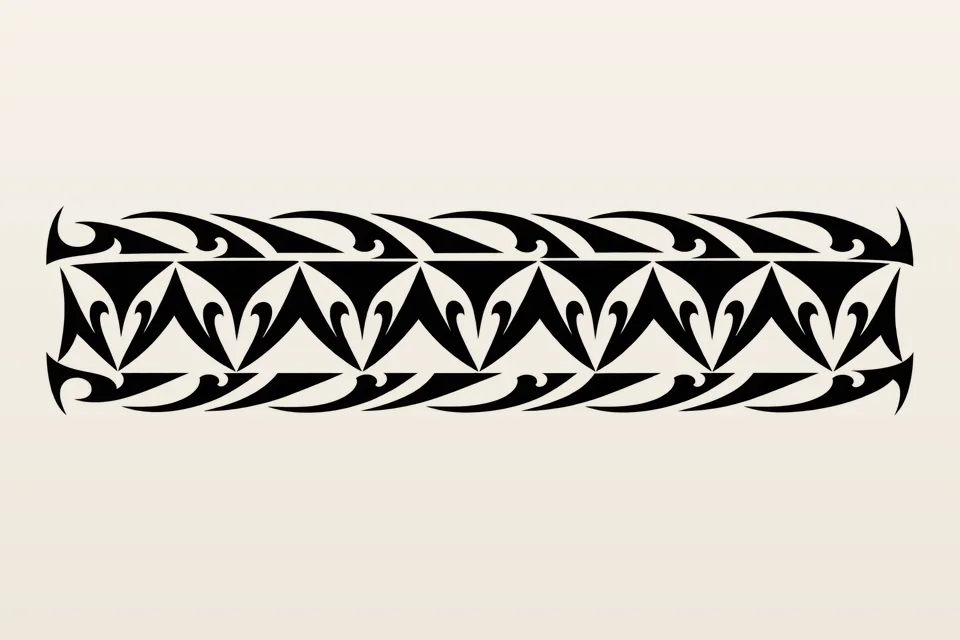
Tribal
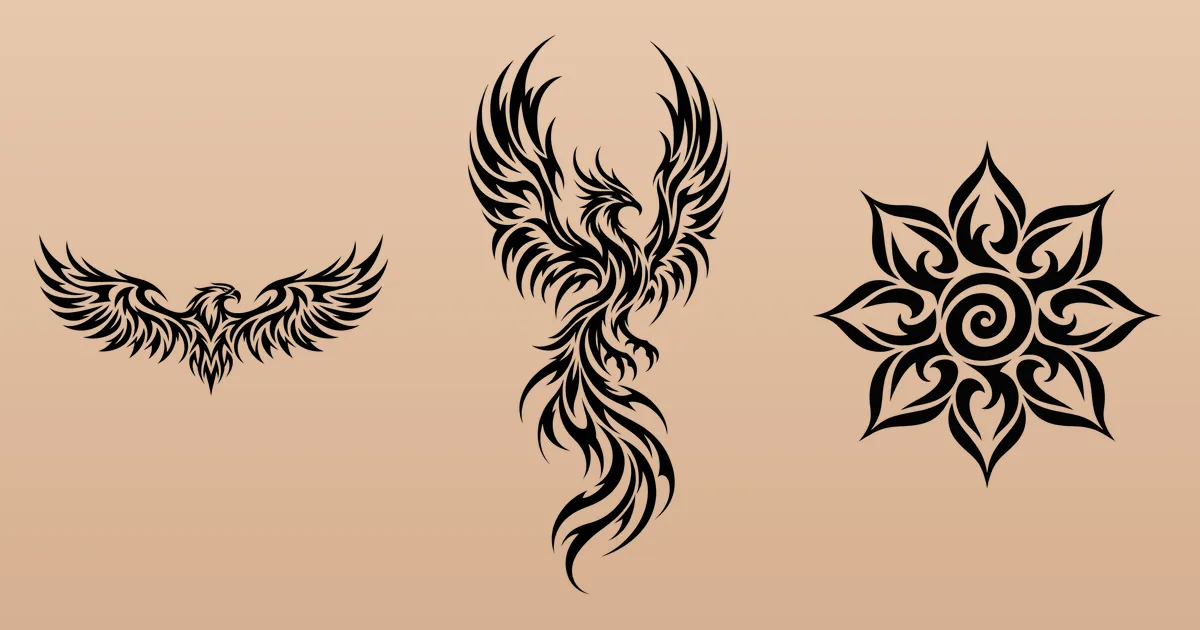
Flowing black shapes with sharp points, often the bold bands many people picture first. "Tribal" is a loose modern label that borrows from several cultures; our tribal tattoo guide explains where the shapes come from and how to choose them thoughtfully.
Geometric, lace and ornamental
Triangles, hexagons and dot rows are the easiest to fit, since units can be added or removed. Lace edges with beads and hanging drops read as a cuff and often look best open, the drops centered on the outer arm.
Floral, script and waves
A vine or chain of small flowers hides the join well and forgives a flexing muscle. Script can't be read all at once, so a short or repeated word beats a sentence that vanishes round the back. Waves are a natural repeat, each crest a unit; Japanese-style waves with foam need more height (more sea ideas in our ocean tattoo guide).
Describing a band to an AI or an artist
A good brief names the pattern, the band's height, whether it's closed or open, where it sits and how the edges finish. A few that work:
- "A closed band of small black triangles between two thin lines, 3 cm tall, around the right upper arm, the join on the inner arm"
- "An open lace armband with beads and three hanging drops centered on the outer left arm, fine line, about 7 cm tall at the drops"
- "Two thin parallel lines about 1 cm apart around the left forearm, a few centimetres below the elbow"
- "A band of curling waves in fine line around the right ankle, 2 cm tall"
Add your arm's circumference at that height, measured relaxed with a soft tape.
In click2ink you write a description like these in a chat, and an AI artist draws an original design on a 3D figure sized in real centimetres to your height; the library's ready-made bands shown here are free to try on. In the adjust panel, wrap around the limb bends the band around the arm so you see how it meets and sits on the taper, and "Arms out" shows the inner arm. Print the stencil at real size; your artist still fits it on your arm. The features page shows each setting.
What holds up in skin, and what an armband can mean
Bold shapes and clear spacing stay readable for years. Thin lines set close together can drift toward each other, and fine detail on a small ankle band softens first. Your artist knows how fine is safe on your skin.
Meanings are personal. A plain black band is sometimes chosen as a memorial, echoing the cloth black armband, which is worn to signify that the wearer is in mourning; sports teams often wear one after the death of a former player or manager. Two lines can stand for two people, a band of waves for someone who lives by the sea. For gentler ideas, see our guide to memorial tattoos.
Armband tattoo questions
What does an armband tattoo mean?
There's no single meaning; it depends on the pattern and on you. A plain black band can echo the cloth mourning armband and mark a loss. Polynesian and Maori-style motifs carry their own cultural meanings, which deserve respect and research. Many people simply like how a band frames the arm, and a wave, vine or script band can carry a personal story.
How wide should an armband tattoo be?
It depends on your arm and the pattern. Thin line bands can be under a centimetre; most patterned bands sit around 2 to 5 cm; tall Polynesian or lace cuffs reach 6 to 12 cm or more. Taller bands need more fitting on a tapering arm. Mark the edges on your skin with an eyeliner pencil and judge them in a mirror.
Which arm should an armband go on?
Either works; there's no rule. Some people pick the arm others see more often, such as the one facing outward when driving or in photos, or balance an existing tattoo on the other arm. If you're planning a sleeve later, put the band where it can become its border.
Are armband tattoos for men or for women?
Both. Bold tribal, Polynesian-style and solid black bands are often thought of as masculine, lace, vine and fine line bands as feminine, but these are habits, not rules. Width and line weight change the feel far more than the subject does.
Can an armband tattoo be extended into a sleeve later?
Yes, and it's a common plan. A band near the elbow or shoulder can become the top or bottom edge of a half sleeve. Choose a pattern that would suit the sleeve's style, and leave skin clear on the side where the sleeve would grow. Tell your artist early so the band is placed with that in mind.
Why does my armband look crooked?
Usually because the band was drawn as a straight strip and wrapped onto an arm that tapers and isn't round. The stencil's top edge needs to be slightly longer than its bottom edge, and the line should sit level when you stand relaxed. Artists often fix this by fitting the stencil on the arm and adjusting the edges by hand.
Can I get a band on my calf instead of my arm?
Yes. A calf band below the knee works much like an upper-arm band and has room for tall tribal, Polynesian-style or geometric patterns. The calf tapers toward the ankle too, so the same fitting rules apply: measure at the exact height, and have the artist fit the stencil while you stand with your weight on both feet.
Is a wave armband tattoo a good idea?
Waves make a natural band, because each crest repeats and can be spaced to fit your arm. Simple curling waves suit thin bands on the forearm or ankle; Japanese-style waves with foam need more height, often 5 cm or more. Keep enough gap between crests that the shapes still read as waves from a distance.