Dagger tattoo: designing the blade, its partners and its spot
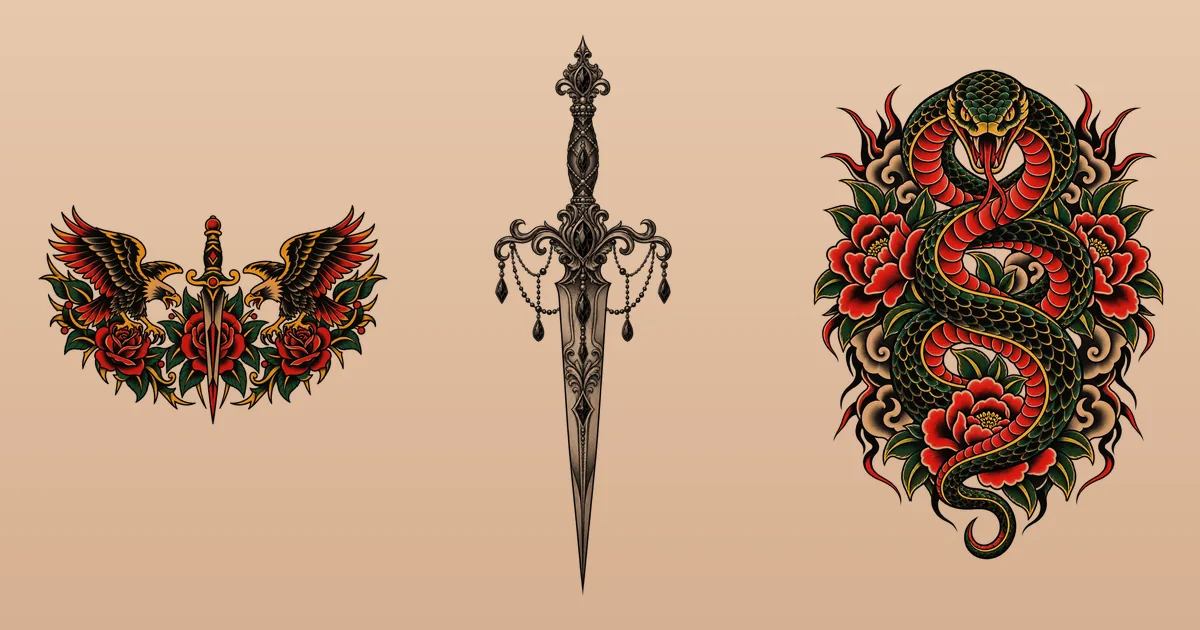
A dagger tattoo is, at heart, one long straight line crossed by a short one. That simple skeleton is why it's a flash staple: it reads from across a room, it fits the narrow parts of the body, and almost anything can hang from it, from a rose to a snake to a banner with a name. Build the blade well and everything else follows.
The parts of a dagger, read as a drawing
Wikipedia's dagger article describes the modern weapon, in most contexts, as a short blade with a sharply tapered point, a central spine or fuller, usually two sharpened edges, and on most examples a full crossguard that stops the hand sliding onto the edges. Each of those parts does a job in a tattoo:
- Blade: the long vertical line that sets the height of the whole piece. Two edges and a sharp taper make it unmistakably a dagger rather than a kitchen knife.
- Fuller or spine: the line or groove down the middle. In traditional work it's often a single black stroke, and a strip of bare skin beside it can make the steel look polished.
- Guard (crossguard): the short horizontal bar. Together with the blade it makes a cross, so the eye reads it instantly, and its ends can curl, flare or end in little balls.
- Grip: the handle. Wrapped cord, ridges or a plain band give it texture; a hand holding it changes the whole mood.
- Pommel: the cap at the end of the grip. It's the natural place for a jewel, a skull or a small ring for a chain to hang from.
A plain dagger needs only those five shapes. Ornate ones add jewels in the guard, filigree on the grip and engraving on the blade, but the silhouette should still read if you blacked it all in.
What a dagger tattoo is often read as
There's no single meaning; these are common readings, not rules:
- Courage and protection: a weapon carried close, ready to defend. The Wikipedia article notes that some cultures and military organizations treat the dagger as a symbol of courage and daring in combat.
- Danger and betrayal: the same article notes daggers may be associated with deception, because they're easy to conceal; the "stab in the back" image is never far away. A dagger through a heart is usually read this way, as a heartbreak survived.
- Sacrifice and loss: paired with drops of blood, a name or a date.
- Strength: a reading that belongs to whoever wears it, man or woman; nothing about it is tied to one gender.
Military daggers
Daggers do appear on unit insignia. Wikipedia's Fairbairn–Sykes fighting knife article says that knife features in the insignia of the British 3 Commando Brigade, the Belgian Commandos, the Dutch Commando Corps and the Australian 1st and 2nd Commando Regiments, and that a solid gold one is part of the commandos' memorial at Westminster Abbey. If you copy a unit's emblem, check how that unit and its veterans feel about civilians wearing it.
Claims online about gang, prison or other coded dagger meanings have no reliable source we could find; ask a local artist if it worries you.
Dagger and rose: love and pain in one image
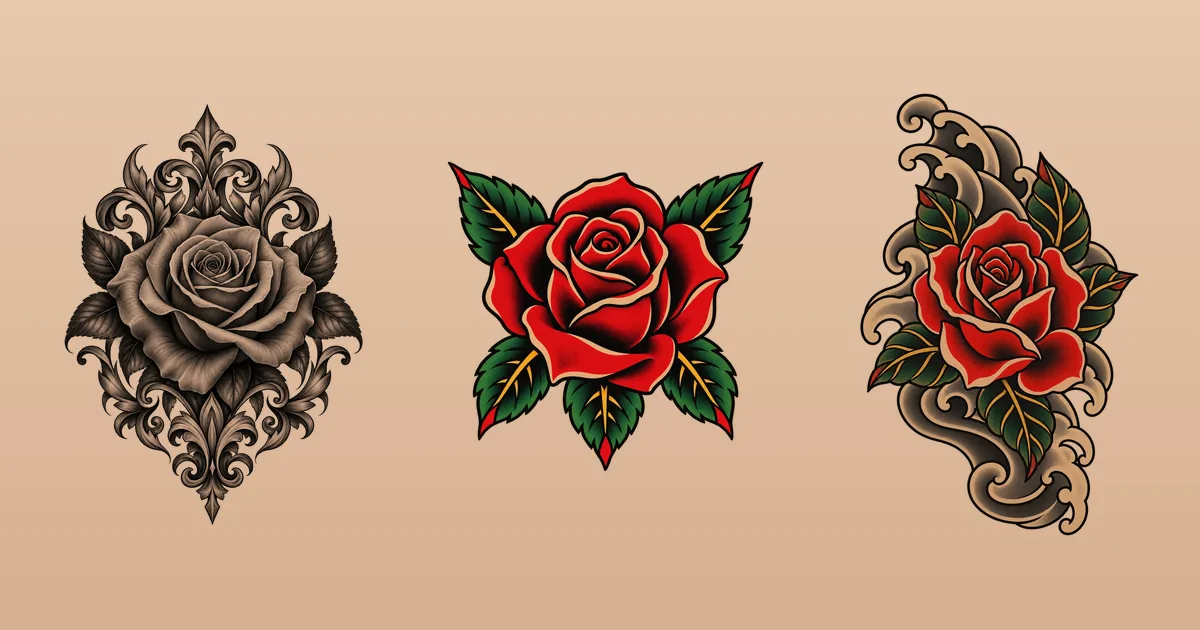
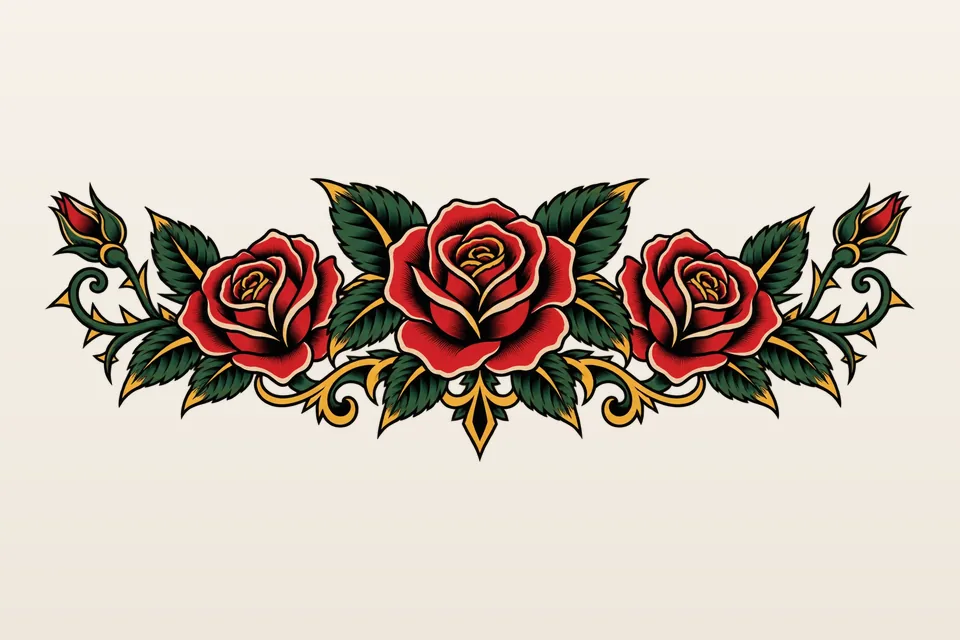
A dagger pushed through a rose is a traditional flash staple, usually read as love and pain, or beauty and danger together. Our rose tattoo guide gives it one line; here's how to build it.
- Through, not beside. The blade enters the top of the bloom and its point comes out below, so the rose sits roughly a third of the way down the blade. The guard and grip stay above the flower.
- Leaves as balance. One or two leaves on either side widen the middle of the design and stop it looking like a stick.
- Drops of blood. Two or three red drops falling from the point turn it from decorative to dramatic. Keep them big enough to stay round.
- Small versions. At 5 to 7 cm, keep one leaf and a heavy outline.
Snakes, hearts, skulls and birds: the other partners
Snake and dagger
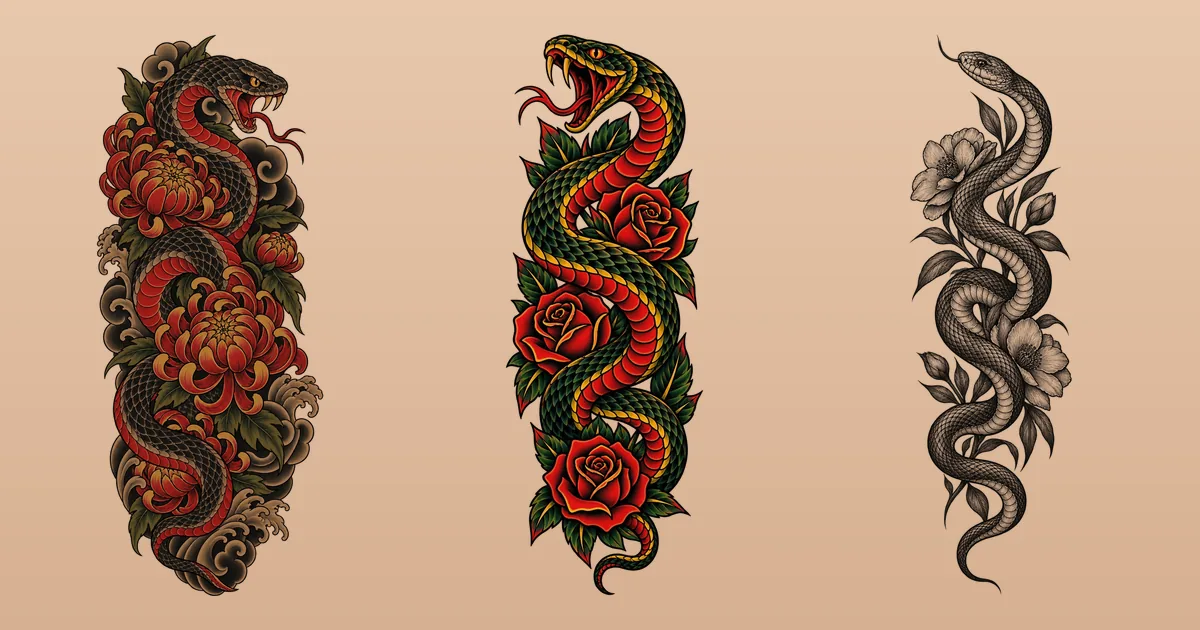
A snake coiled around the blade, its head at the pommel or curling off the point, is the other flash classic (the snake in the picture at the top is the kind of partner it takes). The snake tattoo guide covers the pair; for a traditional version, give the snake two or three turns and keep the blade visible between them.
Dagger through a heart
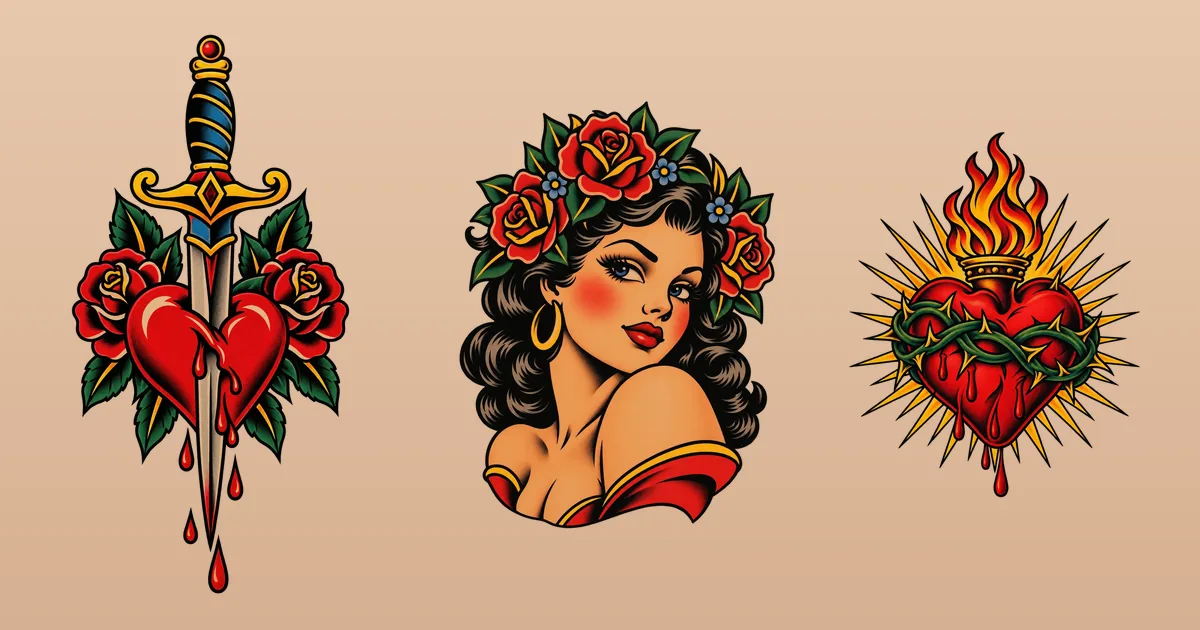
A red heart takes the rose's place, the blade going in at the top, often with a banner for a name.
Skull and dagger, and the gothic dagger
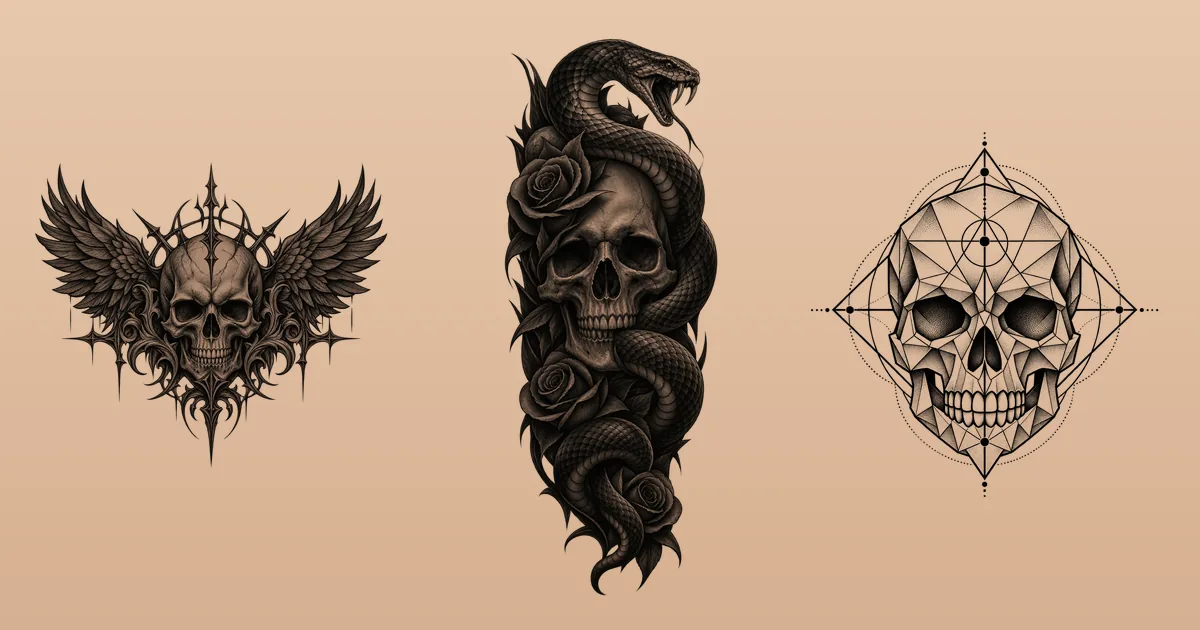
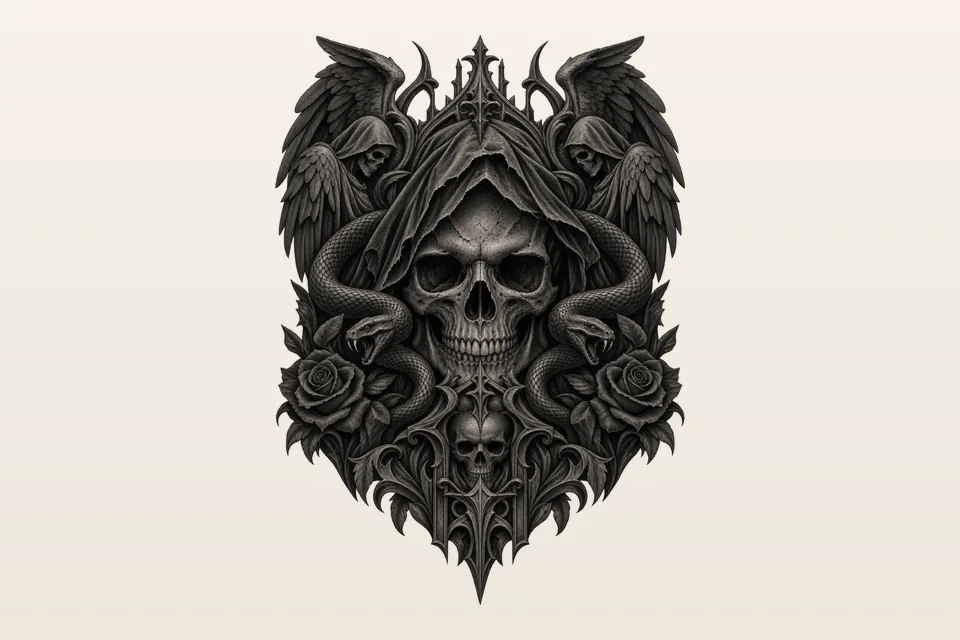
A blade through a skull's crown, or a skull resting on the guard, reads as mortality. Our skull tattoo guide covers the skull itself. Gothic dagger tattoos push the same mood further: black and grey, pointed arches, thorns, hoods, heavy dark backgrounds.
Eagles, swallows and banners
Two birds facing each other across a blade, like the eagles at the top of this page, make a symmetrical chest or back piece.
Dagger tattoo styles
- American traditional (old school, trad): heavy black outline, a few solid colors (red, green, yellow, sometimes blue for the steel) and solid black shading. It holds up small. The traditional tattoo guide explains its roots.
- Neo-traditional: the same readable shapes with varied line weights, richer color and more ornate hilts. See the neo traditional tattoo guide.
- Ornamental: a jeweled, filigreed hilt, hanging chains and drops, like the black and grey dagger at the top. It sits naturally on a sternum or spine; the ornamental tattoo guide covers the style.
- Black and grey: smooth gradients on the steel, polished highlights left as bare skin. Realistic blades need room; the realism tattoo guide explains why size matters.
- Fine line, small and feminine: a slim single-needle dagger with a tiny flower, a few dots or a bow on the grip. Keep it a touch longer than you think; the fine line guide and the small tattoos guide explain spacing.
Composition and placement
Point down or point up
Point down follows a hanging arm or a standing leg; point up looks like a drawn weapon. Neither has a fixed meaning.
Straight, curved or broken
A straight double-edged blade is the classic. A curved or wavy blade adds movement and suits the curve of the ribs or a calf. A broken blade, the tip snapped off and falling, is often read as something overcome.
The dagger as a spine
In a bigger piece the blade can be the axis everything hangs on: roses at the guard, a snake around the middle, a skull at the point.
Where it fits
A dagger is tall and narrow, so it wants tall, narrow spots:
| Spot | What fits | General starting size |
|---|---|---|
| Forearm (outer or inner) | A single dagger, dagger and rose, snake and dagger | 10 to 18 cm long |
| Shin or calf | A long traditional dagger down the shin, a snake and dagger on the calf | 15 to 25 cm |
| Sternum | An ornamental dagger with chains, point down | 12 to 20 cm |
| Ribs | A slim or curved blade running down the side | 12 to 22 cm |
| Back of the hand | A small bold dagger, point toward the fingers | 6 to 10 cm |
| Wrist, ankle, behind the ear, finger side | A fine-line dagger, outline only | 3 to 6 cm |
The forearm, leg, chest, rib and hand guides cover each spot in detail. These sizes are only starting points; your artist sets the real limits for your skin and the detail you want.
From idea to stencil
Flash and stencils are what an artist works from. The stencil is your artist's job, drawn for your size and skin, but you can bring a clear brief. Name the dagger, the style, its partners, the direction, the size and the spot:
- A traditional dagger through a red rose, three drops of blood from the point, bold black outline, red, green and yellow only, point down, 12 cm, outer left forearm.
- An ornamental dagger in black and grey, jeweled crossguard, filigree grip, two chains with drops hanging from the guard, 16 cm, centered on the sternum.
- A fine-line dagger with a tiny daisy wrapped around the grip, no shading, 5 cm, inside the right ankle.
That's exactly how a project starts in click2ink, our own studio: tap the spot on a small figure, pick one of 16 styles (American traditional, neo-traditional, ornamental, black & grey realism, fine line and more), describe the dagger and, if you like, add a picture. The AI artist draws an original design and it lands on a 3D figure sized in real centimeters to your height, so you can see whether the point reaches your wrist. Ask for one change at a time ("longer blade, keep the rose"), then print a true-size stencil and share a link to the figure with your artist. How it works shows each step, and the pricing page explains the free credits.
Dagger tattoo questions
What does a dagger tattoo mean?
There's no fixed meaning. It's often read as courage, protection or strength, and sometimes as danger, betrayal or sacrifice, especially with a heart or drops of blood. What it pairs with shapes the reading: a rose suggests love and pain, a skull mortality. Your own reason for wearing it matters more than any list.
What does a dagger through a rose mean?
It's usually read as love and pain, or beauty and danger, in a single image: something precious and something that wounds. Some wear it for a relationship that hurt, others simply for the classic flash look. The meaning stays personal; the design reads clearly either way.
What does a snake and dagger tattoo mean?
It's commonly read as facing danger head-on or surviving betrayal, with the snake as the threat and the blade as the answer, or both as a double warning. It's a flash classic, and it's fine to choose it for the look alone. Like any dagger, it can also mark something personal that only you need to explain.
Is a dagger tattoo a good choice for a woman?
Yes, as much as for anyone. A dagger can be bold traditional with roses, a slim fine-line blade with a flower on the grip, or an ornamental piece with chains down the sternum. The style and size decide the feel, not the subject. Choose the version you'd still like in twenty years.
What size should a small dagger tattoo be?
Around 3 to 6 cm for a fine-line outline on a wrist, ankle or behind the ear, and around 6 to 10 cm for a bold traditional dagger on the hand. Keep it slim but not tiny: the guard and pommel need room to stay separate shapes, and drops of blood need to stay round.
Where should I put a traditional dagger tattoo?
Classic spots follow the blade's length: the outer forearm, the shin, the calf and the back of the hand. A pair of eagles or swallows around a dagger suits the chest. Aim the point along the limb rather than across it, and try the stencil in both directions before you commit.
Should the dagger point up or down?
Either. Point down follows the arm or leg when it hangs naturally. Point up looks more like a raised weapon and can feel more aggressive. No direction has a fixed meaning, so choose by how it sits on your body, ideally by looking at it on a printed stencil.
Can I bring a dagger flash design to any artist?
Artists differ: some tattoo flash or a clear reference as it is, others adjust it to your size and skin, and some prefer to redraw it in their own hand. Bring the design, the size you want and where it goes, and ask when you book.