Leg tattoo: ideas and placement from the ankle to the hip
The rule of nines, a quick estimate of skin area used in emergency medicine, counts each adult leg as about as much skin as the whole back. That's room for anything from a 3 cm ankle symbol to a full leg sleeve. A leg tattoo also crosses more distinct surfaces than people expect, and each one suits a different shape.
Reading the leg from the hip down
Think of the leg as five canvases, each with its own shape and its own trade-offs.
- Thigh. The largest, flattest surface on the leg, especially at the front and outer side. It takes big pieces, from a tiger or a portrait to a spray of peonies, and most clothes cover it. The inner thigh is softer and more sensitive.
- Knee. A round, bony joint that bends all day. Designs that frame the kneecap suit it: a rose, a mandala, a sun, a spider web. The kneecap and the hollow behind the knee are demanding spots to tattoo and to heal.
- Shin. Long and narrow, with little padding: the inner face of the shinbone lies just under the skin for most of its length. Tall, straight designs fit, such as a dagger, a sword, a long flower stem or a column of ornaments.
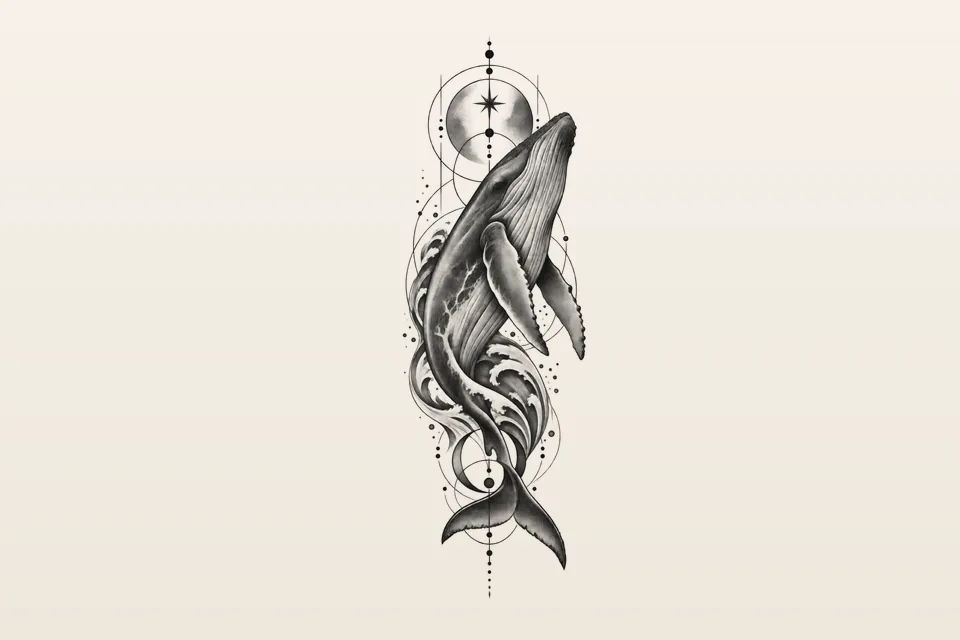
- Calf. A rounded muscle that shows in shorts and skirts. Tall subjects suit it, like a whale, a lighthouse, a koi or a standing figure. The muscle carries a design around the leg, so check it from the side.
- Ankle and foot. Small and bony, with shoes and socks rubbing every day. Small symbols, bands around the ankle and designs that flow onto the top of the foot work well; expect touch-ups sooner here.
Leg tattoo ideas for men and women
Leg tattoos don't divide by gender any more than other tattoos do. What changes the choice is the kind of piece you want.
One strong subject
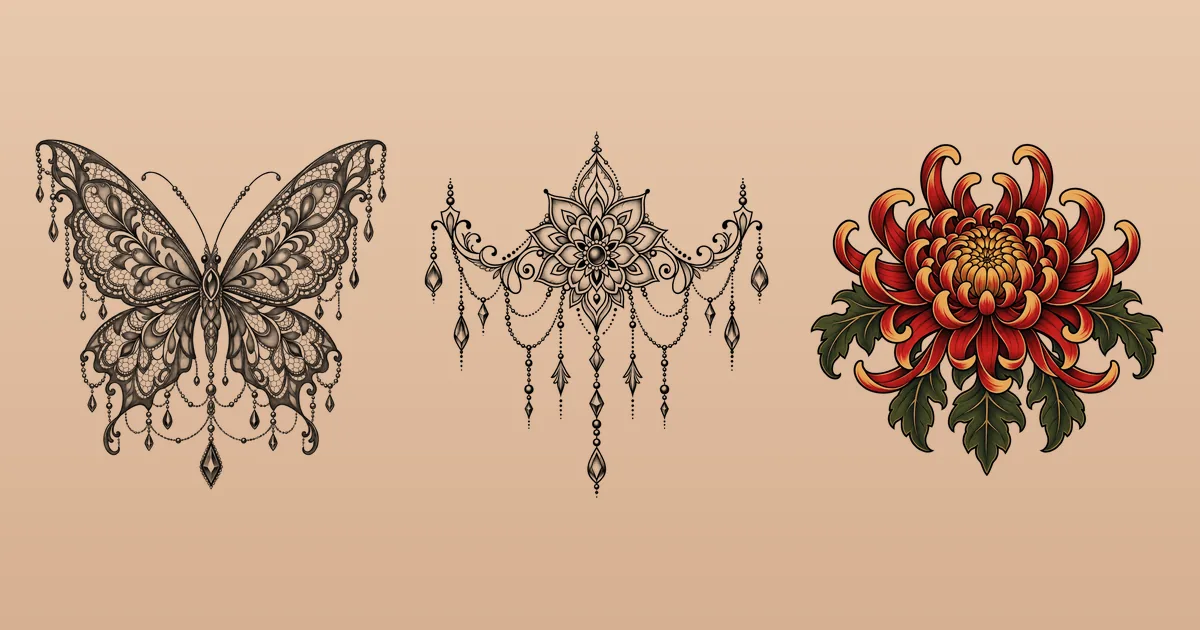
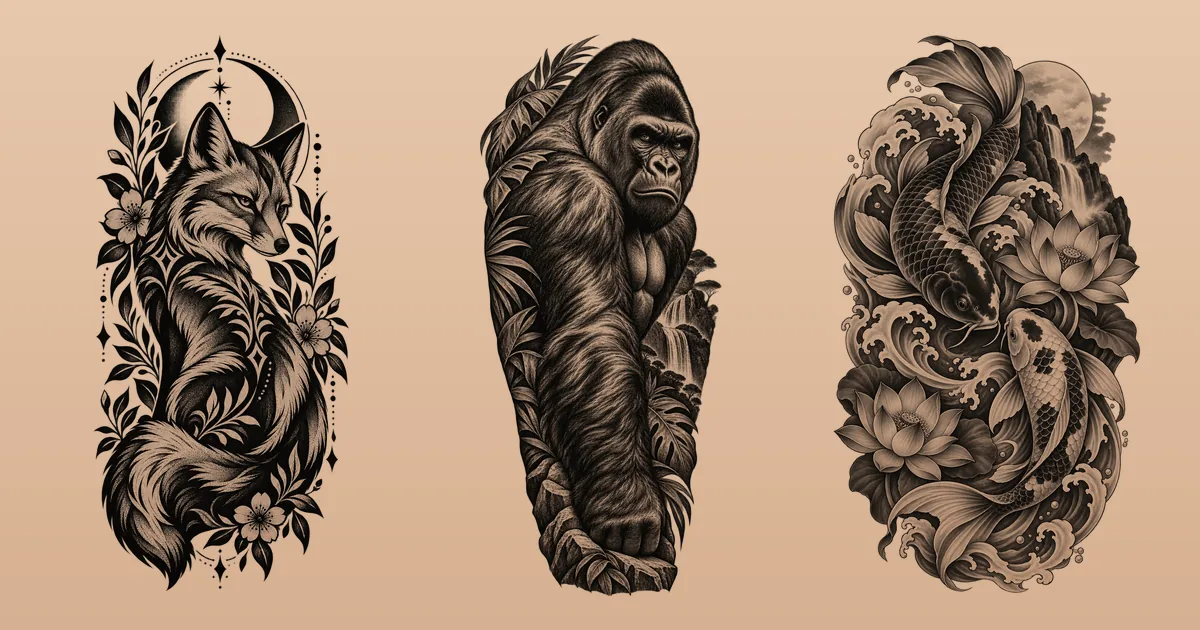
A fox, a wolf or a gorilla framed by leaves on the outer calf; a koi swimming up the back of the leg; a tiger or a big floral across the thigh; a snake winding around the lower leg; a dagger down the shin. The designs at the top of this page come from the click2ink library and were drawn tall for the thigh and calf, because that's the shape those spots want.
Small and quiet
A band of leaves or dots around the ankle, a tiny symbol on the inner ankle bone, a line of script along the side of the foot, a small flower just above the knee. Small still needs enough size for its detail, and our tattoo size guide shows how to judge it.
Pairs and wraps
Mirrored designs on both calves or both knees, such as a sun and a moon or two birds facing each other, or an ornamental band around the upper thigh, known as a garter tattoo, in lace, flowers or jewelry-like patterns. Our tattoo designs for women guide has more hip and thigh ornaments, and they suit anyone.
Shape, wrap and scale for a leg tattoo
- Go tall. Below the knee especially, vertical compositions fit the limb, while wide designs end up wrapping out of sight.
- Expect the wrap. Calves and thighs are round, so the edges of a design curve away. Something that looks centered from the front can drift around the side, so check it from four angles.
- Size up on the thigh. A palm-sized piece can look lost there. As starting points for an average adult, think of 15 to 30 cm (6 to 12 in) on the thigh and 10 to 25 cm (4 to 10 in) on the calf, then measure your own.
- Watch it move. The calf changes shape when you rise on your toes, and the thigh when you sit. Look at the stencil standing, sitting and walking before the first line goes in.
Planning a leg sleeve
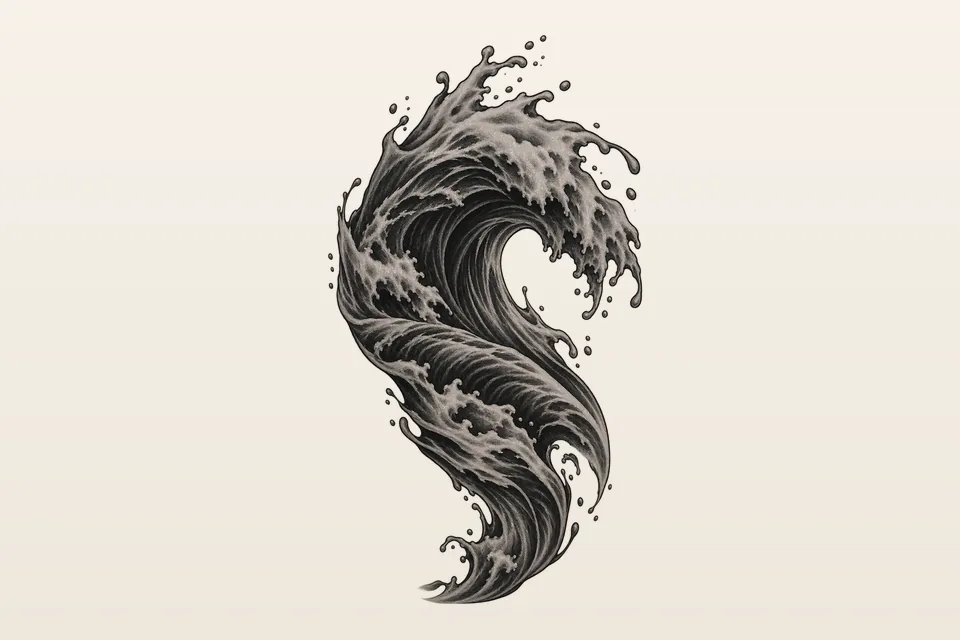
A sleeve tattoo usually means the arm, but the word is also used for a large tattoo that covers a leg. A full leg sleeve runs from the hip or upper thigh to the ankle; a lower one, from the knee down. Like an arm sleeve, it reads best when it's planned as one design: two or three main subjects placed where they show, for example the outer thigh and the calf, and a background of waves, clouds, smoke, foliage or pattern wrapping between them.
The knee is the hard part. A sleeve can make it a centerpiece, with a rose, a mandala or a face framing the kneecap, or let the background flow over it. Planned sleeves take many hours and can take weeks, months or years to finish, with healing time between sessions, so agree on the whole layout with one artist before you start. Our sleeve tattoos guide covers themes and flow in more depth.
Bone, muscle and healing on the leg
Pain is personal, and no chart can predict yours. As general guidance, the outer thigh and the calf, with more muscle and padding, are often described as more comfortable, while the shin, the knee, the ankle and the top of the foot, where bone sits close to the surface, are often described as more intense. The inner thigh and the back of the knee have thin, sensitive skin too. Ask your artist what to expect for your spot, and talk to your doctor first if you have a skin, circulation or other medical condition.
Healing a leg tattoo is mostly about friction: jeans, socks, shoes and boots all rub, so loose clothes help in the first days. Follow your artist's aftercare, including when you can shave over it again. Once it's healed, calves and ankles get plenty of summer sun, and sunscreen keeps the lines crisp.
Thigh, calf or sleeve: trying it in the studio
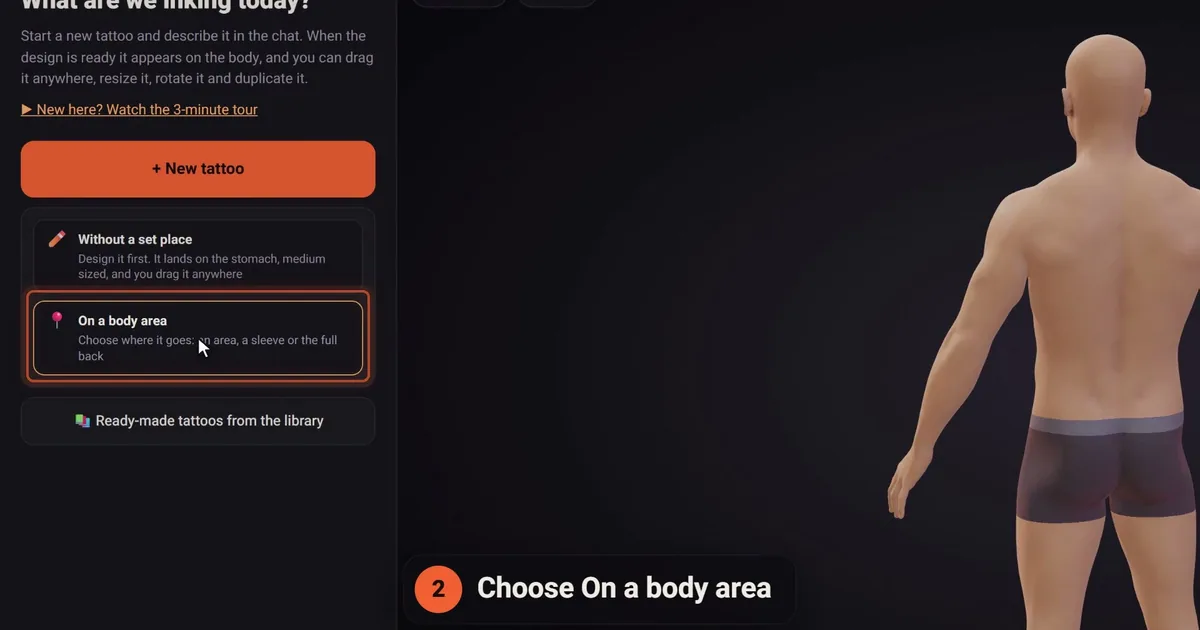
In click2ink you choose the spot as you start a tattoo: tap the thigh, the calf, the ankle or the foot on a small figure, front or back, left or right, or pick a leg sleeve. For the knee or the shin, drag the design there on the 3D figure. Every size is in real centimeters on a figure of your height, and "Make it look like me" adds your weight and build, so a thigh piece is judged on a thigh like yours.
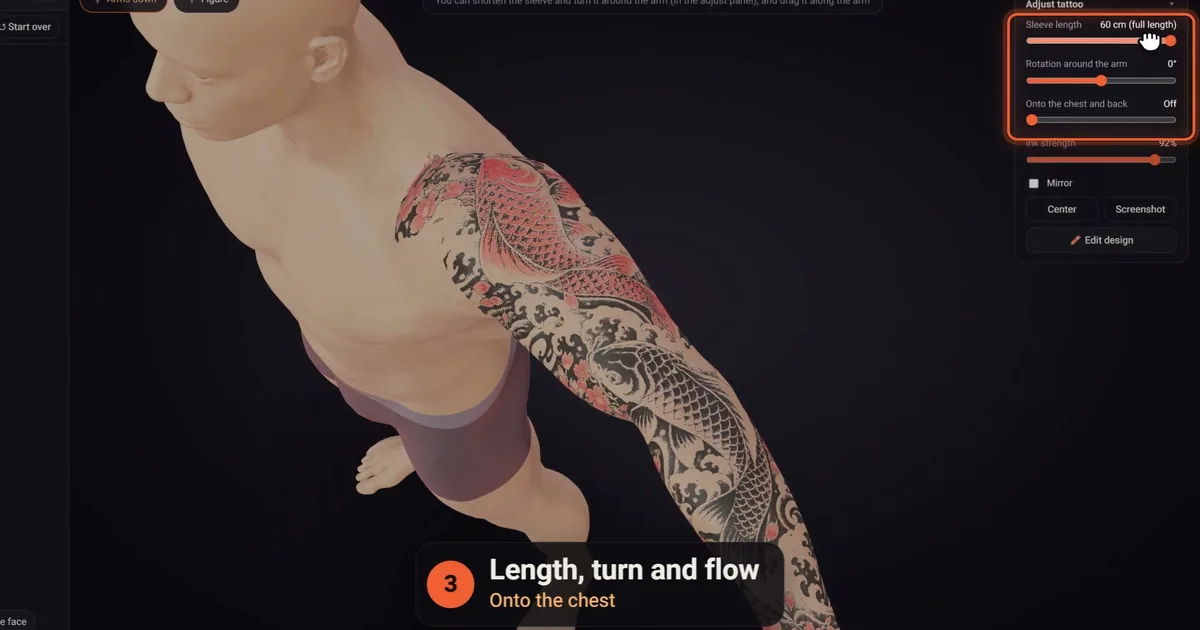
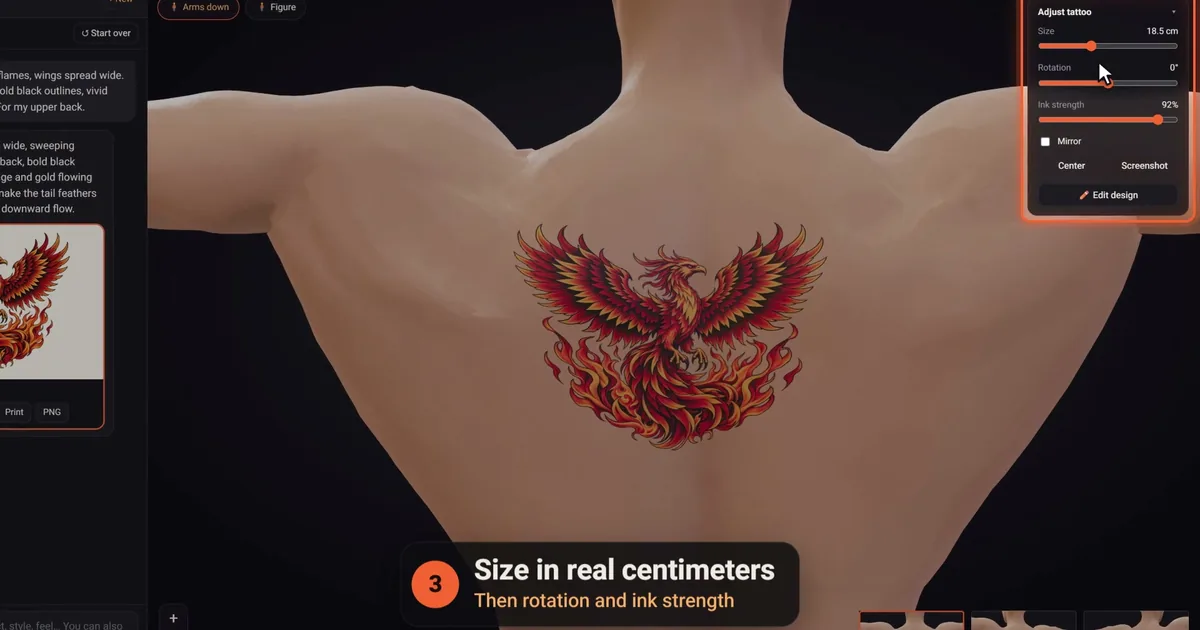
Turn the figure to every side, and use the adjust panel to resize, rotate and wrap the design around the limb. For an upper-thigh or hip piece, switch the figure's underwear to Short or None to see where it really ends. A click2ink leg sleeve is one continuous design around the leg: set its length, slide it along the limb, turn it, and let it carry onto the hip, fading out. The features page shows each control, and our tattoo placement guide helps if you're still weighing the leg against other spots.
Leg tattoos, asked and answered
Is the thigh or the calf better for a first leg tattoo?
Both are forgiving choices: they have padding, and they're easy to cover. The thigh gives you more room and hides under most clothes; the calf shows in shorts and suits taller designs. Choose by the shape of your design and how often you want to see it, and ask your artist how each spot tends to feel.
Should a leg sleeve start at the thigh or the calf?
Artists differ, so ask yours. Starting on the thigh keeps the work hidden while the sleeve grows; starting on the calf gives you the part you'll see most. What matters more is planning the whole leg first, knee included, so each session adds to one design rather than to separate pieces that need joining later.
Can I wear jeans over a new leg tattoo?
Tight denim rubs a fresh tattoo and traps heat, so loose, soft clothing is kinder for the first days. Ask your artist how they want it covered and for how long, and follow their aftercare. Shoes and socks matter just as much for ankle and foot pieces, so book the session for a time when you can wear loose or open footwear.
What is a garter tattoo?
A band around the upper thigh inspired by a garter, usually drawn as lace, ribbons, flowers, pearls or ornamental patterns, sometimes with a bow or a charm. It has to wrap the thigh evenly and meet itself cleanly, so check it on a 3D figure or with a long stencil before the session. It sits under most skirts and shorts.
Should tattoos on both legs match?
Only if you want them to. Mirrored pieces, such as two birds facing each other on the calves or matching ornaments on the knees, look deliberate and balanced. A leg can also be built piece by piece, which looks fine as long as the styles get along. If you plan a pair, design both at once so the sizes and angles agree.
Can a leg tattoo continue onto the foot?
Yes. Vines, waves, snakes and ornamental bands can run from the ankle onto the top of the foot. Keep in mind that the foot is bony, thin-skinned and rubbed by shoes, so it's often described as a more intense spot, and tattoos there tend to fade sooner. Bold, simple lines hold up better on the foot than fine detail.
Is a knee tattoo a good idea?
It can look striking, especially as part of a sleeve, but it's one of the tougher spots: bone sits close to the surface, the skin moves every time you bend, and a healing knee is hard to rest. Designs built around the kneecap, such as a rose, a mandala or a web, suit the shape. Choose an artist with healed knee work in their portfolio.
Will a calf tattoo show at work?
Only when your legs do. Trousers and long skirts cover the calf completely, while shorts, short skirts and some uniforms show it. The thigh stays hidden under almost everything, and the ankle can peek out between trousers and shoes when you sit. If you need a tattoo you can always cover, the thigh is the safest choice on the leg.
Should a thigh tattoo be one big piece or several small ones?
Either can work, but small pieces scattered across a thigh can look lost on such a big surface. One strong piece, or a planned group linked by a background or a shared style, usually reads better from a distance. If you start small, place the first tattoo where it could grow, high on the outer thigh for example, so later work can join it.