Koi fish tattoo: from the legend to a design that swims with your body
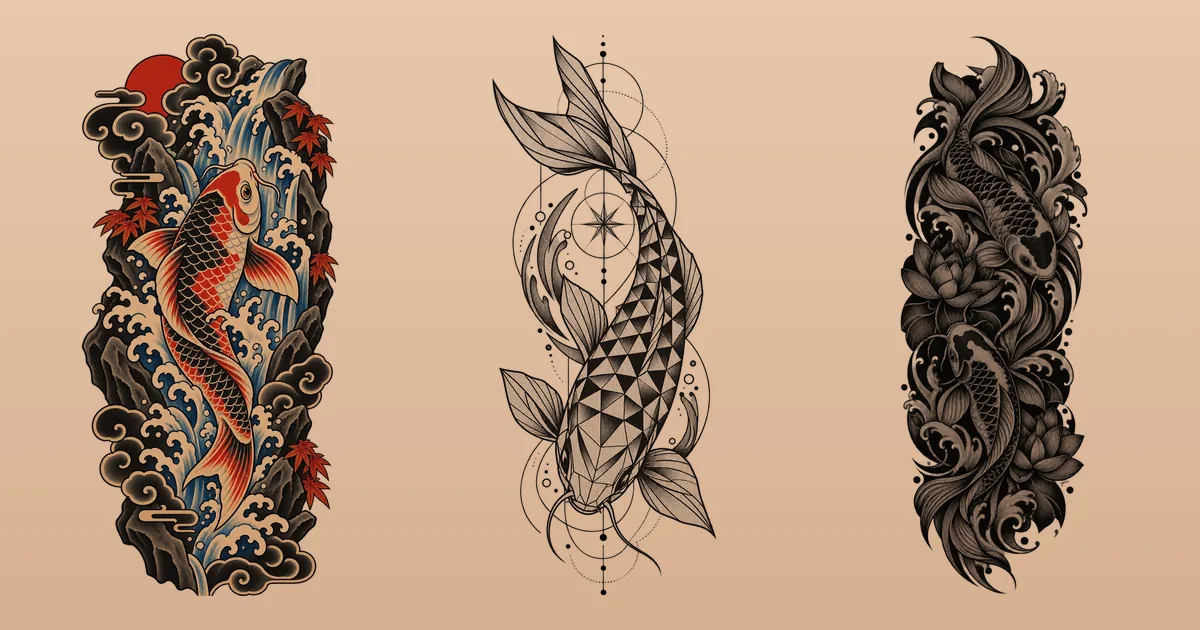
The most common mistake with a koi fish tattoo is treating it as a single fish. A koi is half a story: the other half is the water it fights, the flowers drifting past and the curve of the arm or leg it swims along. Get those right and a simple carp turns into a piece that moves every time you do.
The carp that climbed the waterfall
The koi's reputation comes from an old Chinese legend. At Longmen, the Dragon Gate, where the Yellow River cuts through the mountains, carp swim upstream against the current, and only a few manage the final leap over the falls. The one that makes it is transformed into a powerful dragon. In China the story came to stand for passing the civil service exams and for a sudden rise in life; in Japan the image of the leaping carp is known as Tōryūmon.
That is why a koi in tattooing usually reads as perseverance: effort against the odds, and the reward at the end. The koi itself, a colored carp bred in Niigata, Japan, from the early 19th century, carries other meanings too. In Japan it is a sign of luck, prosperity and good fortune as well as perseverance, and because "koi" sounds like the Japanese word for love, it can stand for love and friendship.
Koi to dragon: the story in one design
Many people tell the whole legend on the skin. Three common ways to do it:
- The climb: a koi fighting up a waterfall, head pointing upstream, spray around the fins.
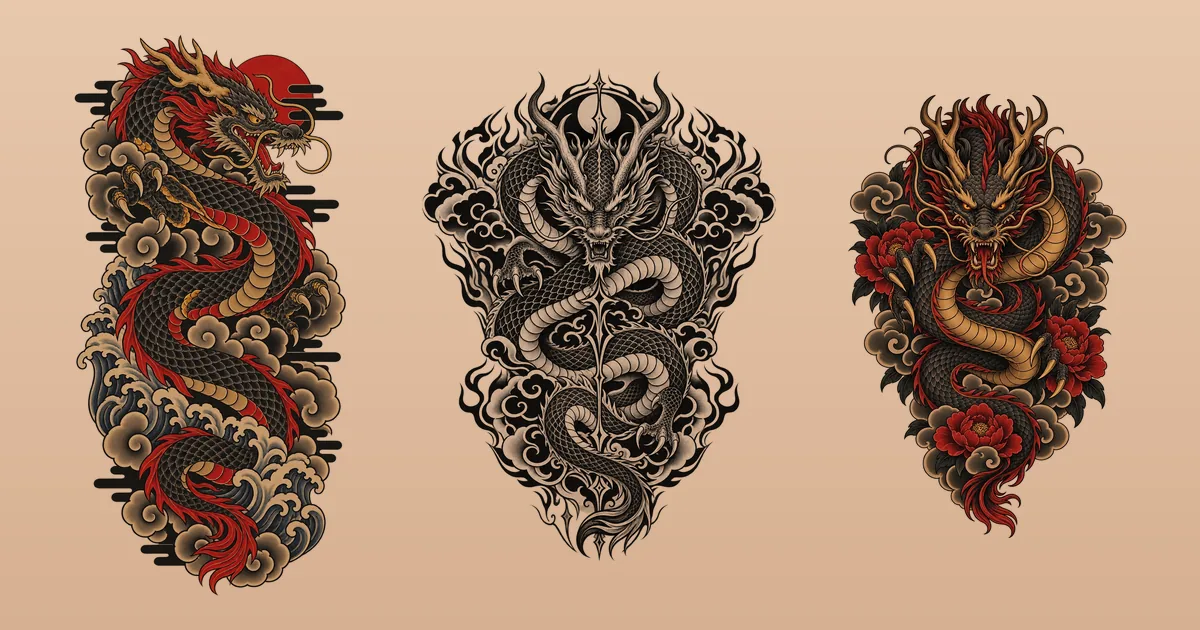
- The change: a koi whose head is already a dragon's, with whiskers, horns and a mane, while the tail is still a fish.
- The pair: a koi at the bottom of a sleeve or a back piece and a dragon coiled above it, linked by water and clouds.
Our dragon tattoo guide covers how an East Asian dragon is drawn, and the direction a koi swims is answered in the Japanese tattoo guide.
Two koi, yin-yang and the colors people choose
A pair of koi circling each other is one of the most requested layouts, and the yin-yang version is the classic: one dark fish and one light, nose to tail, closing a circle. It is read as balance between two opposites, or as two people bound together, which makes it a favorite for couples and siblings who split the pair or wear it whole.
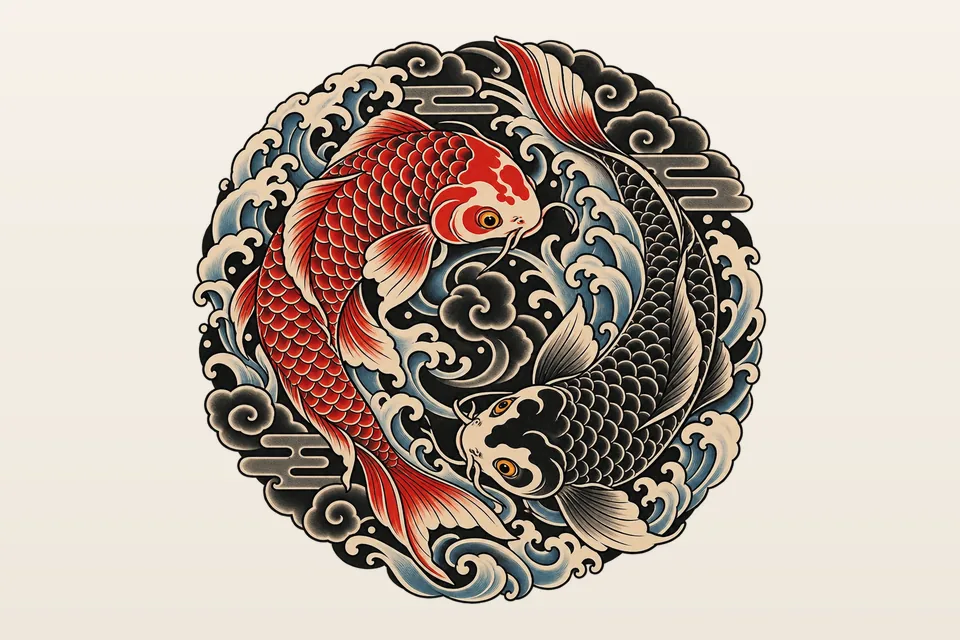
Color meanings are where the internet gets most confident and least consistent. Treat these as popular readings, not rules:
| Color | What people often say it means |
|---|---|
| Red and white | Love, strength; modeled on the kōhaku, a white koi with red markings |
| Gold or yellow | Wealth and good fortune |
| Black | Hardship overcome |
| Blue | Calm |
Pick colors that suit you first, and add a meaning if it fits.
Water, waves and petals: building the composition
The background decides whether your koi looks like a sticker or a painting: it gives the fish something to swim through and sets the direction the eye travels. The usual choices:
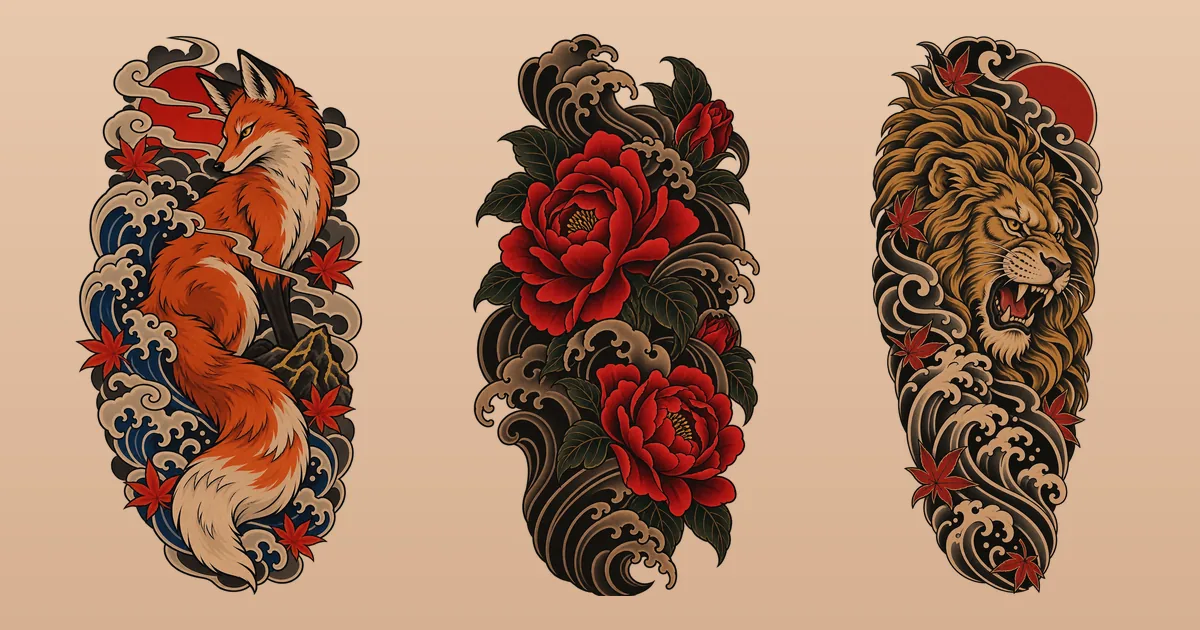
- Water and waves: curling wave crests or smooth current lines, shaded black and grey. The most traditional backdrop, and the one that makes movement obvious.
- A waterfall: vertical streaks above the koi, for the Dragon Gate story.
- Lotus: grows out of muddy water, so it pairs naturally with the idea of rising through difficulty.
- Cherry blossoms: spring, and the beauty of something brief; petals floating on the surface soften a dark wave background.
- Maple leaves: autumn and passing time. Many artists avoid mixing them with cherry blossoms, since the seasons clash.
A useful rule: one fish, one flower, one background. Add a second koi or a second flower only when the size can carry it.
Small, sleeve or back piece: sizing a koi fish tattoo
Koi are long, curving shapes, so size is about length as much as area. A rough guide to what fits:
- Small (5–8 cm): a fine line or simple outline koi, a few scales suggested, one wave or a couple of petals. Inner wrist, ankle, behind the ear.
- Medium (12–20 cm): a single koi with full scales and a patch of water. Outer forearm, calf, upper arm.
- Large (25 cm and up): a koi with a full background, or a yin-yang pair with room to breathe. Thigh, ribs, shoulder to chest.
- Sleeve or back piece: several koi or a koi-to-dragon story, wrapped in waves and blossoms from end to end.
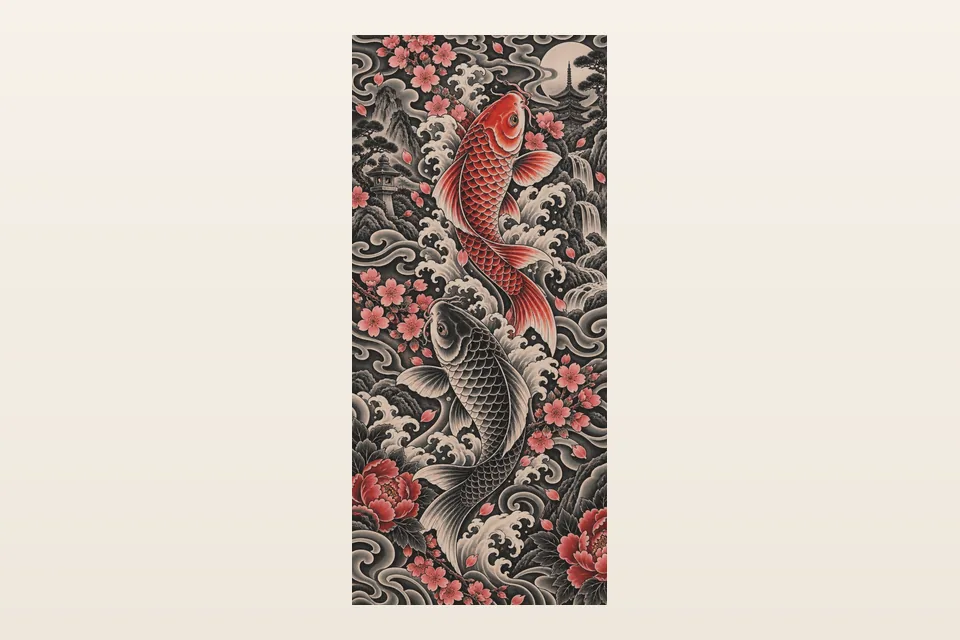
Planning a big piece? Our guides to sleeve tattoos and back tattoos go deeper into layout and sessions.
Simple, traditional Japanese or geometric?
The same fish changes character completely with the style:
- Simple and fine line: a clean outline, light or no shading, maybe a dot of color. Keep it uncluttered, since fine lines need space to stay crisp.
- Traditional Japanese: bold outlines, solid blacks, scales drawn one by one, a limited palette and a full background. It needs size and an artist who knows the style.
- Geometric: the koi built from straight lines, triangles or dot patterns, sometimes with a yin-yang or mandala around it. Works well in black only.
- Blackwork: heavy black fills and open skin, like the two-koi lotus panel in the picture at the top of this page; strong at a distance and good for covering older work.
The tattoo styles overview compares these with the other main styles side by side.
Placements that suit a curving fish
A koi bends, so give it a spot that bends too:
- Forearm: the classic. The koi swims along the length, with the tail near the wrist or the elbow.
- Calf: tall and rounded, ideal for a single koi climbing a waterfall.
- Ribs: a long S-curve following the ribcage; the skin is thin there, so ask your artist what to expect.
- Shoulder to chest: the koi curls over the shoulder and dives across the pec, with waves filling the gap.
- Thigh and hip: plenty of room for a pair, or a yin-yang circle.
The yakuza question
Some people hesitate because they have heard koi are "yakuza tattoos." The background is real: as the irezumi article notes, traditional Japanese tattoos were for many years associated with the yakuza, and the same source says many yakuza and other criminals now avoid tattoos. Koi are one of irezumi's most common animals, alongside birds, tigers and snakes, so the link comes from the style as a whole, not from the fish. In Japan, visible tattoos of any subject can still keep you out of some baths and gyms.
Sketch your koi on a 3D body
A flat koi on a screen won't show where its tail ends up once it wraps the arm. In click2ink you choose the spot or sleeve, pick a style and describe it:
- "A red and white koi climbing a waterfall on the outer forearm, Japanese style, black waves, two cherry blossoms"
- "Two koi in a yin-yang circle, black and grey, for the shoulder cap"
- "A full sleeve: a koi at the wrist turning into a dragon at the shoulder, waves and maple leaves in between"
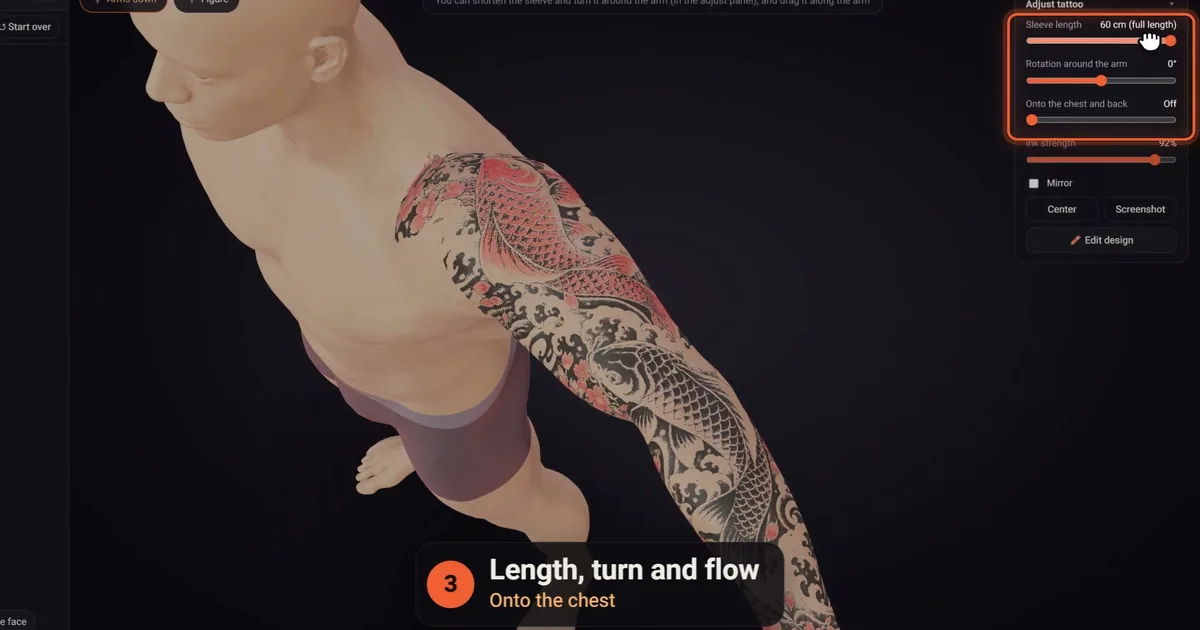
The design lands on a 3D figure sized to your height in real centimeters. A sleeve wraps all the way around the limb and can be shortened, slid or carried onto the chest; a single koi can be wrapped around the limb and rotated in the Adjust panel. Ask for one change at a time ("bigger fins," "fewer petals") and the AI keeps the rest. New accounts get 3 free credits, enough for 12 messages, and the library's koi and 20 sleeves are free to try; see how it works. Then bring the design and a true-size stencil to your tattoo artist.
Koi fish tattoo questions
What does a koi fish tattoo mean?
Most often perseverance, from the legend of the carp that leaps the waterfall at the Dragon Gate and becomes a dragon. In Japan the koi is also a sign of luck, prosperity and good fortune, and because its name sounds like the word for love, it can stand for love and friendship. What surrounds the fish, and what you bring to it, shapes the rest.
Is a koi fish tattoo a yakuza symbol?
Not on its own. Traditional Japanese tattooing was associated with the yakuza for many years, and koi are one of that style's most common subjects, so the link comes from the style rather than the fish. Today a koi is worn by people of every background. In Japan, though, visible tattoos can still matter at baths and gyms.
What does a koi turning into a dragon mean?
It shows the end of the Dragon Gate story: the carp that made the leap and was rewarded. People choose it to mark a goal reached or a hard stretch of life behind them. It needs a forearm-length space or more, so the dragon's head, whiskers and mane can read clearly.
What does a yin-yang koi tattoo mean?
Two koi circling nose to tail, one dark and one light, are read as balance between opposites: calm and drive, light and dark, or two people who complete each other. Couples sometimes split the pair, one fish each, so the circle only closes when they stand together. The round shape suits the shoulder, upper back or calf.
Can a koi fish tattoo be simple or small?
Yes. A fine line outline with a few suggested scales and a single wave works at around 5 to 8 cm on the wrist, ankle or behind the ear. Keep the elements few and the gaps between lines generous, so the design stays readable as the ink settles over the years. Full scales and backgrounds belong on bigger pieces.
Which colors should my koi be?
Whatever looks best on you. Red and white, gold, black and blue all have popular meanings attached, but they are readings, not rules, and they differ from source to source. Ask your artist which colors stay bright on your skin tone over the years, and remember that a black and grey koi tells exactly the same story.
What flowers go best with a koi?
Lotus, cherry blossoms and peonies are the usual partners, with maple leaves for an autumn feel. The lotus echoes the idea of rising out of muddy water, cherry blossoms add softness and color to dark waves, and peonies bring weight to a larger piece. Many artists keep to one season per design.
Where should a koi go on a full sleeve?
Usually the main koi sits on the outer upper arm or the outer forearm, where the muscle is broadest and it is seen first, with water flowing toward the wrist. In a koi-to-dragon sleeve, the koi often starts low and the dragon finishes at the shoulder. Test it on a 3D figure and agree on it with your artist.