Japanese mask tattoo: hannya, oni and kitsune, and how to design one
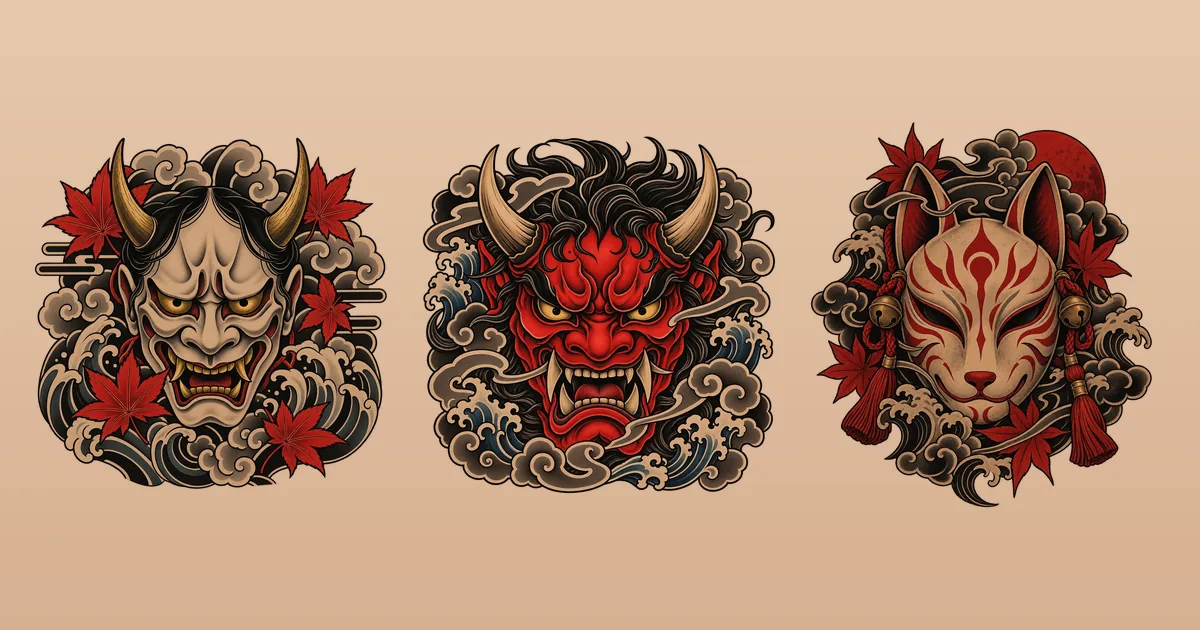
A Japanese mask tattoo is a face that looks back at whoever sees it. Horned hannya, red oni or white fox, the mask is almost always the boldest shape in the piece, and everything around it, from flames to peonies, is there to frame it. Here is what each mask is, how the design is put together, and where it sits best on the body.
Hannya: the Noh mask of a woman turned demon
The hannya comes from Noh, the classical Japanese dance-drama performed since the 14th century. It is the mask of a woman whose obsession or jealousy has turned her into a demon, and it appears in plays such as Aoi no Ue and Dōjōji. Its features are fixed: two sharp, bull-like horns, metallic eyes and a wide, leering mouth.
It carries two feelings at once. Looking straight ahead, the hannya is furious; tilted slightly down, the same face seems to grieve. Noh masks are carved to shift with small movements of the head, so an artist can choose which side to show, or balance both.
Hannya mask tattoo meaning
Theater gives the story; wearers give their own readings: a reminder of how jealousy and rage can change a person, a fierce guardian face, or anger and sorrow side by side. None is a rule. People often search for a "hannya mask tattoo meaning for guys", but the mask means the same for anyone who wears it.
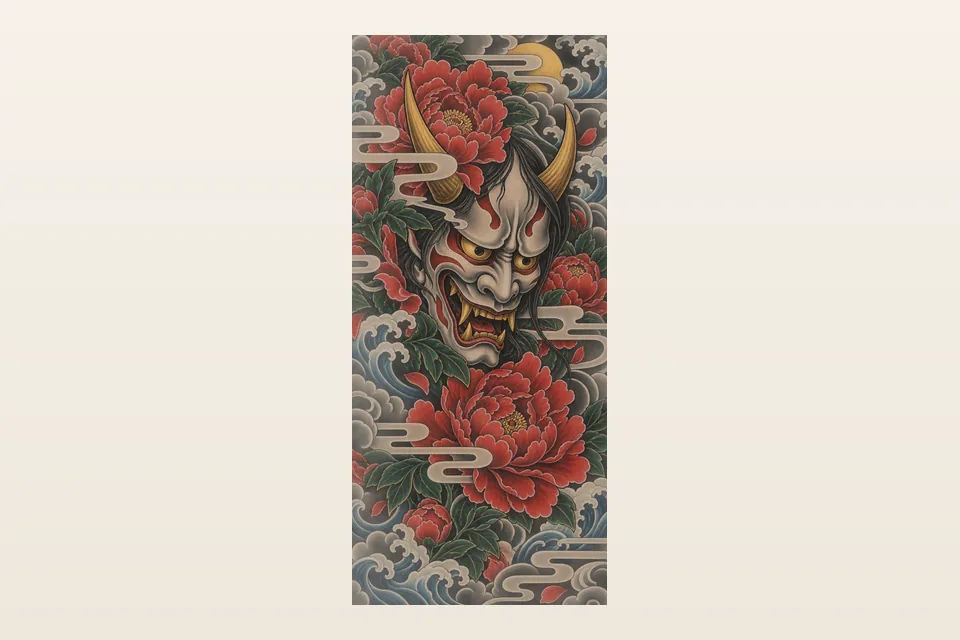
Oni: the ogres of Japanese folklore
The oni is not a theater character but a creature of folklore, a demon or ogre known for superhuman strength. Pictures show it hulking, with one or more horns, massive teeth and red, blue, black or yellow skin, often in a tiger-pelt loincloth and carrying an iron club. At the February Setsubun festival people drive oni out with roasted soybeans, yet oni also protect: onigawara roof tiles carry oni faces thought to ward away bad luck.
An oni mask tattoo usually draws on that double life: a guardian, a temper kept in check, or simply the power of the face. Its round, heavy shape reads at a glance, from the side of the head to the ribs.
Oni vs hannya: how to tell them apart
| Hannya | Oni | |
|---|---|---|
| Origin | A Noh theater mask | A creature of folklore |
| Who it is | A woman turned demon by jealousy | An ogre-demon, not a transformed person |
| Face | Narrow and human, long horns, metallic eyes, wide grin | Broad and brutish, one or more horns, massive teeth, often wild hair |
| Usual colors | White, red or dark red | Red or blue, sometimes black or yellow |
Kitsune: the fox mask
A kitsune is a fox spirit of Japanese folklore, clever and magical, and older foxes are said to grow more tails, up to nine. Kitsune are traditionally Inari's messengers, while wild foxes in the stories are often mischievous. They appear in Noh, kyōgen, bunraku and kabuki plays, and some festivals cast local people as a fox couple, as described on Wikipedia's page on the fox's wedding.
The fox mask is the gentlest of the three: a white face, red markings around the eyes, often bells or tassels on its cords. Wearers read it as cleverness, a trickster's play or protection. It also shrinks best: a small kitsune of 5 to 8 cm in clean black and white linework holds up on a wrist or an ankle, where a detailed hannya would blur. For a bolder kitsune, on men or anyone, try sharper markings, a three-quarter turn and flames behind it on the forearm or chest.
How a Japanese mask tattoo is built
A mask is a face without a body, so the composition decides whether it feels alive.
The angle
Front-on is confrontational, right for the center of the back or chest. A three-quarter view adds depth and lets a horn sweep past the frame.
The background
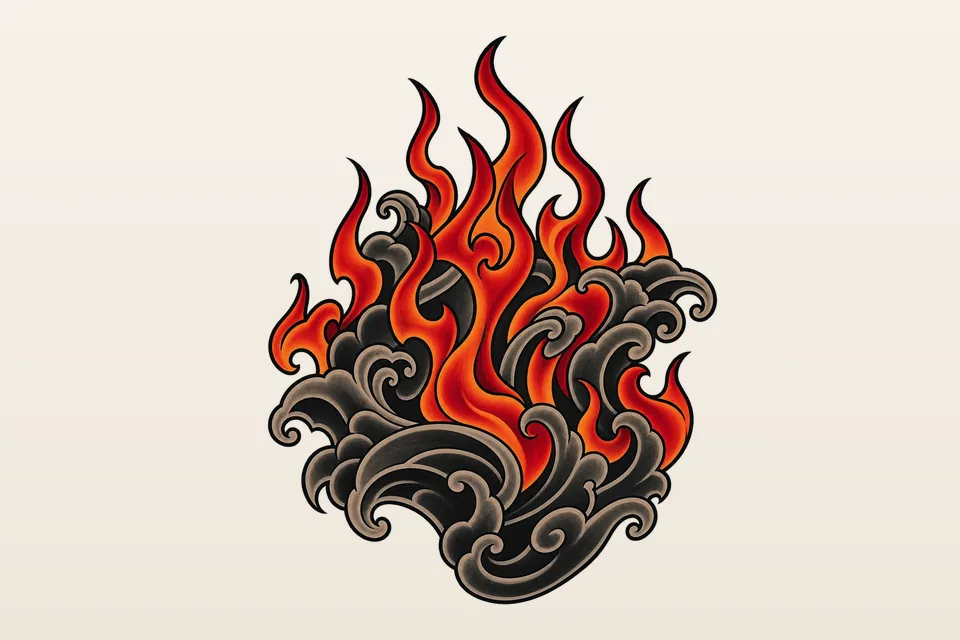
In Japanese work a mask rarely floats on bare skin; a background ties it to the body. The usual choices are wind bars (dark curved bands of moving air), clouds, waves and flames, in black and grey, running one way along the limb.
The pairings
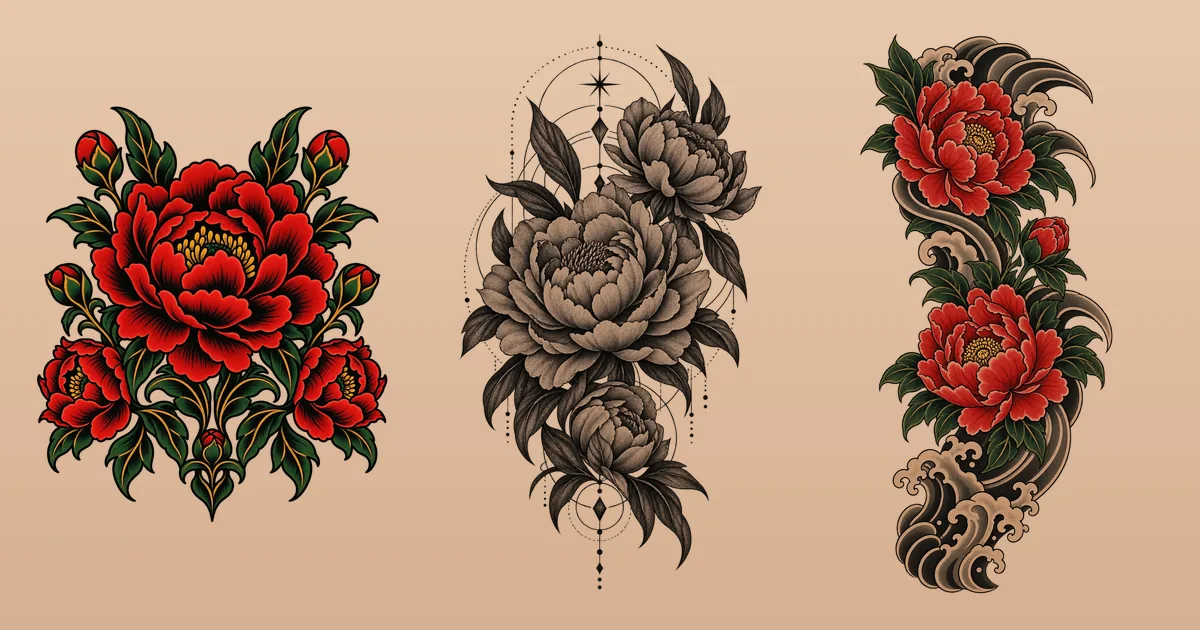
- Peonies soften the mask's edges with big red blooms (see our peony tattoo guide).
- Snakes coil through the horns or out of the mouth; Wikipedia groups the hannya with Noh's snake-type masks (more on our snake tattoo page).
- Maple leaves and cherry blossoms make a quieter, seasonal frame (our Japanese flower tattoo guide).
- A dragon can hold the mask in its coils on a back or sleeve (our dragon tattoo guide).
- A samurai: real samurai armor had its own face mask, the menpō, covering the face from the nose to the chin, often with a moustache and fierce teeth.
Plan the edges too: a mask with wind bars trailing off can grow into a sleeve; one boxed into a neat oval can't.
Color or black and grey
In Noh, the hannya's color tells you who she is: Wikipedia's page says a white mask shows a woman of refined character, a red one a less refined character, and the darkest red a true demon. A tattoo can borrow that logic: a pale face with gold horns and eyes, or full red for something more violent. An oni is usually red or blue, and red against black wind bars reads from across a room.
Black and grey hannya work gets its drama from contrast: solid black in the mouth and eye sockets, smooth grey on the cheeks. Without white ink, a "white" mask is your own skin shaped by the grey around it. A hannya mask stencil is the design reduced to its linework, a quick test of whether the face still reads.
Placement and general sizes
These are general starting points; your artist will fit them to your body.
- Full back: a hannya between the shoulder blades, roughly 25 to 35 cm across, with flames, waves or a snake running to the hips (back tattoo guide).
- Sleeve: the mask on the outer upper arm or shoulder, the background running to the wrist (sleeve tattoos guide).
- Chest: one front-on mask on the pec, 15 to 22 cm, stopping short of the center line (chest tattoo guide).
- Ribs: a mask with a snake or flames running down the side, 15 to 25 cm tall (rib tattoo guide).
- Hand: a simplified mask of 6 to 9 cm with a bold outline (hand tattoo guide).
- Head: an oni on the side of the head needs bold, simple shapes and an artist experienced with that spot.
Describing your mask to an AI or an artist
Give the mask, the angle, the background, the partner, the color and the spot. For example:
- "A pale hannya mask with gold horns, three-quarter view, a snake through the horns, black wind bars, for the outer upper arm"
- "A red oni mask with fangs and wild black hair, front-on, flames rising behind it, black and grey clouds, full back"
- "A small white kitsune mask with red markings and two tassels, clean linework, black and white, for the inner wrist"
- "A black and grey hannya, tilted down so it looks sorrowful, maple leaves around it, for the ribs"
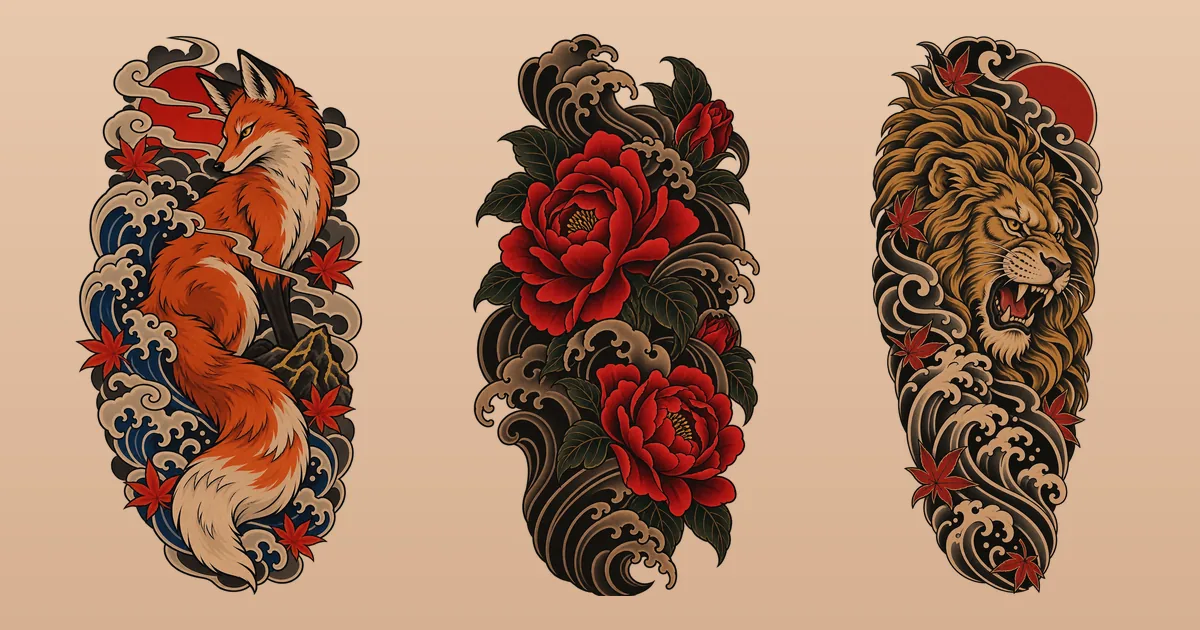
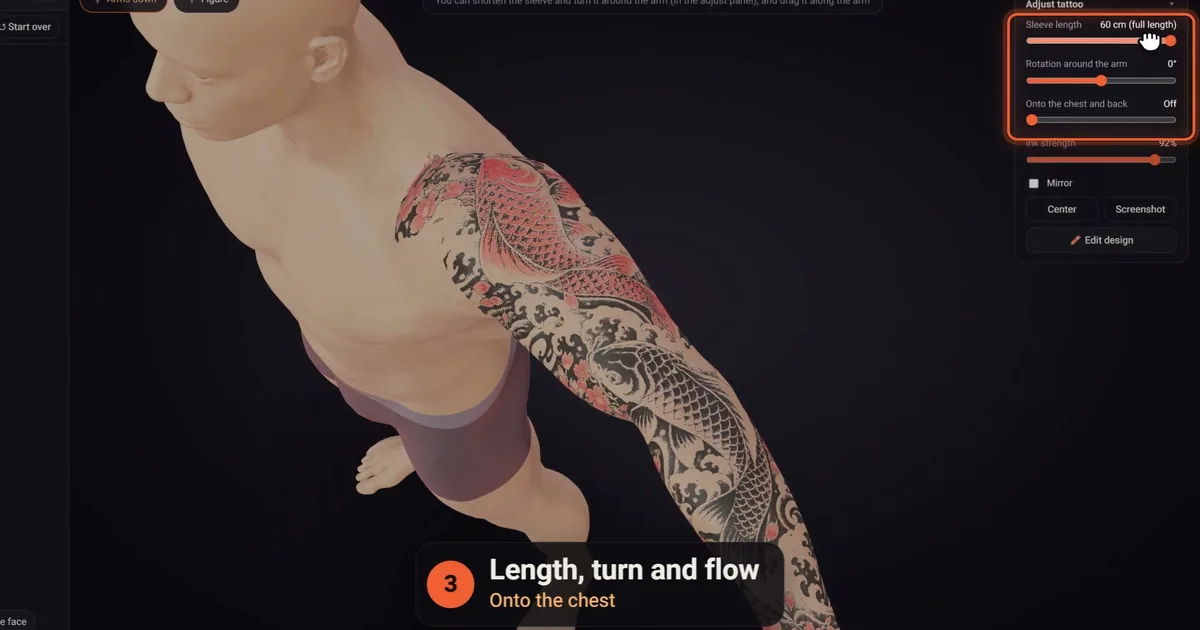
In click2ink you pick Japanese among the 16 styles, choose the spot or a sleeve or the full back, and send a message like these. The AI artist draws an original design and puts it on a 3D figure in your skin tone, sized in real centimeters to your height. Write one change at a time ("bigger flames", "make the oni blue") and it changes only that. The masks on this page come from the free library; how it works shows the rest. Then bring your artist the PNG, a true-size stencil and a share link.
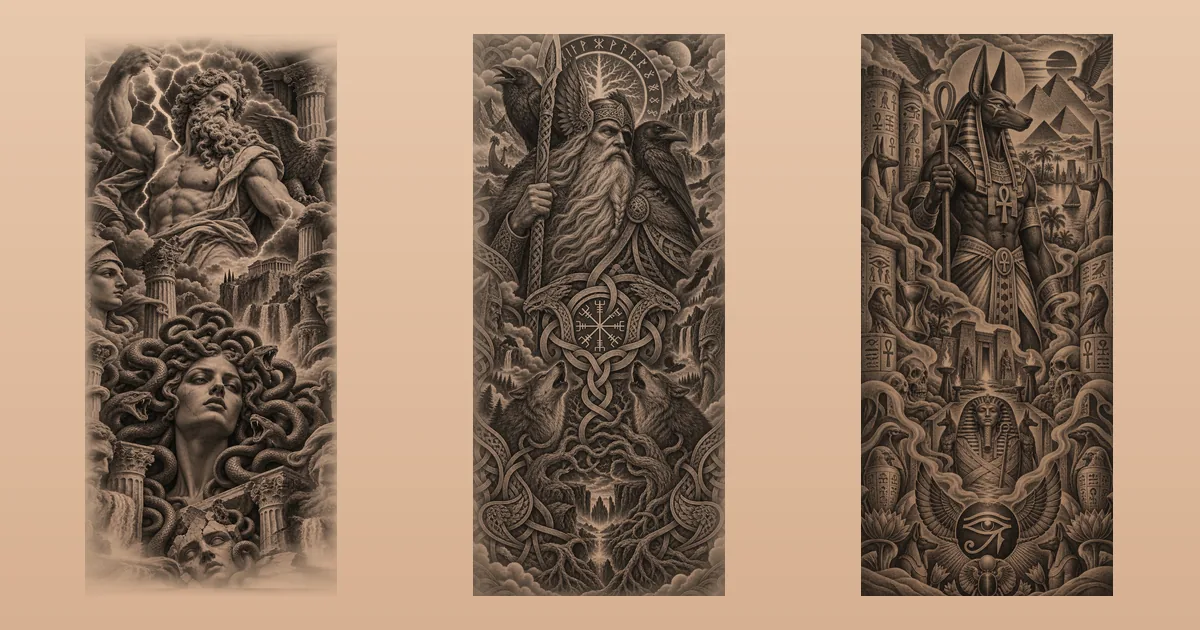
Wear it knowing the story: these masks come from Japanese theater, folklore and belief, and an artist trained in Japanese work will draw them with the right proportions. Our Japanese tattoo guide covers irezumi as a whole, and the mythology tattoo hub sets these figures beside other cultures' myths.
Japanese mask tattoo questions
What does a Japanese mask tattoo mean?
It depends on the mask. The hannya is a Noh mask of a woman turned demon by jealousy, often worn as a reminder of strong emotion or as a guardian. The oni is a folklore ogre that can also ward off bad luck. The kitsune is a fox spirit linked with cleverness and Inari. These are readings people give, not rules.
What is the difference between an oni and a hannya?
The hannya is a specific Noh theater mask showing a woman consumed by jealousy, with a narrow face, long horns and metallic eyes. The oni is a creature of folklore, an ogre-demon with a broad face, fangs and horns, usually red or blue. A hannya is a person transformed; an oni was never human.
Why does a hannya mask look angry and sad at once?
Noh masks are carved so their expression changes with the angle of the head. Looking straight ahead, the hannya seems furious; tilted slightly down, it looks sorrowful, as if crying. A tattoo artist can draw it at either angle, or with features that hold both readings.
Can a Japanese mask tattoo be small?
Yes, drawn simply. A kitsune holds up at 5 to 8 cm in clean linework. A hannya or oni below about 8 cm should drop fine hair, wrinkles and teeth and keep a bold outline, solid black eyes and mouth, and perhaps a hint of cloud or flame.
What goes behind a mask in a Japanese sleeve?
Wind bars, clouds, waves and flames, shaded in black and grey and flowing one way along the arm. Peonies, maple leaves, cherry blossoms, snakes and dragons are common partners. The mask usually sits on the outer upper arm or shoulder, the background running toward the wrist.
Should a hannya mask tattoo be in color or black and grey?
Either works. Color lets you use the Noh logic of white, red and dark red faces, with gold horns and eyes. Black and grey relies on solid black in the mouth and eyes. Ask to see healed examples of both in your artist's portfolio.
Can I combine a samurai and a mask?
Yes. Samurai armor could include a menpō, a face mask from the nose to the chin, sometimes with fierce teeth and a moustache, so a warrior's mask and a hannya or oni can echo each other. A full scene with both needs the room of a back piece or a full sleeve.
Can I design a Japanese mask tattoo before seeing an artist?
Yes. In click2ink you describe the mask, background and placement, see an original design on a 3D figure at its real size, change it one detail at a time, and print a stencil to bring along. Your artist will still redraw it for your skin, which is how it should go.