Hourglass tattoo: glass, sand and the story between them
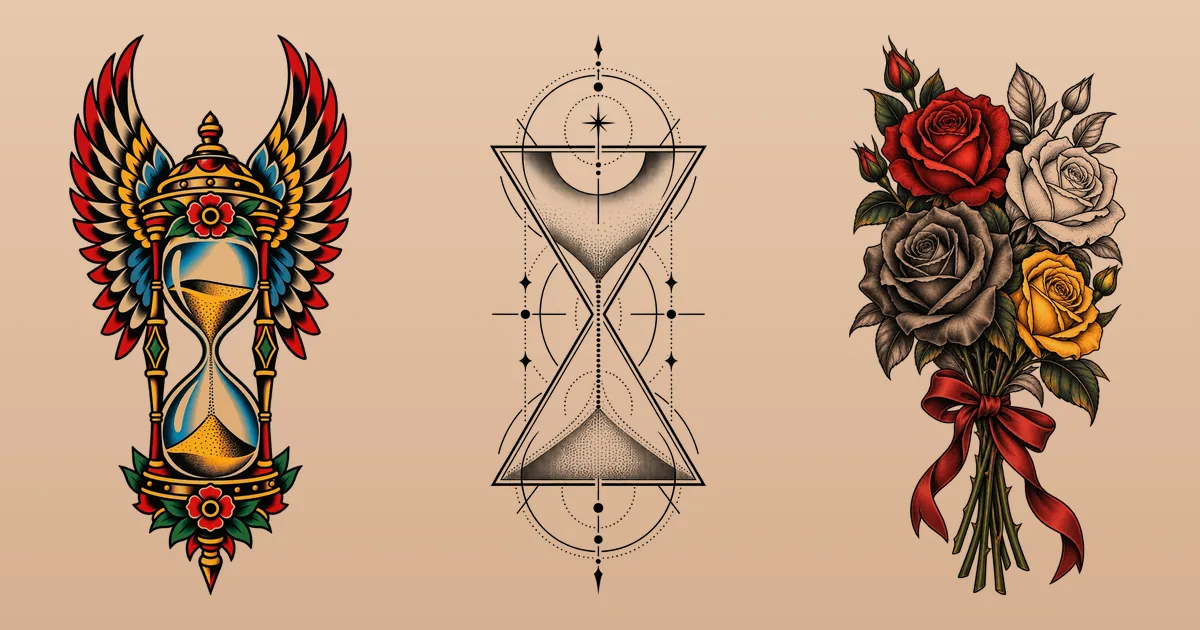
How much sand is left in the top bulb? On an hourglass tattoo, that one detail carries more of the story than anything else in the design. A full top suggests time ahead, a last thin trickle suggests time running short, and a cracked glass suggests time stopped. Get the sand right, choose a partner or two, and fit the tall shape to the right spot.
The parts of an hourglass, read as a design
Wikipedia's hourglass article describes two typically symmetric glass bulbs joined by a narrow neck, with sand falling from the upper bulb to the lower one. Ships relied on marine sandglasses; on land they timed sermons, cooking and work breaks. Each part has a job on skin:
- The two bulbs: mirror images, so the design is symmetrical and sits calmly on a forearm or sternum.
- The neck: the visual center. Keep it open enough for a thin stream of sand, or the glass reads as two blobs.
- The frame: end caps joined by two to four posts. Plain wooden posts feel old-world, ornate brass pillars antique, no frame modern.
- The sand: a mound below, a dip above, a stream between. It changes the meaning, so it deserves the most thought.
- The glass: a curved highlight down each bulb, left as bare skin, makes it look like glass.
As the article notes, an hourglass shows the present as the thin moment between past (below) and future (above).
Sand level and broken glass: how an hourglass tattoo is often read
The article also notes that the hourglass often stands for how fleeting human life is, the "sands of time" running out. None of the readings below is a rule. They are common readings, and the sand is how you steer them:
| Design choice | Often read as | Design note |
|---|---|---|
| Top bulb full, stream starting | A new beginning, time ahead, patience | Show a few falling grains |
| Half and half | Balance, living in the present | The calmest version |
| Top nearly empty | Time running short, "make it count" | Pairs well with a skull |
| Cracked glass, sand leaking | Time slipping away, a loss, a hard chapter | One clean, jagged crack |
| Shattered glass | Breaking free of time, or a life cut short | Needs room for the shards |
| Sand turning into birds or petals | Personal: freedom, a person, a moment | Keep the change near the lower bulb |
Some people simply like the shape and the old-world feel; that's reason enough.
Hourglass and skull: building the memento mori piece
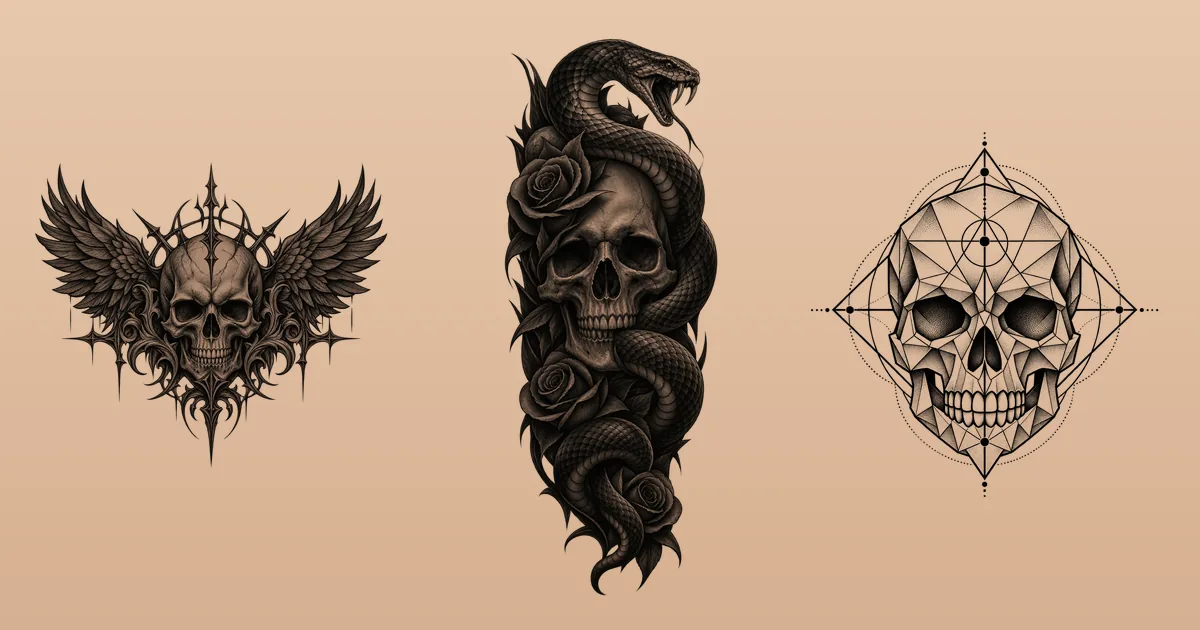
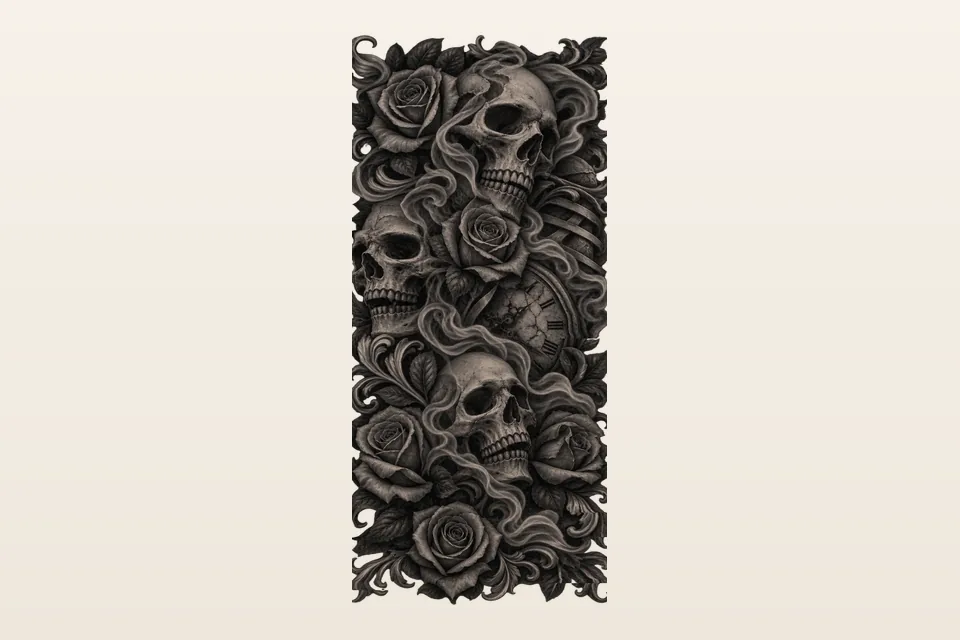
The Latin phrase memento mori loosely means "remember death," and its Wikipedia article lists the hourglass beside the skull, the coffin and wilting flowers as motifs of the impermanence of life, and says vanitas paintings combined skulls, guttering candles, wilting flowers and hourglasses. Vanitas, a still-life genre of memento mori, was used heavily by Dutch painters of the Baroque period. Our skull tattoo guide explains the idea itself; here's how to arrange the two objects:
- Stacked: the skull on the top cap, or the hourglass on the crown. Tall, for the forearm or calf.
- Side by side: skull in front at three-quarter view, hourglass behind. The still-life layout, for a thigh or chest.
- Inside each other: a skull formed by the sand mound, or sand pouring from an eye socket. It needs about 12 cm to read.
- Scale: make one the hero; two objects the same size fight for attention.
Other partners: flowers, wings, clocks, words and the tree of life
Roses and other flowers
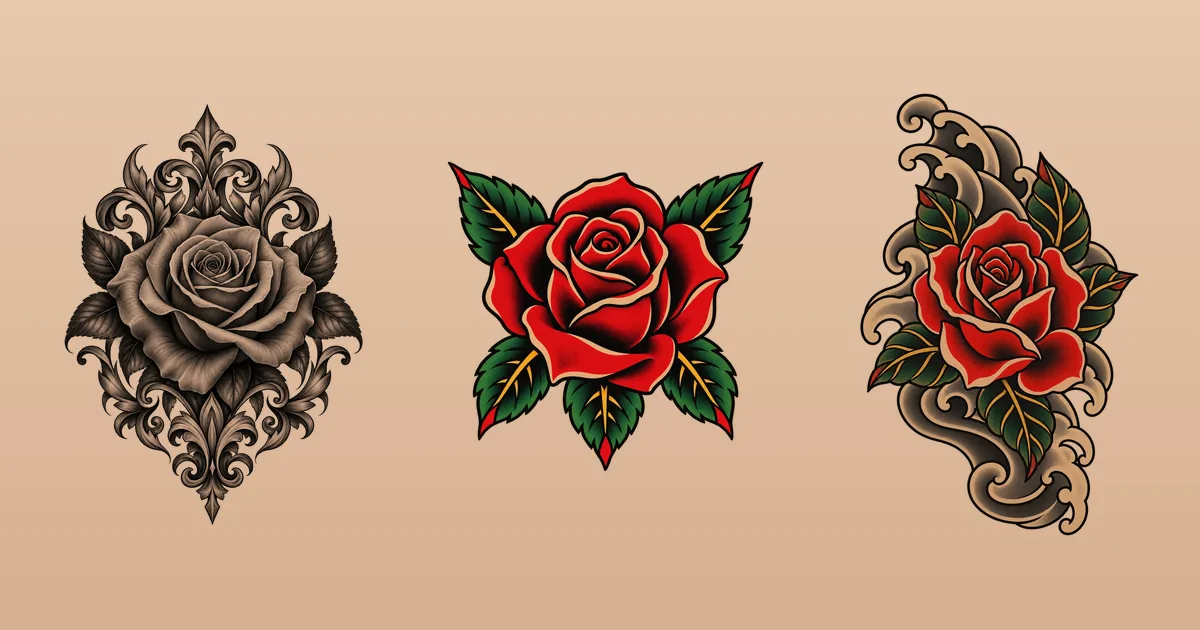
A rose at the base, or petals falling with the sand, is often read as love measured against time. A ribbon-tied bouquet, like the one at the top, can wrap the lower cap, and vines can climb the posts. See the rose tattoo guide and the flower tattoo guide.
Wings: tempus fugit
The hourglass article calls a winged hourglass a literal picture of the Latin tempus fugit, "time flies." Level wings suit the chest; swept-up wings keep it tall for the forearm. Our tattoo quotes guide covers Latin phrases if you want the words on a banner too.
Clocks, words and dates
A clock face behind the glass or a pocket watch on its chain doubles the time theme; set the hands to a meaningful time. A banner across the frame holds a short phrase, and a date fits on the lower cap or in the sand. For names, see the name tattoo guide.
The tree of life
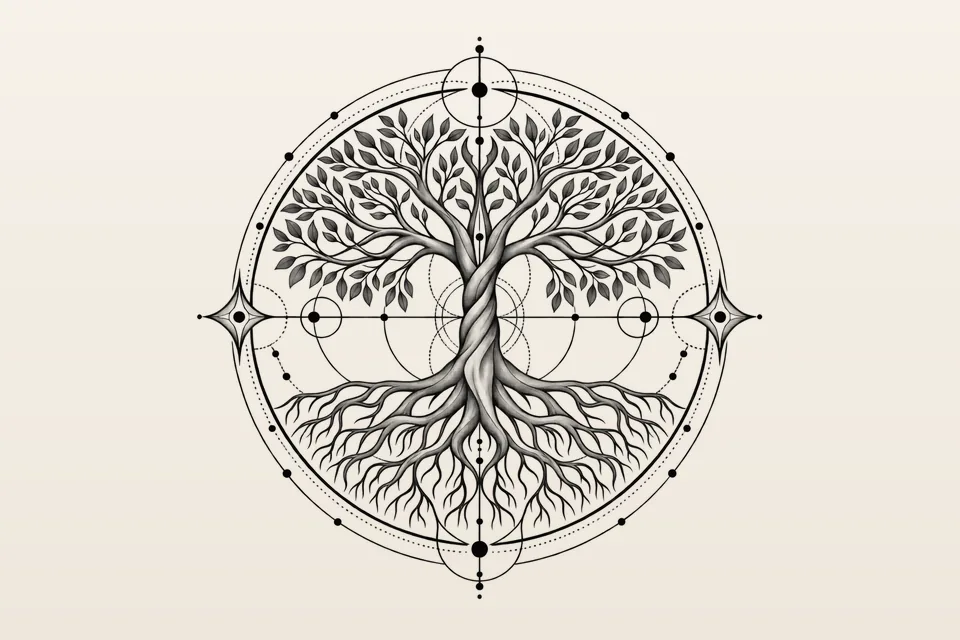
Roots in the lower bulb and branches in the upper one turn time into growth. (Hourglasses with coins instead of sand are a look; any meaning is yours to give.)
Styles that suit an hourglass
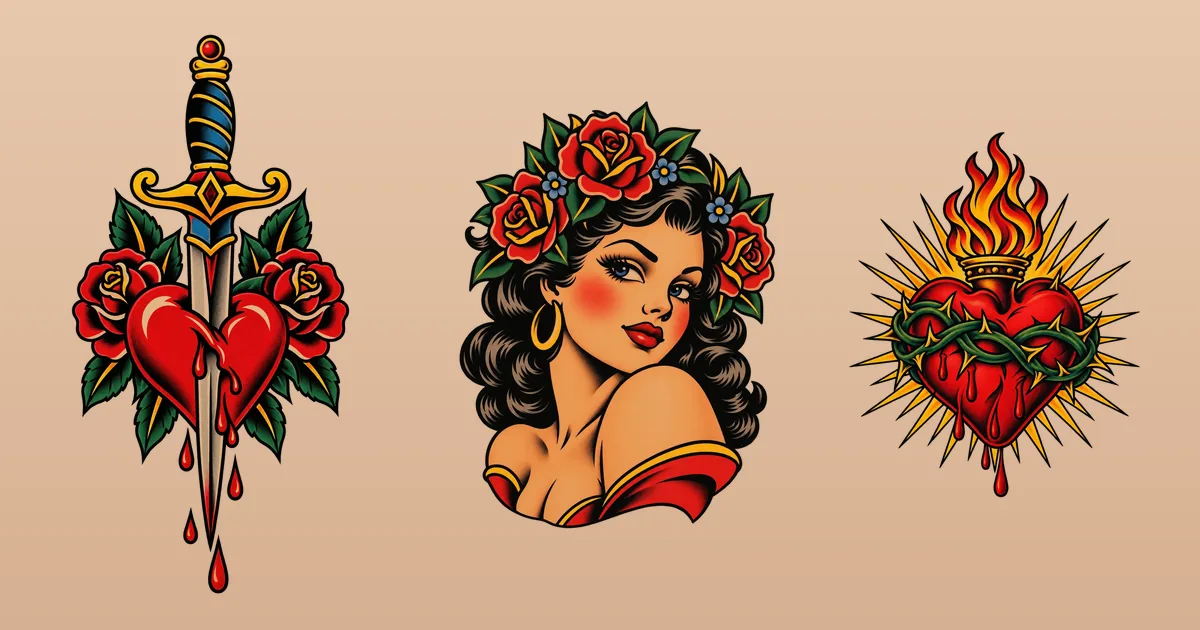
- American traditional: a thick outline, gold frame, yellow sand, red roses, often wings, like the first design at the top. The traditional tattoo guide covers the style.
- Neo-traditional: the same bold shapes with ornate brass pillars, richer color and more varied line weight. See the neo traditional tattoo guide.
- Black and grey realism: polished glass and smoke, which need room; the realism tattoo guide explains why.
- Fine line, minimalist and small: two thin triangles meeting at a point, a few dots for sand, no frame. See the fine line, minimalist and small tattoos guides.
- Geometric: the hourglass as two triangles inside circles, dotted lines and stars, like the second design at the top, with dotwork for the sand. The mandala and geometric guide covers dotwork.
- Etching: fine hatching on the frame and glass for an old-engraving look; see the etching tattoo guide.
Where an hourglass fits, and how big
A tall, narrow, symmetrical subject wants tall, narrow spots. These are general starting ranges; your artist sets the real ones.
| Spot | What fits | General starting size |
|---|---|---|
| Forearm (outer or inner) | A single hourglass, hourglass with skull or roses | 8 to 18 cm tall |
| Calf or shin | A framed hourglass with vines, a skull stacked below | 12 to 22 cm |
| Sternum | A centered winged or ornamental hourglass | 10 to 20 cm |
| Back or side of the neck | A small, simple hourglass, fine line or bold | 4 to 8 cm |
| Sleeve | The hourglass as one element among clocks, skulls, roses and smoke | Part of the whole arm |
| Wrist, ankle, behind the ear | Minimal triangles and a few dots | 2 to 5 cm |
The forearm, leg, neck, chest and sleeve guides go deeper on each spot.
Describing your hourglass to the AI or an artist
Name the frame, the sand, the partner, the style, the size and the spot:
- An hourglass with turned wooden posts, top bulb nearly empty, a realistic skull in front at three-quarter view, black and grey with soft smoke, 16 cm, outer left forearm.
- A traditional winged hourglass, gold frame, yellow sand half and half, red roses at the base, banner reading "tempus fugit", 14 cm, centered on the sternum.
- A fine-line hourglass made of two triangles, a few dots of sand, no frame, 4 cm, inside the right wrist.
In click2ink, our own studio, a project's first tattoo starts with four questions: where it goes (tap a spot on a small figure, or choose a sleeve), the style (16 of them, from American traditional to geometric and fine line), your description and an optional picture. The AI artist draws an original design on a 3D figure sized in real centimeters to your height (for the side of the neck, drag it there from the back of the neck). Ask for one change at a time ("less sand in the top, keep the roses"), add a date with the editor's text tool, then print a true-size stencil or share a link with your artist. How it works shows each step, and pricing explains the free credits.
Hourglass tattoo questions
What does an hourglass tattoo mean?
There's no single meaning. It's commonly read as time passing, mortality and a reminder to use your time well, and sometimes as patience or balance. The details steer it: a full top bulb suggests time ahead, an empty one time running out, wings mean "time flies," and a skull turns it into a memento mori. Your own reason matters more than any list.
What does an hourglass tattoo mean on a woman?
The same as on anyone: time, mortality, patience or a moment worth marking. Some women pair it with roses or a date in fine line, others choose a bold traditional or black and grey piece. Some enjoy the play on an "hourglass figure," but that's a pun, not a meaning the symbol carries.
What does an hourglass tattoo mean for guys?
Nothing different from what it means for anyone else. Skulls, clocks and memento mori sleeves come up in men's ideas, but those are style choices, not rules. A realistic hourglass with smoke on the forearm or a fine-line one behind the ear suits whoever likes it.
What does a broken or cracked hourglass tattoo mean?
It's read in opposite ways. Some see time stopped or cut short, a loss or a hard chapter; others see someone breaking free of time's limits. Leaking sand suggests time slipping away; scattering shards a clean break. Decide which story you want and let details, such as birds or a date, make it clear.
What does an hourglass with a skull mean?
It's a memento mori pairing: the hourglass shows time running out, the skull shows where it leads. It's often meant as "make your time count" rather than a grim warning. The Memento mori article lists both among the theme's motifs. A nearly empty top bulb strengthens the reading; roses or a banner soften it.
Can an hourglass tattoo be small or minimalist?
Yes. At 2 to 5 cm, draw it as two triangles meeting at a point, with a few dots for sand and no frame. Leave space at the neck so the lines don't merge as the tattoo ages. The wrist, ankle and behind the ear suit it; keep framed, shaded versions for 8 cm and up.
How do I add flowers to an hourglass tattoo?
Place a bloom or two at the base, wrap vines up the posts, or let petals fall with the sand. Roses suit bold styles; small wildflowers suit fine-line work. Keep flowers mostly outside the glass so the sand level stays readable, and let the leaves widen the bottom of the design.
Where is the best place for an hourglass tattoo?
Its tall, symmetrical shape suits the forearm, the calf or shin, the sternum and the back of the neck. Wings or a wide layout suit the chest or upper back. Try the design on a printed stencil or a 3D figure in a natural pose, so it stands upright when your limb hangs.
How do I fit an hourglass into a sleeve?
Treat it as one element in a time-themed scene: an hourglass on the forearm, a skull or clock on the upper arm, roses and smoke joining them. Smoke, clouds or sand pouring from a broken glass fill the gaps. Plan the whole sleeve with your artist first, so the hourglass isn't squeezed in.