Etching tattoo: the old-print style built from lines
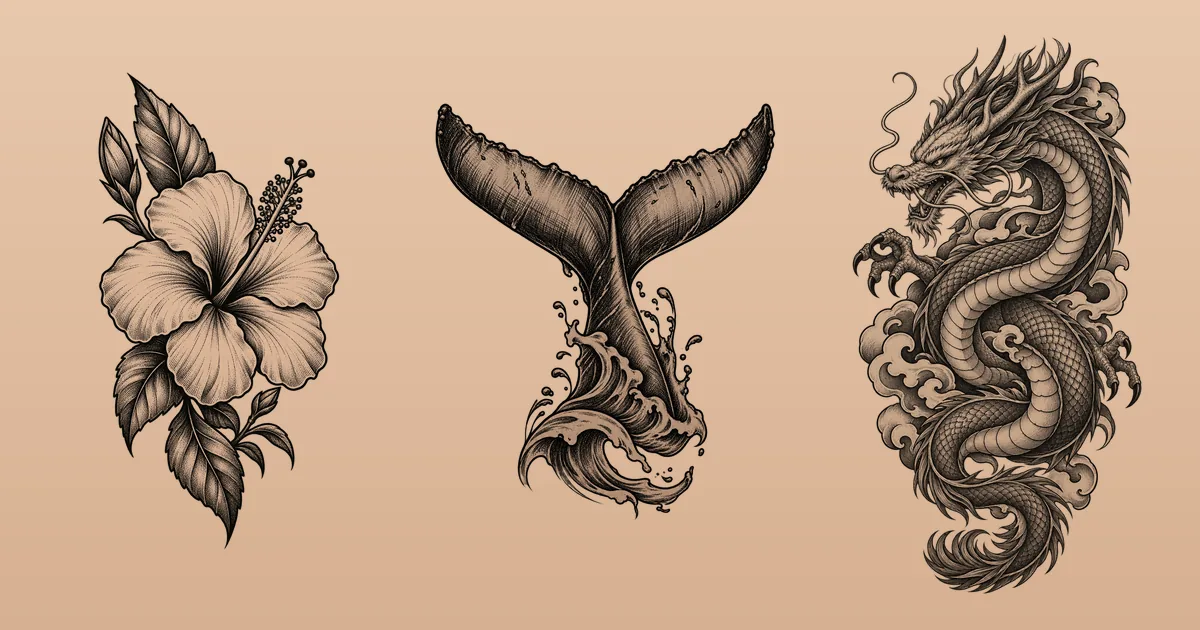
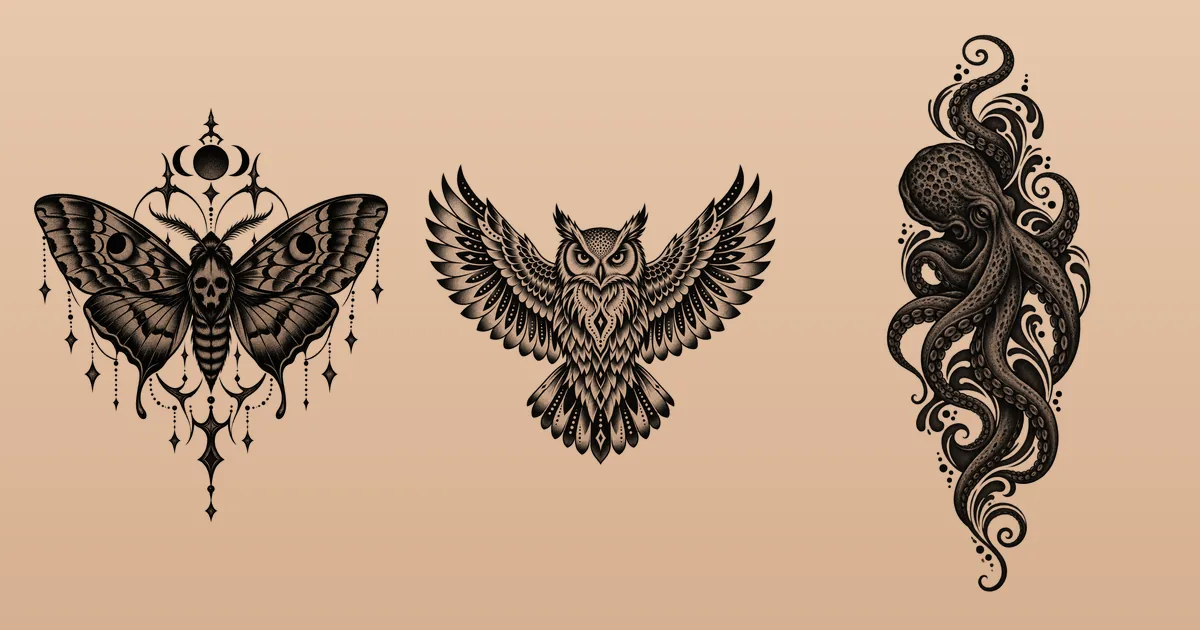
Open an antique natural-history book and look closely at one of its plates: the shadow on a beetle's shell is not grey at all, but hundreds of tiny parallel lines. An etching tattoo borrows exactly that trick. It draws light and shadow with black lines and dots alone, so the finished piece looks as if it was printed from an old copper plate rather than painted on skin.
From copper plate to skin: where the look comes from
The style is named after two printmaking methods that look alike on paper. In engraving, the artist cuts lines straight into a metal plate, traditionally copper, with a steel tool called a burin. In etching, the plate is coated with a waxy ground, the artist scratches the drawing through it with a needle, and acid bites the exposed lines into the metal.
Printmakers built tone out of lines. Thin parallel lines, called hatching, read as a shadow; a second set crossing the first, cross-hatching, darkens it; patterns of dots, stippling, give softer transitions. Tattooists in this style use the same three tools.
Dürer, the reference everyone reaches for
Albrecht Dürer is the name you'll hear most. He is counted among the first great masters of engraving, and in 1513 and 1514 he made three famous engravings, often called his master prints: Knight, Death and the Devil, Saint Jerome in His Study and Melencolia I. He also tried etching itself: the oldest dated etching is his, from 1515, though he made only six before going back to engraving. Up close, those sheets show the whole vocabulary of the modern etching tattoo: hatching that follows a form, dense cross-hatching in shadow, bare paper for light.
Etching, engraving or illustrative? The names people use
You'll see the same style under several labels, and artists don't always agree on where one ends and the next begins:
- Etching or etched tattoo: the most common name for the vintage-print look.
- Engraving tattoo: the same idea, often used for crisper, more regular line patterns, like old banknote or book-plate engravings.
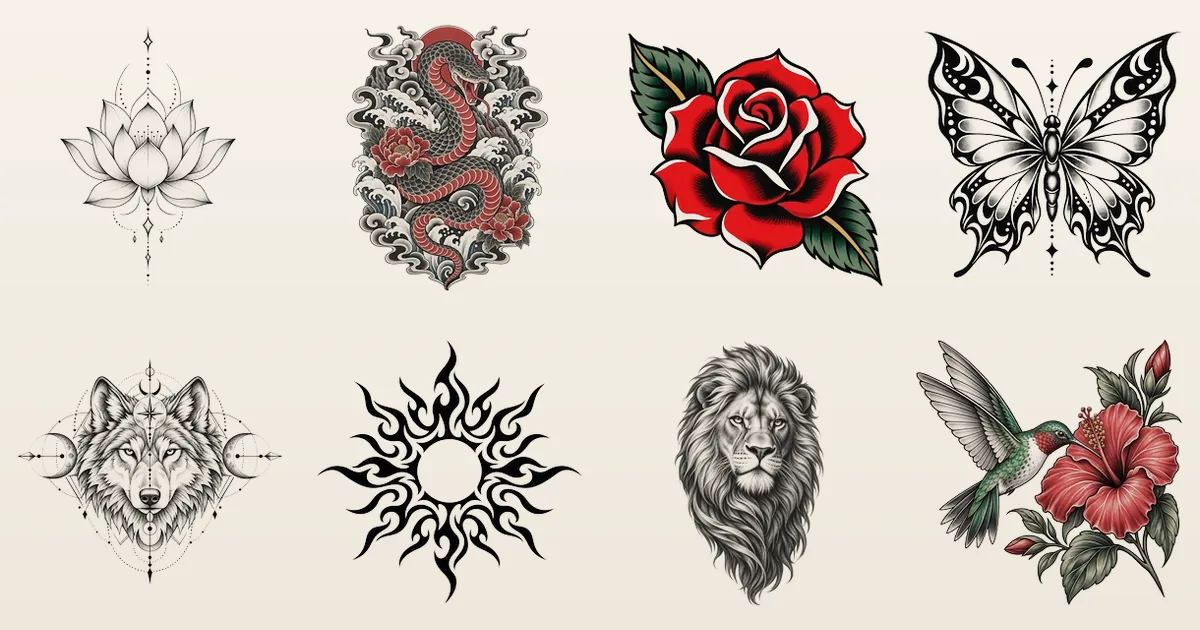
- Illustrative tattoo: a wider umbrella for tattoos that look drawn rather than photographed. Etching sits inside it, but illustrative work can also be colorful or sketchy.
In the click2ink studio the style is called illustrative etching, one of the 16 styles you can pick. With an artist, any of these names gets you to the right part of their portfolio, but bring pictures too.
How it differs from blackwork, dotwork and realism
All four can be black only; the difference is how each makes a shadow.
| Style | How it shades | Outlines | Overall feel |
|---|---|---|---|
| Etching / engraving | Hatching, cross-hatching and stippling: lines you can count up close | Fine to medium, often broken by the hatching | An antique print or book illustration |
| Blackwork | Solid black against bare skin | Bold, or none at all | Graphic, high contrast |
| Dotwork | Stippled dots, often in patterns | Fine, often geometric | Soft gradients, ornamental |
| Black and grey realism | Smooth grey washes from diluted ink | Usually none | A photograph |
The overlaps are real: etching borrows dotwork's stippling, and heavy etched pieces carry solid blacks like blackwork tattoos. What sets it apart from realism tattoos is visible mark-making: from across the room it reads as a picture, up close as lines. For the wider map, see our guide to tattoo styles.
Subjects that suit the style
Anything that appeared in old prints feels natural in an etching tattoo, and anything with texture gives the hatching something to do:
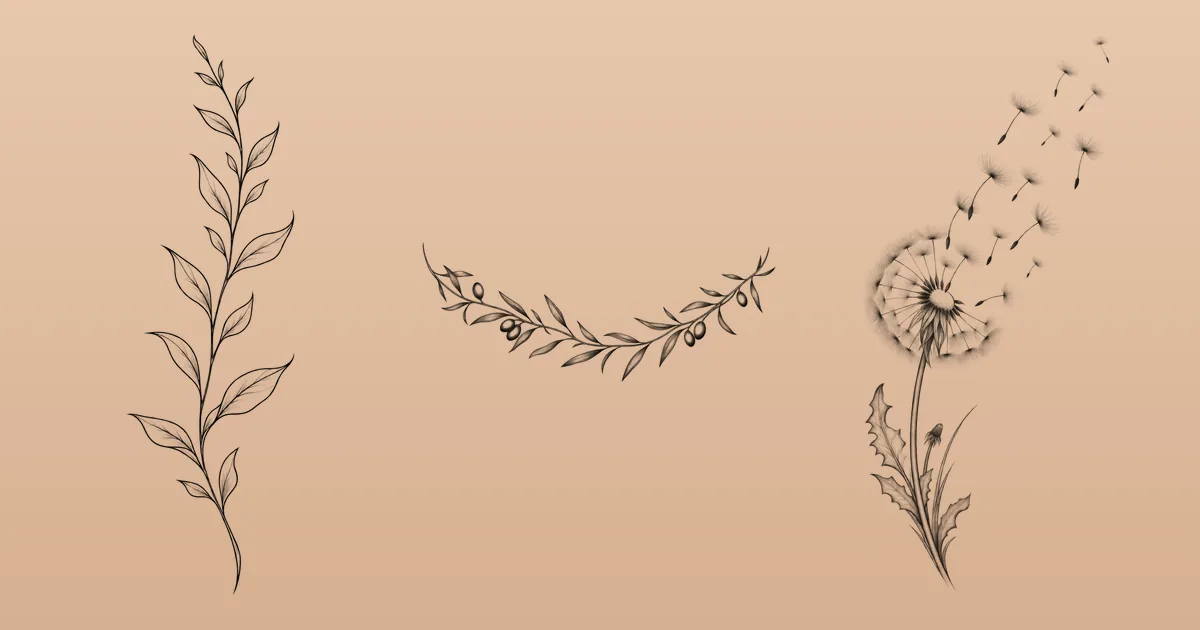
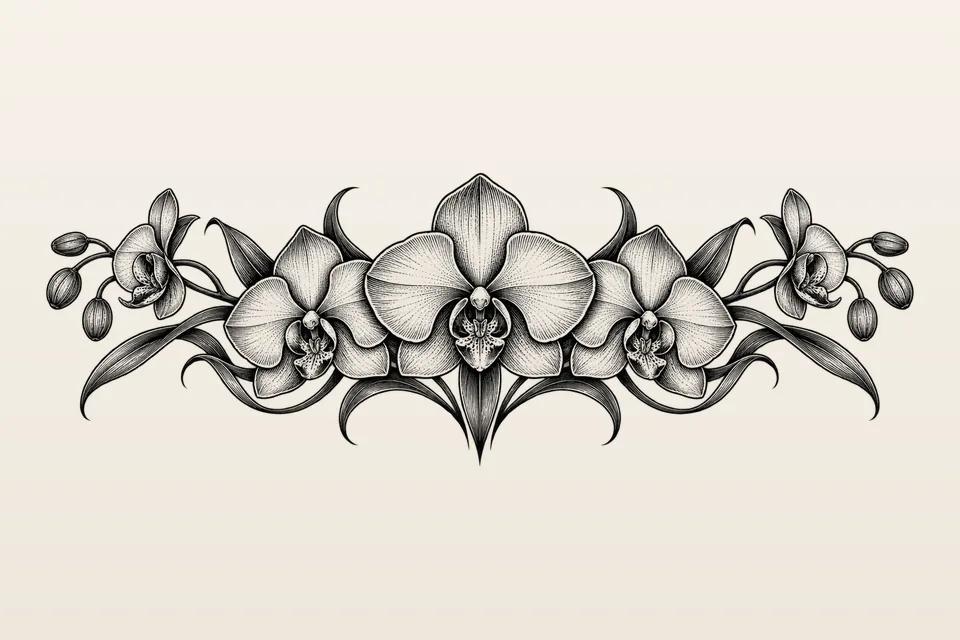
- Plants and flowers: the botanical plate is the style's home ground. Leaves, seed heads and petals with hatched undersides; our botanical tattoo guide covers sprigs, branches and vines.
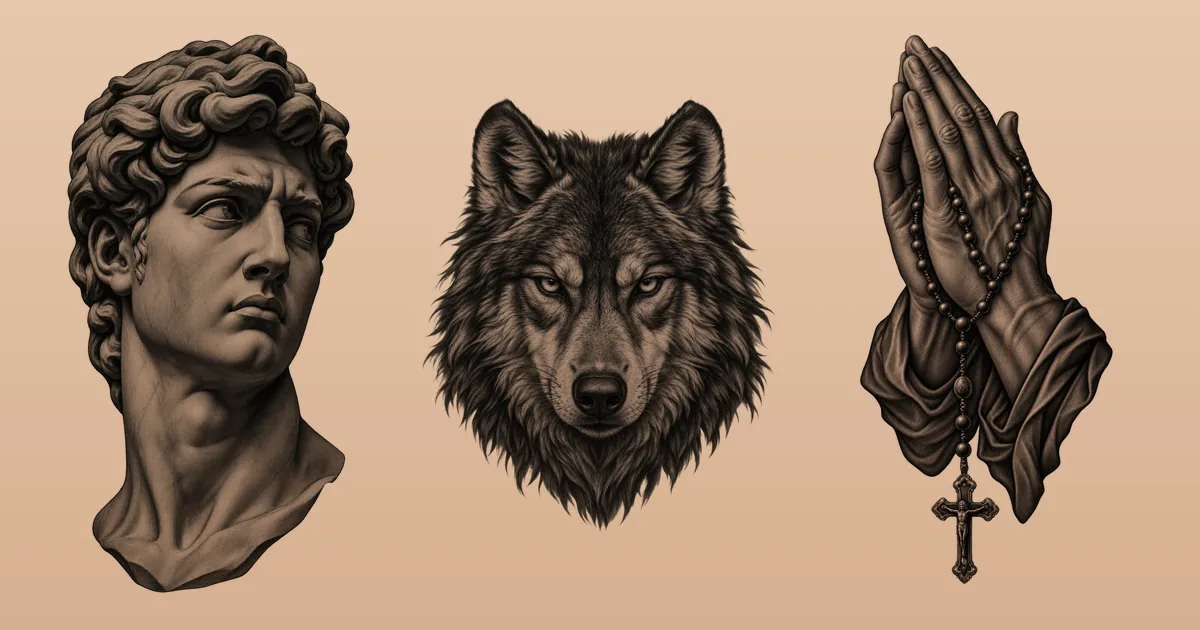
- Animals: fur, feathers and scales are made for line texture. Owls, stags, wolves, moths, whales and snakes all work.
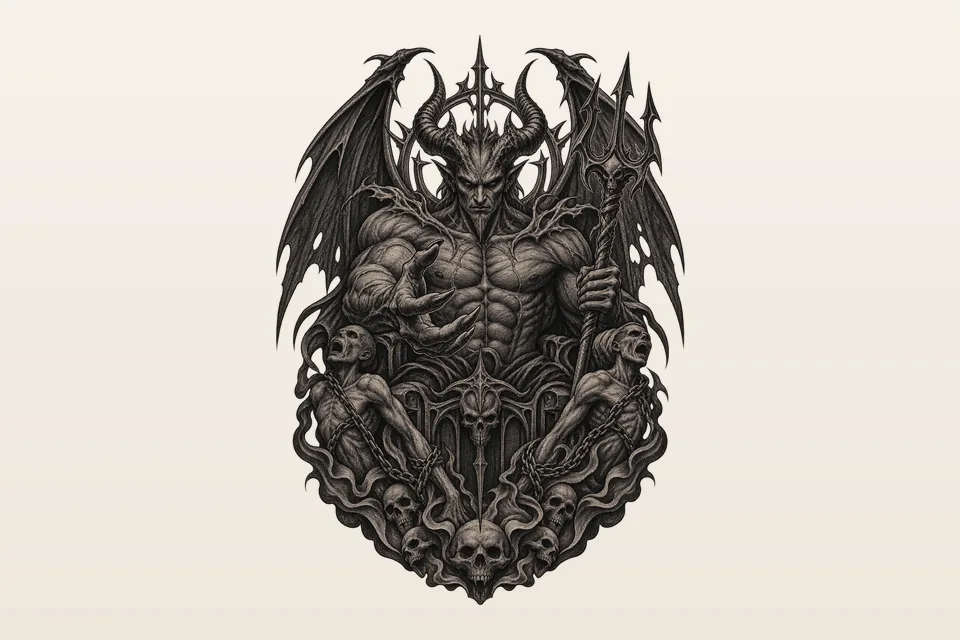
- Anatomy: hearts, skulls, hands and skeletons drawn like an old medical textbook. Our skull tattoo page has more skull ideas.
- Myth and the occult: dragons, devils, sea monsters, gods and saints, often with a dark, crowded mood.
- Ships and objects: sailing ships, lighthouses, hourglasses, keys and old scientific instruments.
A frame helps the old-print feel: an oval border, a banner with a word in roman capitals, or a scene cut off by a straight edge like a fragment of a larger plate.
Size and line spacing: what keeps hatching readable
This separates a good etching tattoo from a grey smudge a few years later. Ink lines in skin tend to spread a little over time, and hatching lines placed too close can merge into a dull tone. General guidance to discuss with your artist:
- Go bigger than you think. Dürer's Knight, Death and the Devil is only about 24 cm tall, but paper holds lines far finer than skin does. A scene with that much detail needs a thigh, a back or a sleeve, not a wrist.
- Fewer, bolder hatching lines. Wider gaps and fewer layers of cross-hatching than the print you're copying.
- A strong silhouette and real contrast. The outer shape should read on its own, with solid black in the deepest shadows and bare skin for the light.
How close is too close depends on the needle, the artist's hand and your skin, so there is no single rule: ask your artist for the minimum size they'd tattoo your design at. Our tattoo size guide has more on matching detail to size.
Etched sleeves and big pieces
One consistent line texture can hold many subjects together, so the style scales up well: a snake winding through ferns and moths, or a ship, a whale and a lighthouse in one sea scene. Keep one light source so the hatching runs the same way everywhere, two or three main subjects, and areas of open skin or solid black to rest the eye, so the arm doesn't turn into one grey texture.
In click2ink you can start a full, half or forearm sleeve, or a leg sleeve, in illustrative etching; the AI artist draws one continuous design around the limb, and you set its length and turn it on the 3D figure. Our sleeve tattoos guide covers planning the flow.
Describing an etching tattoo to an AI or an artist
Name the subject, then say how it should be shaded. "In etching style" alone leaves too much open; describe the lines:
- "A stag's head in three-quarter view, antique engraving style, fine hatching following the fur, cross-hatching in the shadows under the jaw, an oval frame, about 15 cm tall for the outer forearm."
- "An anatomical heart with veins, like a 19th-century medical illustration, black ink only, stippled shading on the left side, a small banner below with one word in roman capitals."
- "A sprig of olive with three leaves and two olives, botanical plate style, light hatching, lots of bare skin, along the collarbone."
In the studio, pick illustrative etching in the starting questions, choose the body area and describe the subject. Designs come without white ink unless you ask, so the light parts stay bare skin, as on a printed page. If the hatching is too busy, the one-tap Simpler change thins it out. You can attach an old print with 📎 and say whether to take its idea or its style, then print a stencil at real size for your artist. See how it works for the full flow, and the pricing page for what credits cost after the free ones.
Finding the right artist
Etching is a specialist's style. Look for portfolios full of hatched work, not only bold blackwork or smooth realism, and for healed photos: lines still separate where they should be, shadows dark without being muddy. Bring your design, the size and placement, and any prints that inspired it, and expect the artist to redraw the hatching for your skin.
Etching tattoo questions, answered
Is an etching tattoo the same as an engraving tattoo?
Mostly, yes. Both names describe tattoos that imitate old intaglio prints, with tone built from hatching, cross-hatching and stippling in black ink. Some artists use "engraving" for crisper, more regular line patterns, like banknotes or book plates, and "etching" for a slightly looser, sketchier line. When booking, show reference pictures rather than relying on the name alone.
Can an etching tattoo have color?
Traditionally it's black only, because the prints it copies were printed in one ink. Some artists add a single accent, such as a red flower, which pushes it toward illustrative work. Plan any color from the start, because it needs open skin to sit in rather than going over dense hatching.
How small can an etching tattoo be?
Small pieces work when the subject is simple and the hatching is kept loose: a single leaf, a moth or a small skull with a few layers of line. Crowded scenes need real room. There's no universal minimum, since it depends on the artist's needles and your skin, so ask your artist what size they would recommend for your design before you commit.
Does an etching tattoo take longer than other styles?
Often, because each hatching line is placed one by one and dense shadows are built up in layers. A palm-sized piece may fit in one session, while sleeves and back pieces are usually split into several. Only your artist can estimate the time, after seeing the design, the size and the placement.
Is etching a good style for a cover-up?
Light, airy etching is not the strongest cover, because bare skin and fine lines let old ink show through. Heavier etched designs with large dark areas, such as deep shadows, solid backgrounds or a dark sky, can work. Only an artist who sees your old tattoo in person can say. Our cover-up guide explains the general options.
Can a tattoo artist copy a real antique print?
Many artists will adapt one, simplifying the hatching so it survives in skin, and most prefer to redraw rather than trace. A redrawn version fits your body better: stretched for a forearm or rounded for a shoulder, with the line spacing opened up for your size. Bring a sharp scan.
How does an etching tattoo look on deeper skin tones?
It can look excellent, because it relies on the contrast between black ink and skin rather than on color. On deeper skin, ask for slightly bolder lines and wider gaps between them, and more solid black in the shadows, so the shading reads clearly. Look for an artist whose healed portfolio includes linework on skin like yours.
Which body parts suit the engraving style?
Flat, wide areas give hatching the most room: the outer forearm, upper arm, calf, thigh, chest and back. Tall subjects like snakes, plants and ships fit limbs; round ones like medallions and skulls fit shoulders and the back of the calf. Hands and fingers are tough homes for fine hatching, so keep any design there bold and simple.