Custom tattoo design: how a one-of-a-kind piece comes together
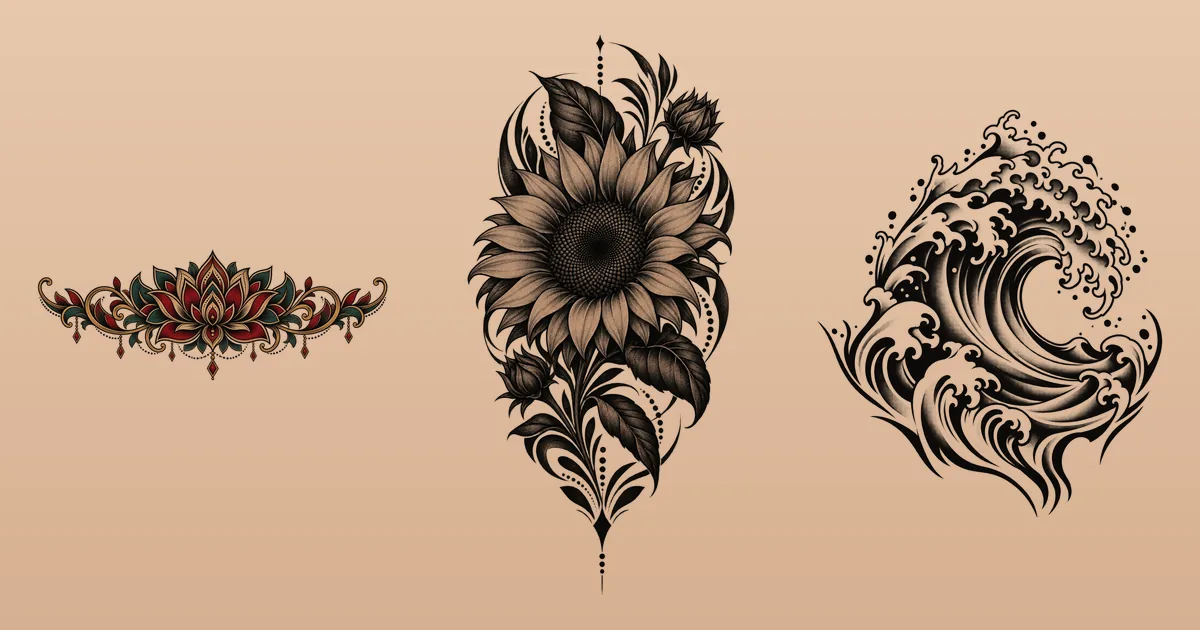
Walk into a street shop and you'll see flash on the walls: designs drawn in advance, ready to tattoo. A custom tattoo design is the opposite. It's drawn for one person, around one idea, for one spot on one body, and it usually takes a conversation, some drawing time and a round of changes before it becomes a stencil.
Flash, custom, or something in between
Wikipedia defines tattoo flash as a design made ready for customers, either to avoid the need for a custom one or as a starting point for custom work. That second use matters, because flash and custom aren't two boxes so much as two ends of a line:
- Flash is drawn in advance and chosen off a sheet. It's quick to book and you know exactly what you'll get. Our flash tattoo guide covers it.
- Adapted, or semi-custom, work starts from an existing design and changes it for you: another flower, your date, a mirrored pose, a new size.
- Fully custom work starts from your idea and your body. The artist composes it around your placement, often sketching over a photo of the spot itself.
None of these is better by default. A classic swallow from a flash sheet can be exactly the right tattoo, and a custom sleeve can disappoint if the brief was muddled. What custom buys you is fit: to your story, to your shape and to the tattoos you already have.
How a custom tattoo design usually comes together
Every studio runs its own process, but most custom work follows some version of these steps:
- The inquiry. You send the idea, the placement, a rough size and a few references, usually by email or the studio's form.
- The consultation. In person or online, the artist looks at the spot, asks what the tattoo means and suggests a direction. This is where honest feedback happens, so listen.
- The deposit. Many artists take one to hold the appointment and cover drawing time. How much it is, and whether it counts toward the tattoo, varies; ask before you pay.
- The drawing. Some artists send the design ahead; many show it on the day. Either way, it's drawn for your placement and size.
- Changes. Small adjustments are normal. A complete rethink may mean a new drawing, and sometimes a new fee.
- The stencil. On the day, the artist applies the stencil and you look at it in a mirror before anything is tattooed. It can still be moved or resized at this point.
Popular artists can have long waiting lists, so give yourself time. If you need the tattoo by a certain date, say so in your first message.
What to put in your brief
The quality of a custom piece starts with what you send. A useful brief covers these points, a line or two each:
- The idea and why, in one sentence each. "A lion for my son, Leo" tells an artist more than "a lion."
- The style: neo-traditional, fine line, Japanese, blackwork, black and grey realism. If you don't know the names, browse our tattoo designs guide and point at what you like.
- Placement and size: the body part, which side, and a size in centimeters or inches.
- Color, or black and grey.
- Must-haves and no-gos: the one element you can't lose, and the one you never want.
- Two to five references, each with a note on what you like about it.
- Where the artist is free. Leave something open; artists do their best work where they have room.
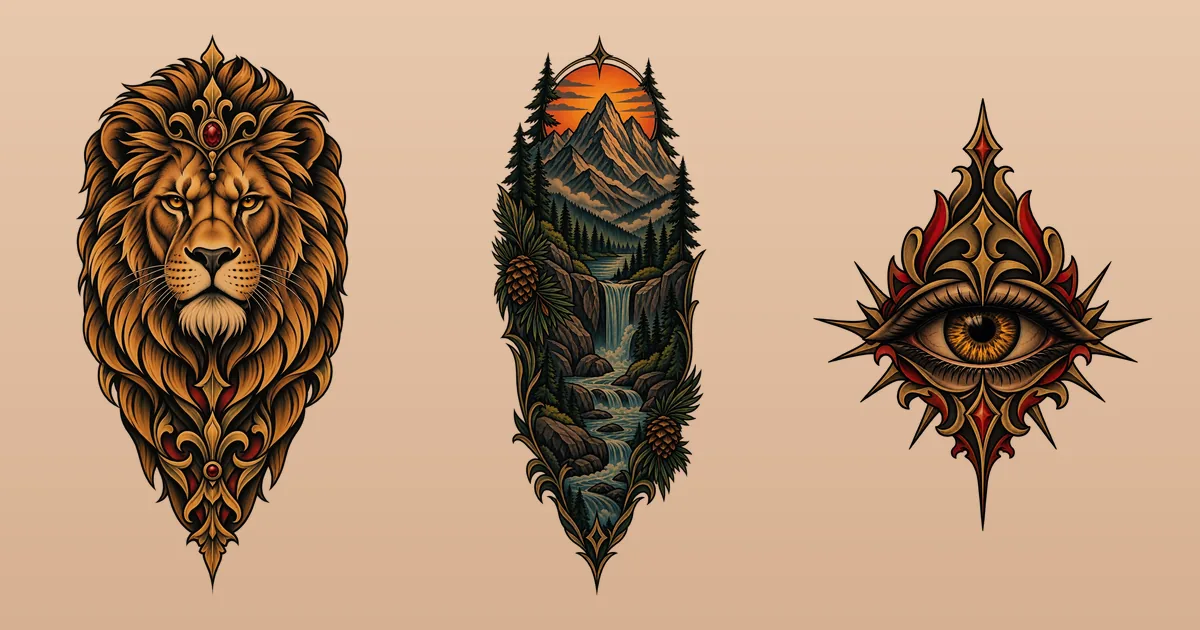
Put together, it can be this short: "A lion head in neo-traditional style, facing forward, with a jewel on the brow, warm golds and deep red, about 15 cm tall on my outer right forearm. Must-have: my son's birth flower worked into the mane. No-go: an open, roaring mouth. Happy for you to decide the background."
Where AI fits into a custom tattoo design
AI doesn't replace the custom process; it speeds up the first half. Before the consultation you can try ten directions, settle the size and the spot, and arrive with a reference that shows exactly what you mean. That helps the artist too, who no longer has to guess what "something with a lion, but softer" looks like.
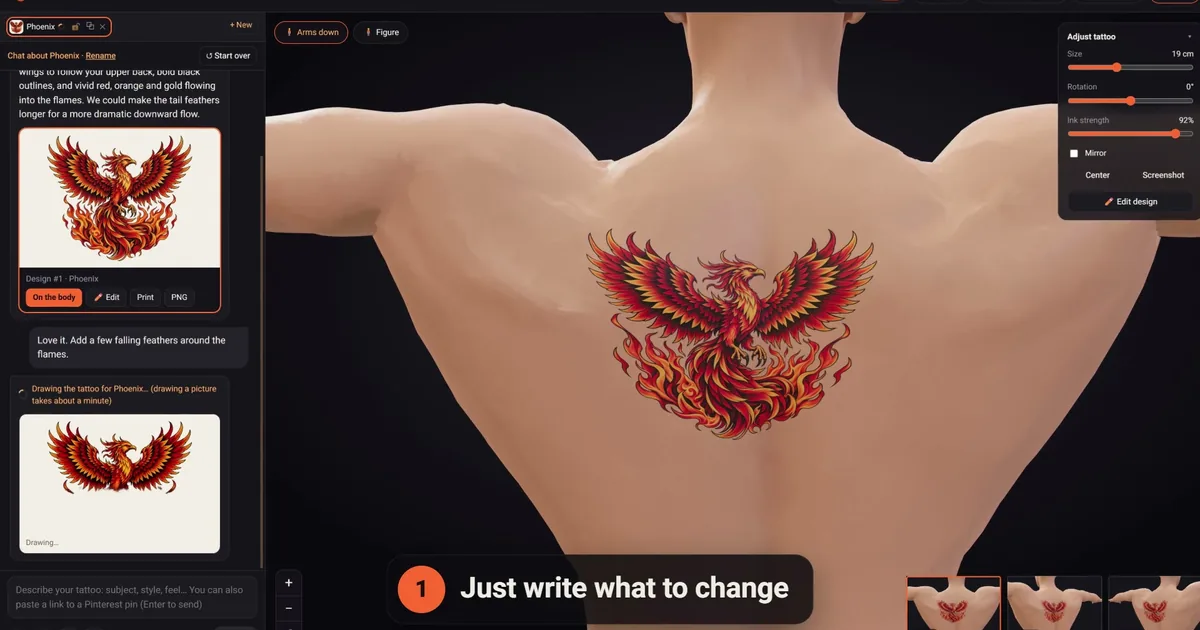
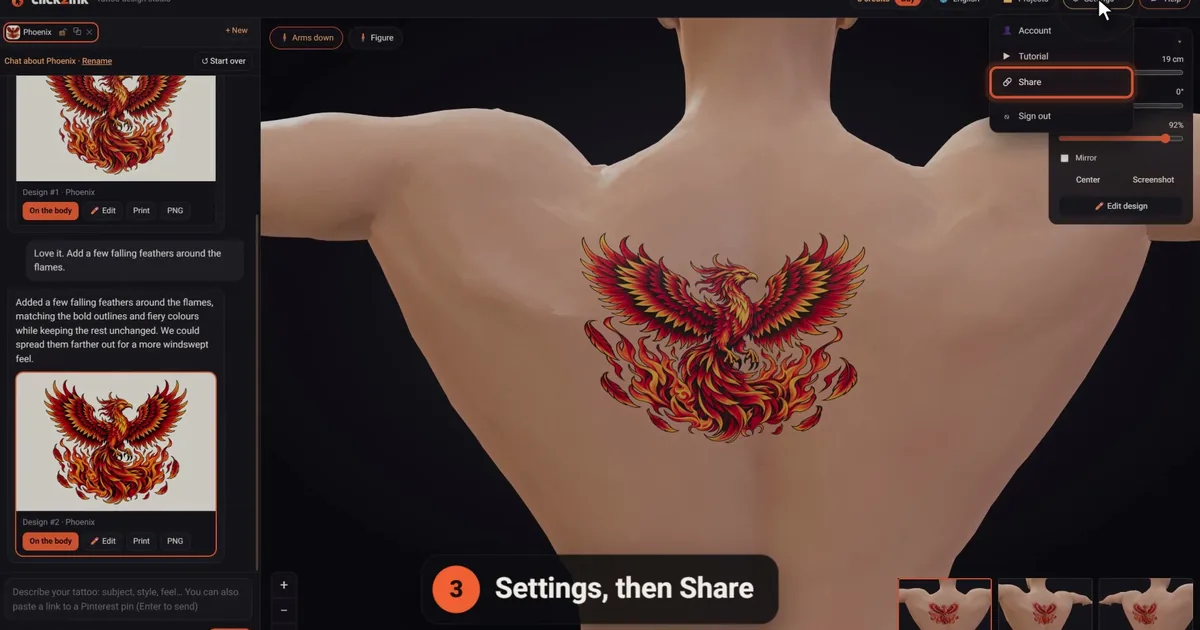
click2ink, which we make, draws every design from scratch for your request, and the AI remembers everything said earlier in the chat, so you can push one idea through many versions. You can also start from the library: 450+ ready-made tattoos, drawn especially for click2ink and free to use, where Adapt asks the AI to make one your own. How it works shows the steps.
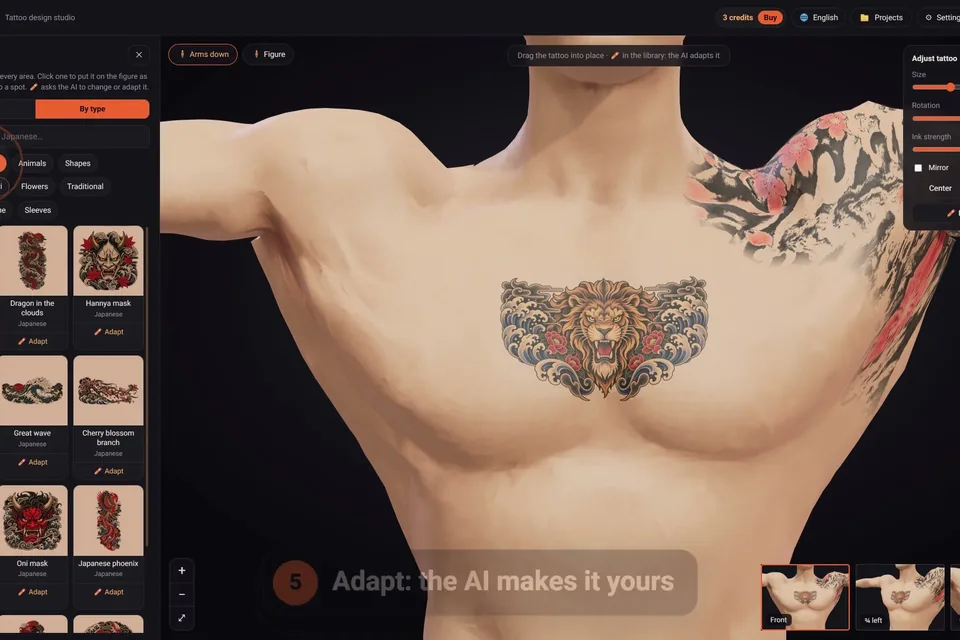
Be clear with yourself about what you're bringing. An AI design is a detailed brief. Your artist will still redraw it for your skin, and adapting someone else's drawing is still drawing time. Some artists welcome AI references; others would rather start from your words. We also cover how tattoo artists see AI designs, and how to bring one without stepping on their craft.
Custom work in cultural styles
Some styles carry far more than looks. In Māori culture, tā moko involves consent, genealogy and history, and it is a sign of identity; designs made in its style that can be worn by anyone, without that lineage, are called kirituhi. Japanese irezumi and Polynesian tatau have their own long histories, motifs and conventions, and their symbols aren't interchangeable decoration.
If you want custom work in one of these traditions, look for an artist from it or deeply trained in it, and expect them to shape the design, sometimes more than you planned. Our guides to Māori and Polynesian tattoos and Japanese tattoos go further.
Questions to settle before you book
- How much is the deposit, and does it count toward the final price?
- Is there a separate drawing fee, and how many rounds of changes does it include?
- When will you see the design: before the day, or at the appointment?
- What happens to the deposit if you need to reschedule?
- Does the artist regularly tattoo this style, at this size, in this placement? Ask to see healed examples.
- Can you keep a copy of the drawing afterwards? Policies differ, so ask rather than assume.
If you'd rather shape the idea yourself first, our guide to designing your own tattoo walks through it.
Custom tattoo design, answered
What does custom tattoo design mean?
It means the design is drawn for you, from your idea, for a specific placement and size on your body, rather than picked from a sheet of ready-made flash. A custom piece can still borrow from references and traditions, but the composition is made for one person, and it usually goes through a consultation and a round of changes.
How long does a custom tattoo design take?
It depends on the artist's schedule and the size of the piece. A small design might be drawn in an hour or two; a sleeve or back piece takes much longer and is often drawn in stages. The wait for an appointment is usually longer than the drawing itself, so ask about both when you first get in touch.
Do tattoo artists charge for custom designs?
Many do, in one of a few ways: a deposit that covers drawing time and counts toward the tattoo, a separate drawing fee, or drawing time built into the price. Practices vary from studio to studio and from country to country, so ask before you commit, and treat a fair fee as payment for real work.
Will I see my custom design before the appointment?
Sometimes. Some artists send the design a few days ahead so there's time for changes; many prefer to show it on the day, when they can fit it to your body. If seeing it early matters to you, ask before booking. Either way, you approve the stencil on your skin before anything starts.
How many changes can I ask for?
Reasonable tweaks, like a bigger flower, a different angle or less background, are part of the process. Starting over with a new idea is different, and may mean a new drawing and a new fee. Ask how the artist handles changes, and save your big decisions for the brief, not the day of the appointment.
Can I take my custom design to a different artist?
Usually not, if another artist drew it for you. Many artists keep their drawings and don't release them to be tattooed elsewhere, and their drawing time is often covered by your deposit. A design you developed yourself, by hand or with a tool, can go with you to whichever artist you choose.
Can I get a custom tattoo design online?
Yes. Some artists draw designs remotely for a fee, and AI tools such as click2ink draw a new design for your request in minutes. Either way, you'll still need a tattoo artist to tattoo it, and they'll usually adjust the design for your skin, your size and your placement before the session.
Is an AI design a custom tattoo design?
It's custom in the sense that it's drawn for your request rather than copied from a gallery. It isn't custom in the full studio sense, where an artist composes the piece around your body and then tattoos it. The strongest result often combines both: explore with AI, then let an artist make it theirs and yours.
Is a custom tattoo better than flash?
Not automatically. Flash is often the artist's own drawing, made to work well as a tattoo, and it's quick to book. Custom wins when the tattoo has to fit a specific idea, an awkward body part or the tattoos around it. Choose by what the tattoo needs, not by the label.