Arm tattoos: ideas for the upper arm, bicep and shoulder
Where on the arm, exactly? It's the first thing a good artist asks, because the outer arm, the bicep, the soft inner arm and the round of the shoulder are different canvases, each with its own shape, visibility and feel. This guide covers arm tattoos above the elbow and the arm as a whole; the forearm has a guide of its own.
Five canvases above the elbow
The outer upper arm
The classic spot, and a popular first one. It's fairly flat, has some padding, hides under a T-shirt sleeve and shows the moment you roll it up. It suits medium pieces with real detail: a panther, a rose, an eagle, a swallow, an animal's head. Our tattoo size guide gives about 8 to 18 cm (3 to 7 in) on the longest side as a starting range here.
The shoulder cap
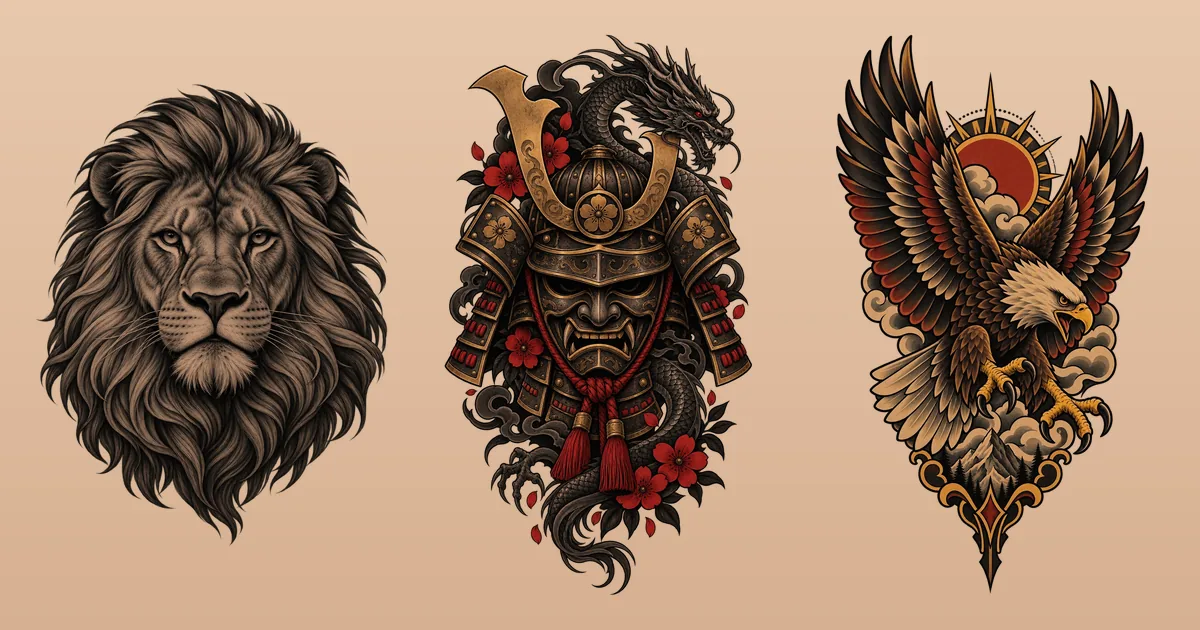
The deltoid is the muscle forming the rounded contour of the shoulder, and round designs love it: a compass rose, a mandala, a lion's head, an ornament that sits like an epaulette. The cap curves two ways at once, so check a shoulder piece from the front, the side and behind.
The bicep
The biceps lies on the front of the upper arm, between the shoulder and the elbow. Tall ovals and vertical designs fit it, and it shows whenever you reach forward. It also changes shape more than the rest of the arm when you flex, so organic shapes forgive more than strict geometry does.
The inner arm
Soft, pale and private, the inner arm suits script, fine line work, botanicals and small symbols. It's commonly described as more sensitive than the outer arm, especially toward the armpit.
The back of the arm
Over the triceps, the back of the arm takes long vertical designs: a dagger, a snake, a sword, a line of script. Other people see it far more often than you do.
Fitting a design to the muscle
The best arm tattoos follow the muscle instead of fighting it. Four principles do most of the work:
- Go tall, not wide. From any one side, the upper arm is longer than it is wide, so a tall oval fills it naturally, while a wide design wraps out of view at both edges.
- Pick a direction. A subject can face out to the side, forward toward your chest or back toward your shoulder blade, and each reads differently to the person beside you.
- Respect the edges. The inner elbow and the armpit are awkward transitions. Designs that stop short of them, or soften into a background, sit better than hard frames.
- Leave room to grow. If a half sleeve might follow, skip a hard border so later work can join the first piece.
Arms also come in every build. The same 12 cm design covers far more of a slim arm than a muscular one, so size it to your own arm, not to a photo of someone else's.
Put it on a figure built like you
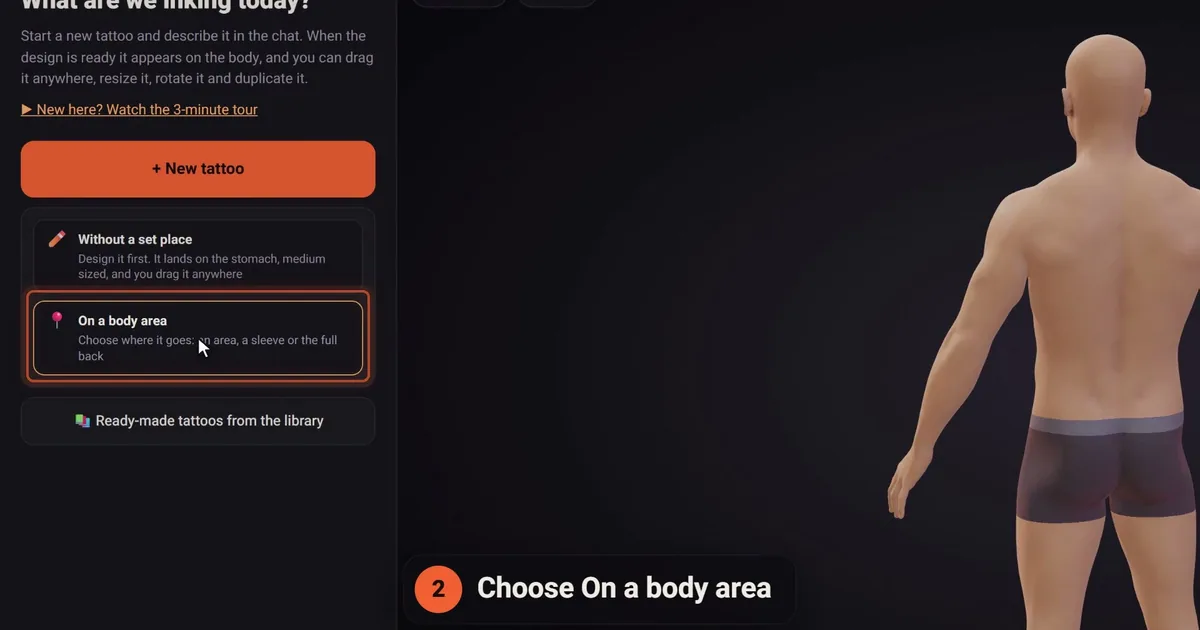
Arm tattoos live on curves, which is exactly what a flat drawing hides. In click2ink, start a new tattoo and tap the upper arm or the shoulder on the small figure, right or left, or choose a half sleeve to plan the whole upper arm at once. Describe the design with its size and direction, such as "a tiger's head in fine line, facing forward, about 14 cm tall on the outer right arm."
The design lands on a 3D figure sized in real centimeters to your height. Make the figure a man or a woman, slim to full, with more or less muscle, or use "Make it look like me" with your height, weight and build. Drag the tattoo anywhere on the skin, rotate and resize it, and turn the figure; "Arms out" lifts the arms to show the inner arm and the side of the body. The library's 20 ready-made sleeves are free to try on, and the features page shows every setting.
Arm tattoos for men and women, in six styles
Search results split arm tattoos for men and for women, but every idea below suits anyone. What matters is how each style uses the space:
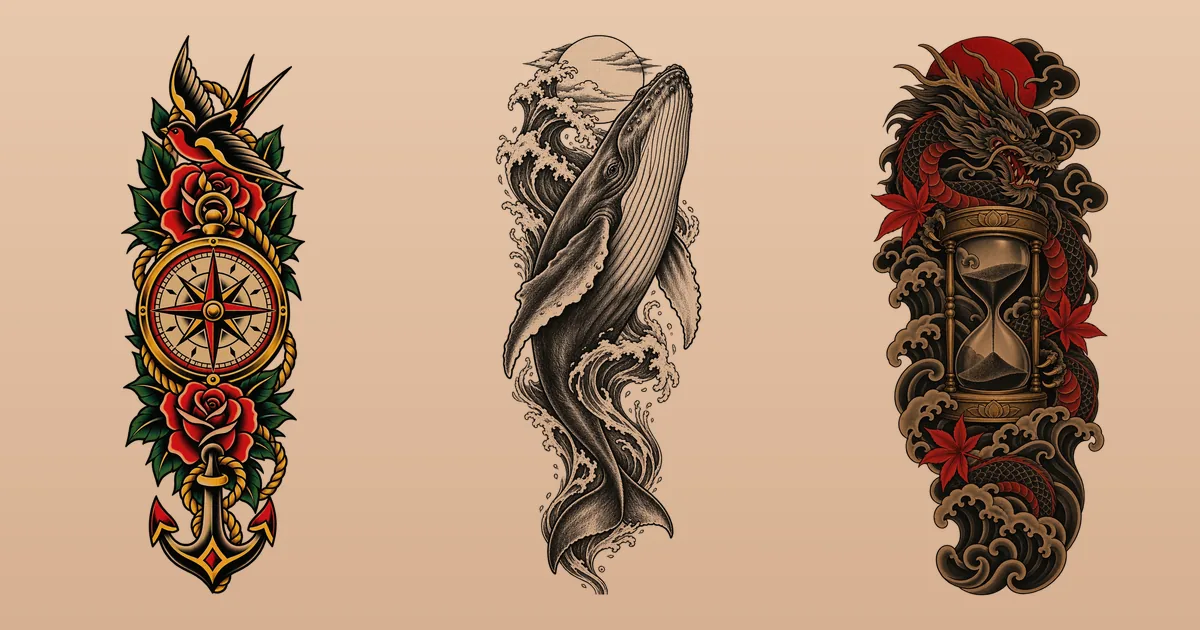
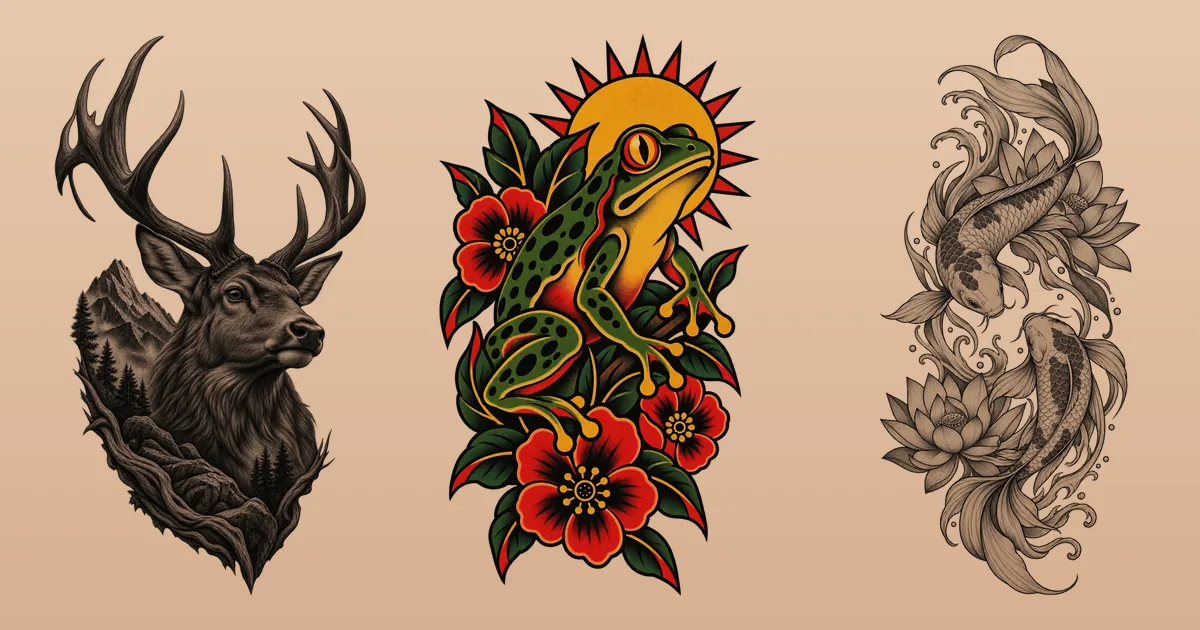
- American traditional: bold outlines and a few solid colors, at home on the outer arm. Think of a panther, an eagle, or a frog in a burst of red flowers like the one at the top.
- Black and grey realism: smooth shading that needs medium size or more, like a stag whose outline frames a mountain landscape.
- Fine line: thin, precise lines with open skin around them, such as a pair of koi circling lotus flowers.
- Japanese: koi, dragons, tigers and peonies with waves and wind bars. In irezumi, a sleeve that stops above the elbow even has its own name, gobu; our Japanese tattoo guide explains why an artist trained in the tradition matters.
- Geometric and blackwork: armbands, mandalas and bold panels that wrap the arm.
- Neo-traditional and illustrative etching: richer ornament, or the hatching of an old engraving, for animals, flowers and objects.
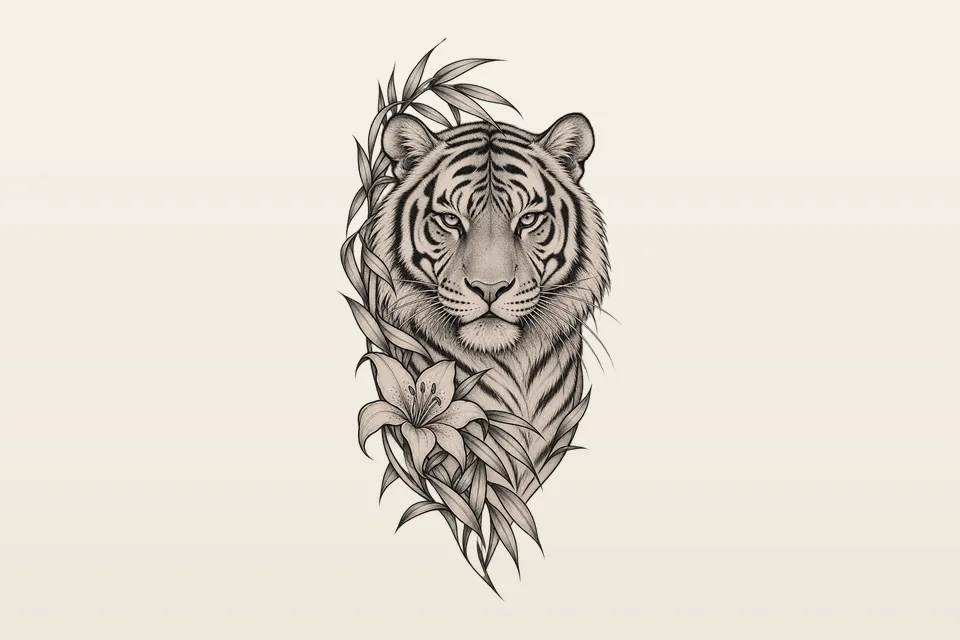
For more subjects with placement in mind, our tattoo designs for men guide covers upper-arm and shoulder pieces that work on anyone.
Armbands and designs that wrap
An armband is the simplest wraparound there is, and the hardest to fake. A band has to meet itself, so it's drawn to the measurement of your arm at that exact spot, and the join usually goes on the inner arm, where it's least seen.
- Full or open: a full ring reads as one strong line; a band left open on the inner side is easier to fit and leaves the softest skin bare.
- Height: thin bands a centimeter or two tall look graphic, while tall bands read as a cuff of pattern and can frame a future half sleeve.
- Pattern: repeating patterns such as hexagons, waves, braids or dots can be lengthened or shortened to fit; a scene can't.
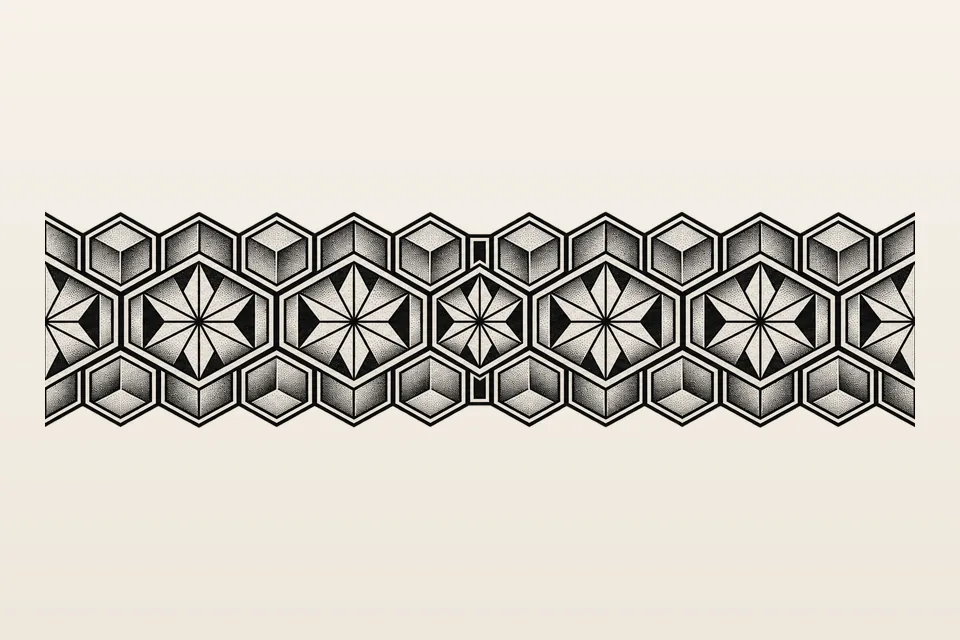
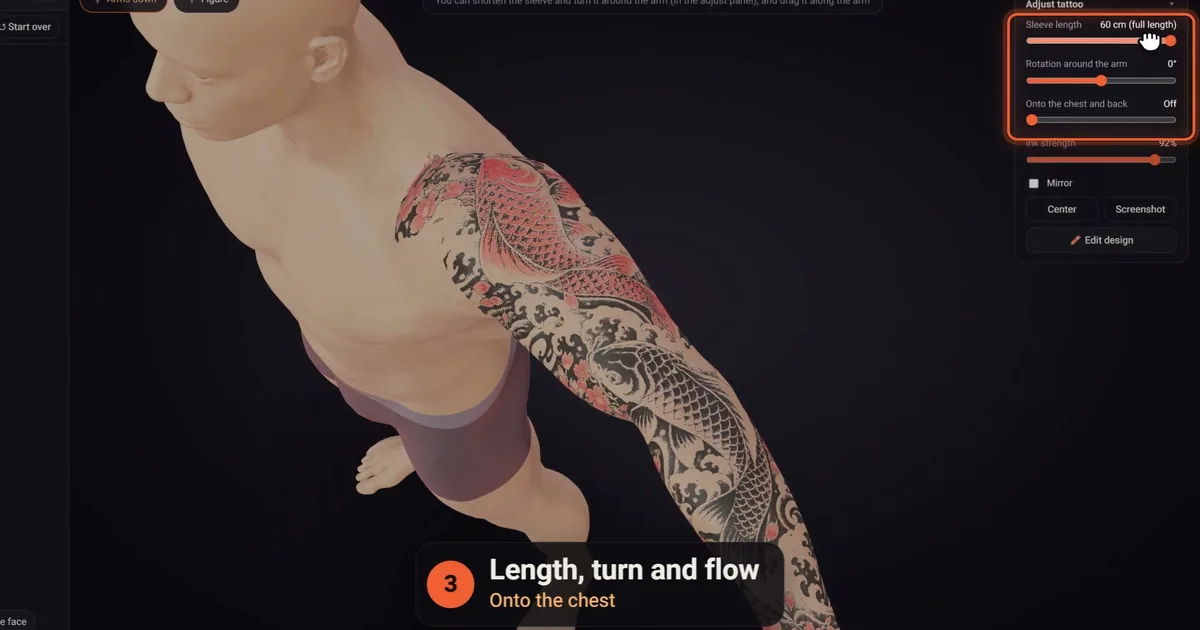
On click2ink's 3D figure, the adjust panel's "Wrap around the limb" option bends a design around the arm, so you can see where a band would meet and how much of a wide piece disappears around the side.
When the upper arm is only the beginning
Sleeves often begin as a single upper-arm piece, so even one tattoo is worth placing with the whole arm in mind. Choose a style you'd be happy to fill the arm with, and decide early where things would end: at the elbow for a half sleeve, at the wrist for a full one, or over the shoulder onto the chest and back.
Our guide to sleeve tattoos covers themes, flow and backgrounds, and the forearm tattoo guide takes the lower half of the arm, wrist included. For how the arm compares with other spots, start from our tattoo placement guide.
Upper arm questions people ask
Why is the outer upper arm such a popular first spot?
It's fairly flat, has some padding, hides under a T-shirt sleeve and is easy to show when you want to. It takes a medium-sized design with real detail, and it can grow into a half sleeve later. Many people also find it one of the more comfortable spots to be tattooed, though everyone feels it differently.
Does the inner bicep hurt more than the outer arm?
It's commonly described that way. The inner arm has softer, more sensitive skin that tends to get more tender toward the armpit and the inner elbow, while the outer arm has more padding. Pain is personal, so ask your artist what to expect for your design, and talk to a doctor first if you have a health or skin condition.
How big should an upper arm tattoo be?
For a single piece on the outer arm or the shoulder, about 8 to 18 cm (3 to 7 in) on the longest side is a common starting range, depending on your arm and the detail. Bigger, wrapping designs move into half-sleeve territory. Set the size on a figure at your height, then print the stencil and hold it against your arm.
Will a short-sleeved shirt cover an upper arm tattoo?
Usually, if the design stays on the upper part of the arm. T-shirt sleeves often end around the middle of the bicep, so pieces that run close to the elbow peek out, and shoulder caps show in tank tops. Mark where the hems of your own shirts fall before you settle the size and the bottom edge.
Should an armband go all the way around?
It doesn't have to. A full band reads as one strong ring but has to meet itself cleanly, usually on the inner arm, which takes careful drawing. A band left open on the inner side is easier to fit and leaves the softest skin bare. Either way, measure around your arm at the exact spot before anything is drawn.
Which way should an upper arm design face?
There's no rule, but decide on purpose. A subject on the outer arm can face out to the side, forward toward your chest or back toward your shoulder blade, and each reads differently to someone beside you. Lettering usually runs along the arm. Check the stencil in a mirror with your arm relaxed and raised.
Do arm tattoos look different on slim and muscular arms?
Yes. The same design covers more of a slim arm and less of a muscular one, and it bends differently over a defined shoulder or bicep. Size it to your arm, not to someone else's photo. In click2ink the figure's build and muscles are adjustable, and "Make it look like me" sets your height, weight and build.
Can an upper arm piece grow into a half sleeve later?
Yes, and it's a natural way to start one. Keep the first piece in a style you'd happily fill the arm with, avoid a hard frame around it, and leave room above and below. A shared background, such as clouds, smoke, waves or patterns, can join it to later pieces. Tell your artist about the plan early.