Koru tattoo: designing the unfurling fern spiral with care
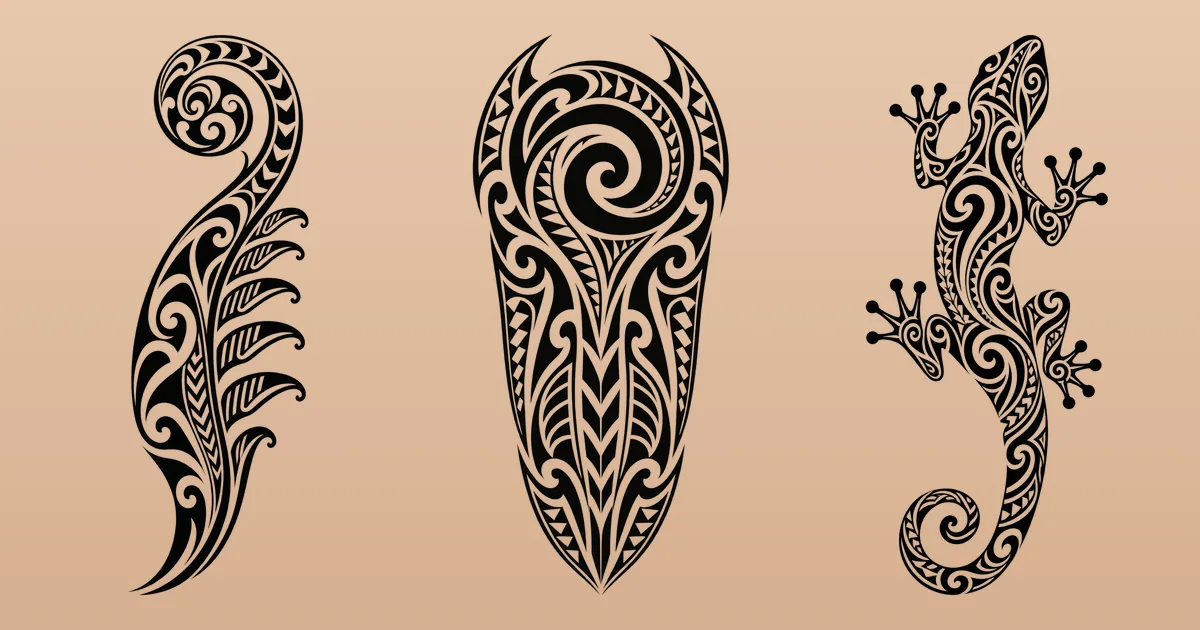
Draw a spiral too tight for its size and, as the years pass, the gaps of skin inside it can close into a muddy patch. A koru tattoo is a simple shape with a lot riding on it, both in craft and in culture. Here is how the fern spiral is built, where it sits best, and how to wear it with respect.
What a koru is, before it becomes a tattoo
Start with the plant. In te reo Māori, the Te Aka Māori Dictionary gives koru as a fold, loop or coil, a curled shoot, and a spiral motif in kōwhaiwhai patterns and carving. The young fern shoots themselves are pikopiko, "young curved fern shoots." One shoot is the whole design brief: a strong stem, a curve tightening inward, a small bulb at the tip.
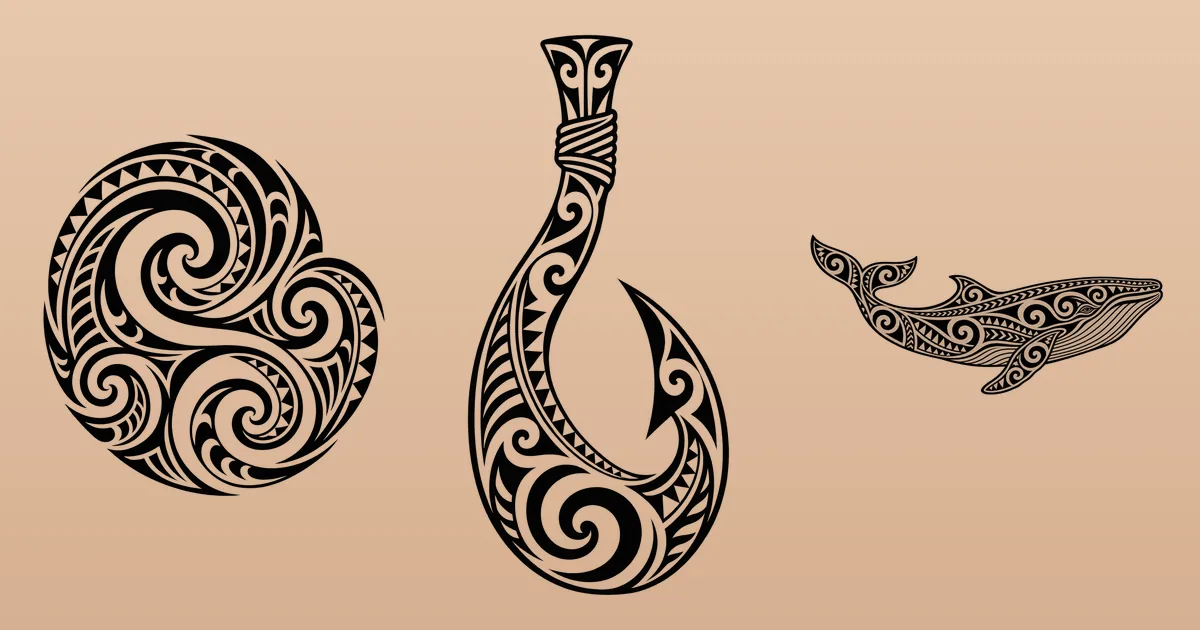
The koru is also a building block of kōwhaiwhai, the painted patterns of meeting houses, and of carving. A good koru tattoo borrows that grammar: it has a direction, a weight at its base and breathing space inside its coil.
What the koru is linked with
The Wikipedia article on the koru describes it as evoking a newly unfurling silver fern frond, an integral symbol in Māori art, carving and tattooing, where it symbolizes new life, growth, strength and peace. It adds that the shape conveys perpetual movement, and that the inner coil suggests a return to the point of origin.
Treat those as traditional associations, not a rule that fixes your tattoo's meaning: a motif also takes its sense from what surrounds it and the story behind it. People choose a koru for a new child, a fresh start or a growing family. Tell your artist the story and ask how they would express it. Our guide to meaningful tattoos has more on turning a story into a design.
Single, double or as fill: three ways to build a koru tattoo
A single koru
One frond, one spiral: the most readable version, suited to a frond rising along the forearm or curling over the shoulder. The craft is in the taper. The stem is thickest at the base and thins steadily toward the coil, and the bulb at the tip stays clearly round, not swallowed by the line around it.
Two koru together
Two spirals facing each other, back to back, or growing from one stem. A pair can stand for two people, such as a couple, siblings or a parent and child, though any reading is yours to give it. The pair works best when the coils differ a little in size and a clear channel of skin runs between them.
Koru as fill
Here the spiral becomes texture: koru packed into bands, panels and silhouettes, such as a calf panel built around one central koru, or a lizard outline filled with koru patterns and ending in a coiled tail. Fill needs the most planning, because many small spirals must all stay open at once.
Where koru designs sit on the body
A spiral reads as movement, so koru designs suit curved, muscled surfaces.
- Shoulder cap flowing to the chest. A layout made for the spiral: a large koru on the round of the shoulder, with bands sweeping down onto the pec and sometimes the upper arm.
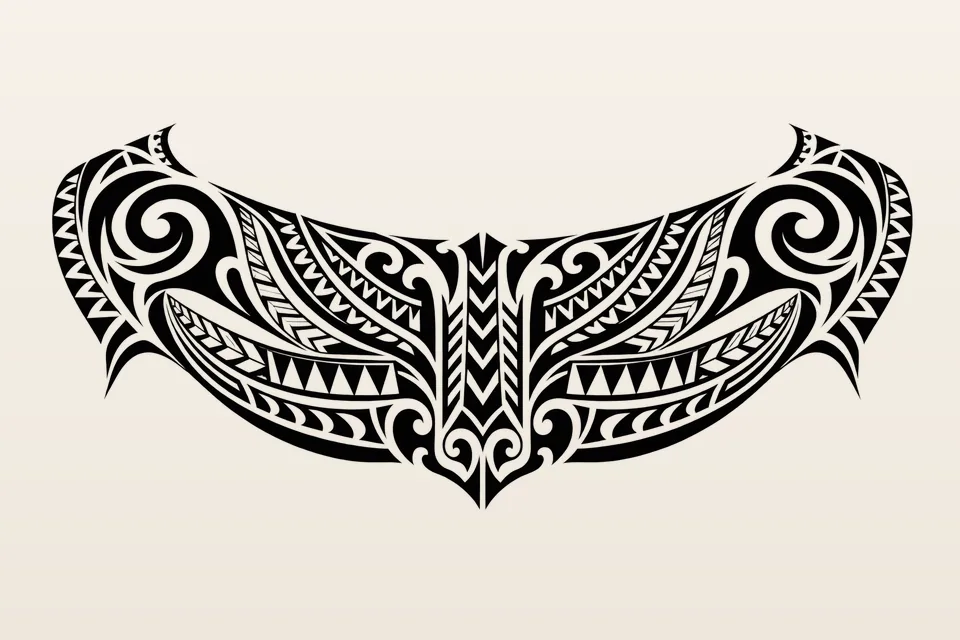
- Chest piece. Wide and often symmetrical, with mirrored spirals either side of the sternum.
- Calf panel. A tall, narrow field on the outer calf, built around one dominant koru.
- Forearm. A single frond climbing from wrist toward elbow, the coil near the top where the arm is widest.
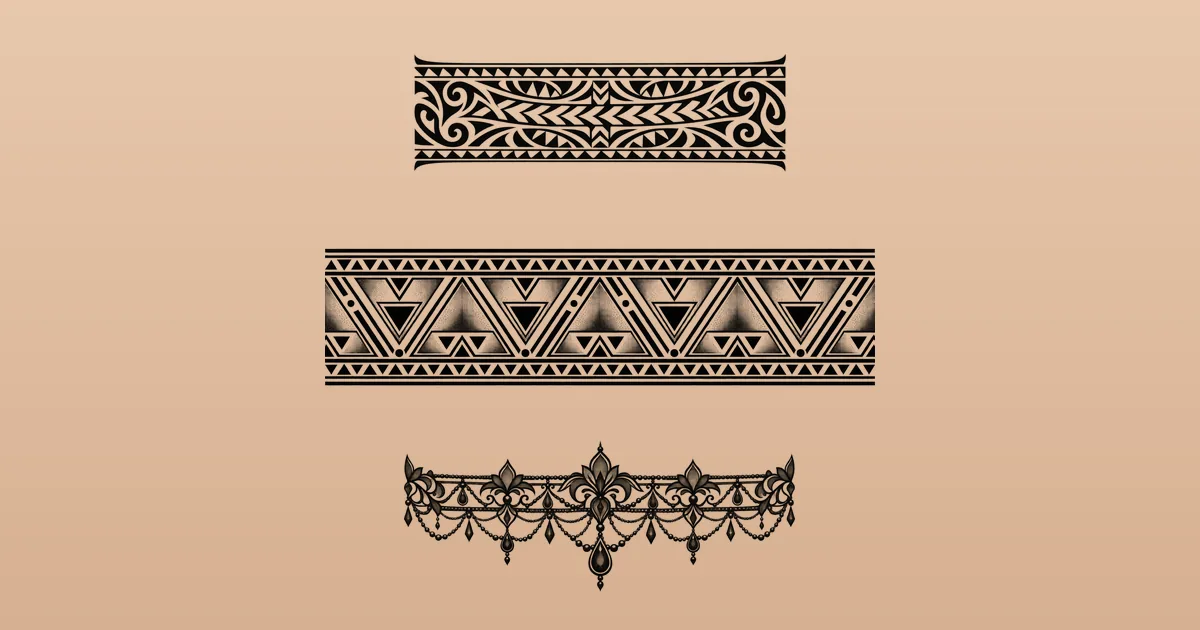
- Armband. Koru repeated as a band around the upper arm or calf; our armband tattoo guide covers how a band must wrap a tapering limb.
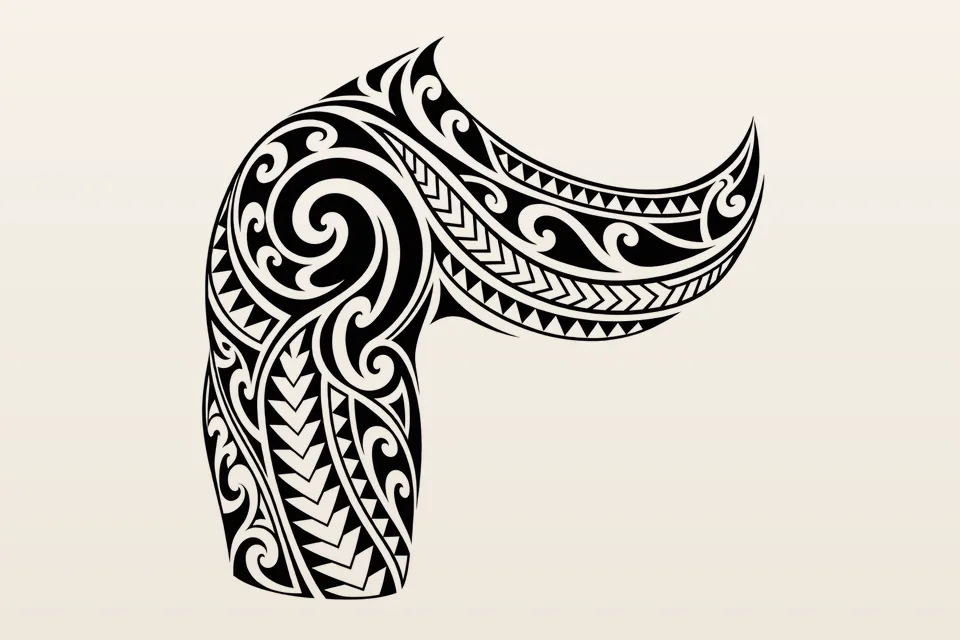
Let the coil land on the broadest part of the area and the stem follow a muscle line; a spiral in a joint crease distorts every time you move.
Keeping the spirals open as skin ages
Lines set close together tend to soften toward each other over the years, and a koru is mostly gaps, so it shows this first. General starting points:
| Design | What to watch | Rough starting size |
|---|---|---|
| Single small koru | One or two turns only; a clear round bulb | About 5 to 8 cm |
| Forearm or shoulder frond | Bold base line, steady taper, generous gaps inside the coil | About 12 to 20 cm |
| Fill in bands and panels | Fewer, larger spirals rather than many tiny ones | Large: calf, shoulder, chest |
Three habits help: keep the gap of skin inside the coil at least as wide as the line around it, let solid black carry the heavy shapes and negative space the rest, and limit the turns. Two clean turns stay a spiral; five tight ones can become a dark disc. Your artist knows how fine is safe on your skin, so ask before settling on a size; our tattoo size guide compares spots.
Pairing the koru with other patterns
Koru rarely appear alone in bigger pieces. The patterned bands that frame them in many designs echo carving, such as pākati, which the Te Aka dictionary defines as a fine dog's-tooth pattern in carving, often running between parallel grooves. In a tattoo, notches between two lines give a band texture against the smooth spirals; keep them big enough to read, and ask a Māori artist how such patterns are used.
Describing a koru tattoo to an AI or an artist
A useful brief names the layout, the placement, the size, the line weight and how much open skin you want. Some that work:
- "A single koru frond rising along the outer right forearm, about 16 cm tall, bold black stem tapering into two open turns, Māori-inspired kirituhi, no shading"
- "Two koru growing from one stem and facing each other, for my two daughters, the left one slightly larger, 10 cm wide, for the left shoulder blade"
- "A shoulder-cap piece of large koru spirals flowing onto the right chest, framed by notched bands, solid black with wide gaps of skin"
In click2ink you write a description like these in a chat, pick the Polynesian & Maori style, and an AI artist draws an original design that lands on a 3D figure in your skin tone, sized in real centimetres to your height. Turn the figure to check the coil sits on the shoulder's round, and use "wrap around the limb" to curve a koru band around the arm. The designs on this page are in the free library. See how it works.
Kirituhi, not moko: wearing a koru with respect
Tā moko is the customary Māori practice. As the article on tā moko puts it, moko requires a process of consents, genealogy and historical information, and wearing moko by non-Māori has been called cultural appropriation. The term promoted by the Te Uhi a Mataora group for designs with a Māori flavor that can be made for anyone is kirituhi, which Te Aka defines as skin art: non-traditional tattooing not done using Māori protocols or imagery.
So if you are not Māori, a koru tattoo made for you is kirituhi. In practice:
- Never get a facial design, and never copy someone's moko from a photo.
- Work with a Māori artist where you can; they can shape the koru around your story and tell you what isn't appropriate.
- Treat AI sketches and library designs as a way to think and talk, not as a finished design to impose.
Our guides to Māori tattoo, tā moko and kirituhi and to tribal tattoos cover the wider picture.
Koru tattoo questions
Is a koru tattoo only for Māori people?
Tā moko, with its genealogy and consents, is Māori. A koru design made for someone outside the culture is kirituhi, skin art made without moko's protocols, a term promoted by tā moko artists for designs anyone can wear. Views differ, so the respectful route is to ask a Māori artist what suits you, never wear a facial design, and accept the answer if it's no.
What is the difference between a single and a double koru?
A single koru is one frond and one spiral, simple and very readable. A double koru uses two spirals together, facing each other, back to back or growing from one stem, and can stand for two people. Visually, a double needs a clear channel of skin between the coils and works best when one spiral is a little larger.
How big should a koru tattoo be?
Big enough that the gaps inside the coil stay open. A small single koru with one or two turns can work at roughly 5 to 8 cm; a frond with more turns or fill patterns needs much more room, which is why koru fill suits the calf, shoulder and chest. Ask your artist what's safe for your skin and the spot.
Where is the best place for a koru tattoo?
Curved, muscled areas suit the spiral: the shoulder cap flowing onto the chest, the outer calf, the forearm and the upper back. Let the coil sit on the broadest part of the area and the stem follow a muscle line. Avoid placing the coil in a joint crease, where it bends out of shape whenever you move.
What are good koru tattoo designs for females?
Any koru layout works for anyone; style and scale change the feel more than gender does. Ideas include a single slender frond along the forearm or ribs, a koru curling over the shoulder blade, two small koru for children, or a koru band around the ankle or calf. Finer line weights need more size to stay open.
What does pikopiko mean?
Pikopiko is a Māori word for young curved fern shoots, the fronds before they unfurl, according to the Te Aka Māori Dictionary. The same word can also mean winding or meandering. It's the living plant behind the koru motif, and many people like knowing their design starts from a real fern shoot rather than an abstract swirl.
Is the koru the same symbol as the Air New Zealand logo?
The airline's logo incorporates a koru design, introduced in 1973 as a symbol of New Zealand flora, according to the Wikipedia article on the koru. The motif itself is much older, rooted in Māori carving and kōwhaiwhai. A tattoo drawn for you won't look like the logo unless you ask for that.
Can I get a koru tattoo on my face?
Please don't, if you are not Māori. Facial moko is deeply tied to Māori identity and genealogy, and wearing moko by non-Māori has been called cultural appropriation. Keep a koru kirituhi to the body, such as the shoulder, chest, arm or calf, and talk it through with a Māori artist if you can.