Geometric animal tattoo: how to build an animal from lines and facets
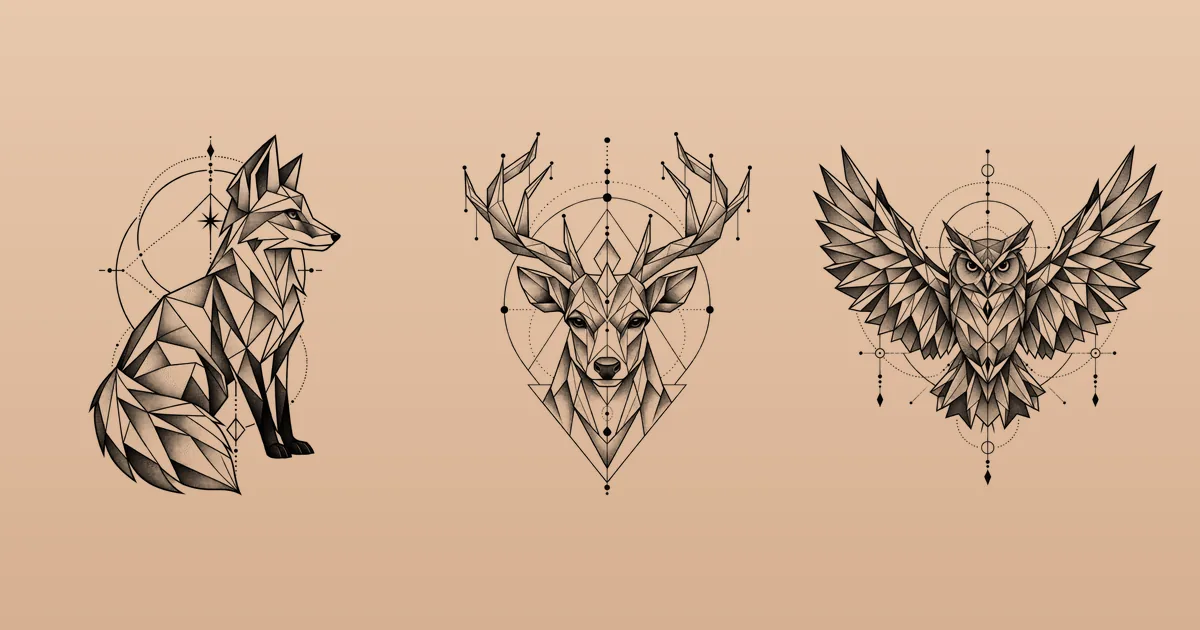
Fold a square of paper into a fox and you get the animal without a single hair: ears, snout and tail made of flat planes meeting at sharp creases. A geometric animal tattoo works the same way on skin. It swaps fur and feathers for straight lines, triangles and circles, and it lives or dies on how big those shapes are for the spot you give it.
Five ways to draw a geometric animal tattoo
"Geometric" covers several different drawings, and each one ages, sizes and places differently.
1. Low-poly, or faceted
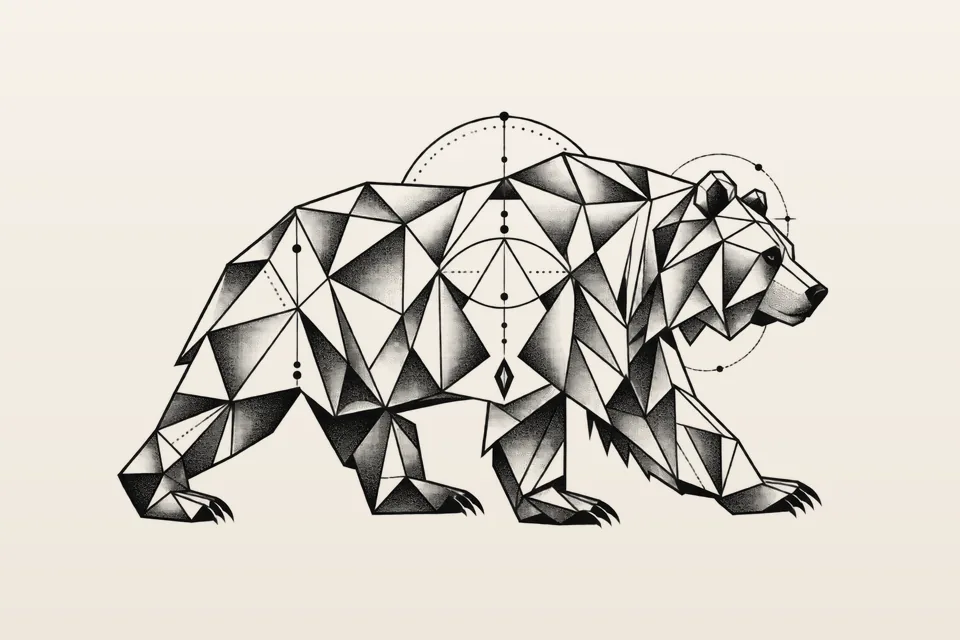
The animal is built entirely from flat triangles, each shaded a different grey, like a 3D model with very few polygons. The name comes from computer graphics: a low poly mesh has a small number of polygons, and artists have turned its blocky look into a minimal, non-photorealistic style of its own. On skin, the shading of each facet is what makes the animal look solid rather than like a pile of triangles.
2. A realistic animal inside a geometric frame
The animal is shaded softly, the way a black and grey portrait would be, and the geometry lives around it: circles, triangles, hexagons and fine ornamental lines. This hybrid gives you a recognizable face and a crisp outer shape at the same time.
3. Half realistic, half geometric
One side of the head is realistic, the other breaks into facets or a wireframe, with the split running down the middle of the face or diagonally across it. This is the look behind the search "half geometric animal tattoo." The join needs care: a clean line or a gradual dissolve both work, but a ragged edge reads as unfinished.
4. Line-only, or wireframe
Outlines and inner lines with no shading at all, like a mesh before it is filled. It is the lightest and most open look, and the one most sensitive to size, because every line has to stay apart from its neighbors.
5. An animal over sacred geometry
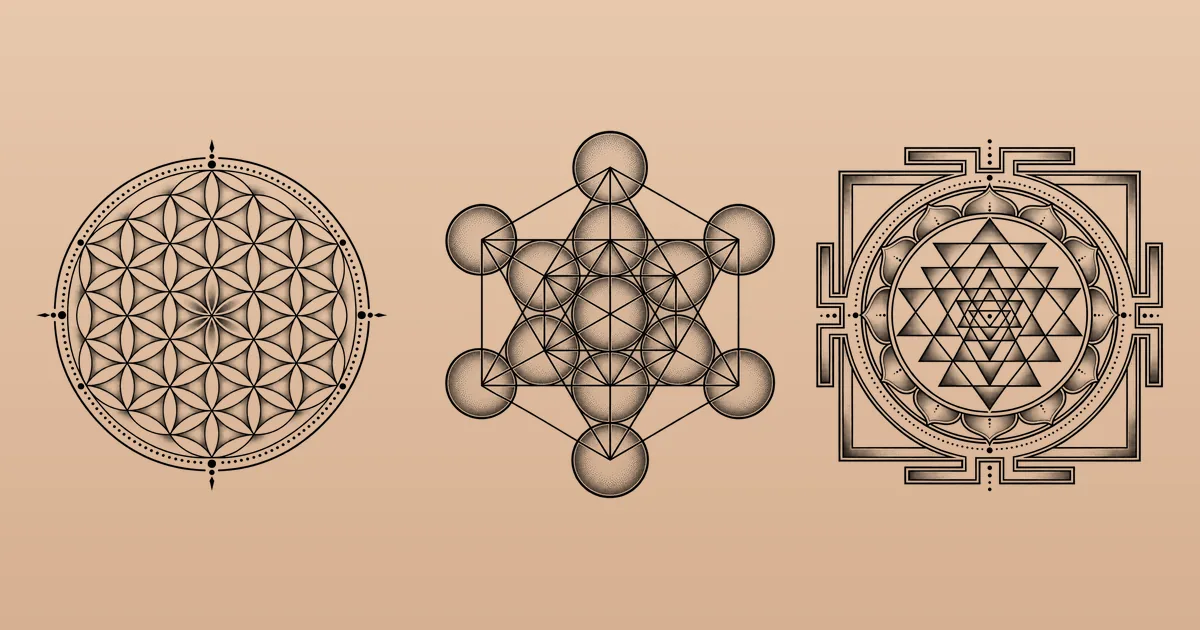
A fox or owl in front of a Flower of Life, a Metatron's Cube or concentric circles. The figure behind becomes a halo that holds the composition together. Our sacred geometry tattoo guide explains those figures and where they come from.
Facets, lines and shading: what holds up in skin
Ink spreads a little in skin over the years, so fine detail softens and narrow gaps can close. Straight lines and sharp corners show that blur more than most shapes.
- Facet size follows tattoo size. A palm-sized animal with hundreds of tiny triangles will not keep them. For small pieces, ask for fewer, bigger facets; save dense faceting for pieces with real room, such as a thigh or a half sleeve.
- Keep line spacing generous. Parallel lines and the points where several lines meet are where blur starts. Wider spacing keeps the drawing clean.
- Vary the line weight. A bolder outline around the animal and finer lines inside it keep the silhouette readable even when the inner detail softens.
- Shade the facets with contrast. Neighboring facets need clearly different tones, or the form flattens. Smooth black and grey works, and so does dotwork, which builds tone from dots: in stippling, the denser the dots, the darker the shade.
- Let bare skin be the light. The palest facets can simply be open skin.
For dotwork and geometric work as a style in general, see our mandala and geometric tattoo guide. Your tattoo artist is the one who can judge how fine your skin can hold.
Frames, symmetry and the pose
The pose decides the composition. A front-on head (stag, owl, wolf, lion, elephant) is symmetrical, so the frame should be too: a circle, a downward triangle or a hexagon centered on the face, with a dotted line running from top to bottom. A profile or full body (fox, bear, horse) is asymmetrical, and an open frame that the animal steps out of, or no frame at all, often sits better.
Frames carry the style's small extras: dotted lines, dots at the corners, arcs of thin circles, hanging drops or diamonds. Use a few, thinner than the animal's outline, so they frame it rather than compete.
Geometric animal tattoo ideas by animal
The meanings below are popular modern readings, not fixed rules; the one you give your animal is the one that counts. To choose an animal in the first place, start with our animal tattoo hub.
- Fox. Pointed ears, snout and tail facet naturally. Often read as cleverness.
- Stag or deer. A front-on head with antlers rising into the frame. Usually read as calm strength or growth.
- Owl. Spread wings across a circle make a wide piece for the chest or upper back. Commonly linked with wisdom.
- Bear. Its heavy body takes big facets well. Often read as protection.
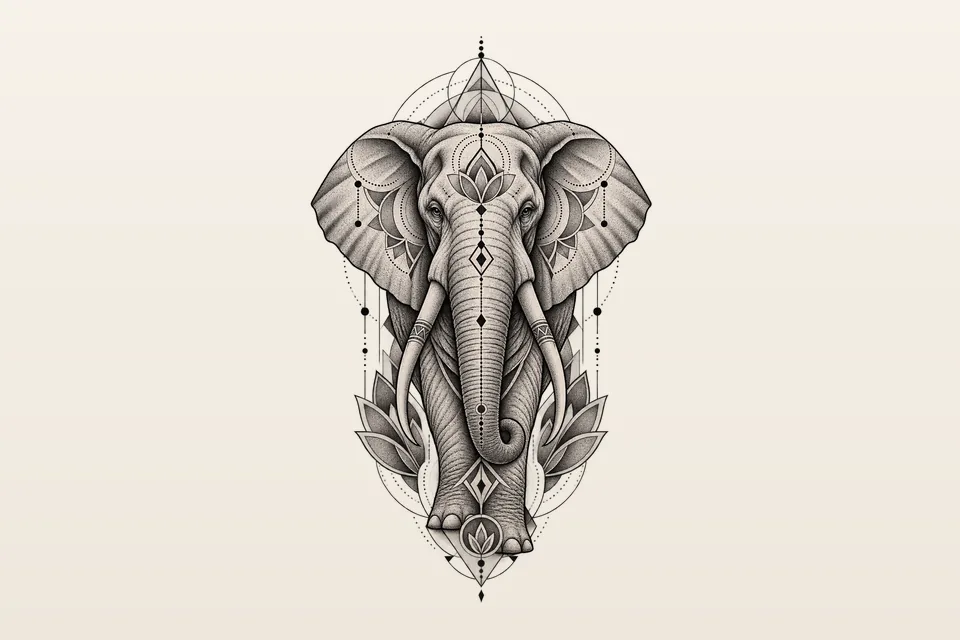
- Elephant. A realistic head in a geometric frame, as above, or fully faceted with the trunk curling down. Commonly read as memory and family.
- Wolf. A faceted head with a moon or circle behind it; our wolf tattoo guide covers poses and packs.
- Lion. The mane can break into triangles around a realistic face; see the lion tattoo guide.
- Eagle. Wings spread as long angular planes, across the chest or the collarbones.
- Horse. A profile head with the mane as a fan of facets, tall for the outer forearm or thigh.
- Jellyfish. A faceted bell with tentacles as straight, hanging lines, which echo the drops of a geometric frame.
- Snake. A body of diamonds or triangles winding around the forearm or calf, or through a triangle frame.
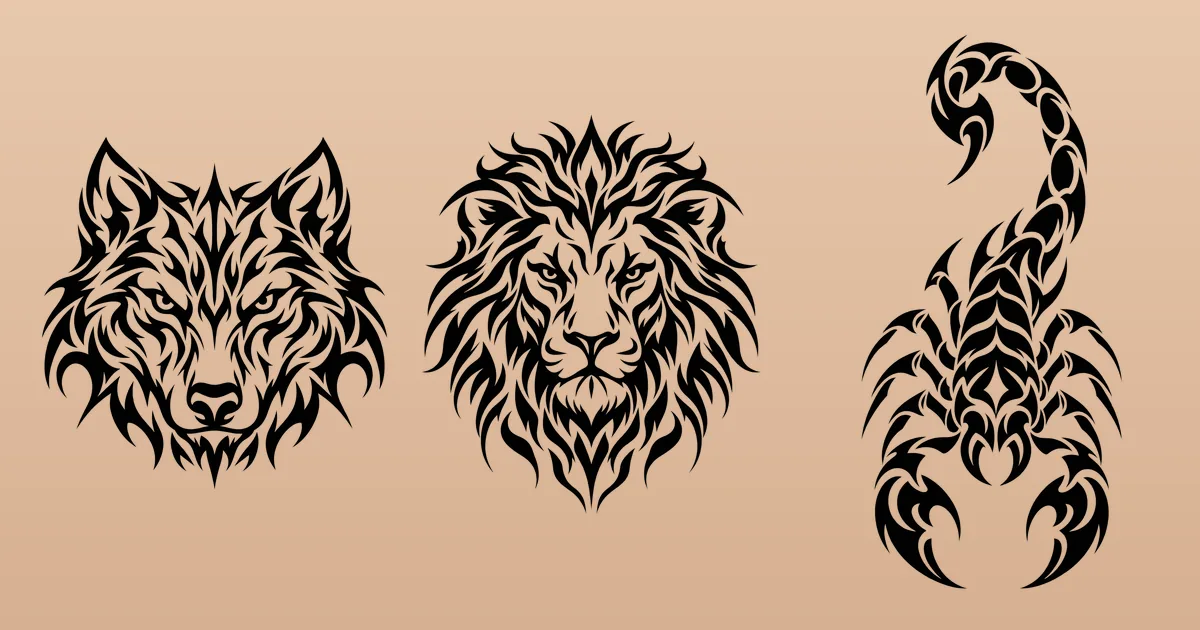
A tribal animal is a different look, solid black curves instead of planes; it has its own tribal animal tattoo guide.
Placement, size and sleeves
As a rough starting point, a small geometric animal head with few facets often begins around 5 to 8 cm (2 to 3 in), a forearm or upper arm piece around 12 to 20 cm (5 to 8 in), and a chest, thigh or upper back piece larger still. These are general ranges; your artist will size it to your body and to the detail in the design.
| Spot | Shapes that suit it |
|---|---|
| Outer forearm | Tall heads, sitting foxes, horses in profile, a snake along the arm |
| Upper arm and shoulder | Front-on heads in a circle or hexagon, centered on the outer arm or shoulder cap |
| Chest | Owls or eagles with spread wings, a stag head centered on the sternum or over one pec |
| Thigh and calf | Larger faceted bodies (bear, elephant, wolf), framed or free |
| Upper back | Wide symmetrical pieces with a big sacred-geometry backdrop |
For a geometric sleeve, see the FAQ below and our sleeve tattoo guide. And "for men" or "for women" changes little: a large faceted bear across the thigh and a small line-only fox behind the ear are both open to anyone.
Describing it to the AI or an artist
Name the approach, the animal and pose, the facet density, the shading, the frame, and the size with the spot:
| Vague | Clear |
|---|---|
| geometric fox | a low-poly fox sitting in profile, large facets, black and grey shading with bare skin for the lightest planes, no frame, 14 cm tall, outer forearm |
| geometric elephant | a realistic black and grey elephant head, front-on, inside a symmetrical frame of thin circles and a downward triangle, dotted line through the center, 18 cm, upper arm |
| half geometric wolf | a wolf head, left half realistic fur, right half clean wireframe triangles, split straight down the middle, small dots at the line joins, 12 cm, shoulder |
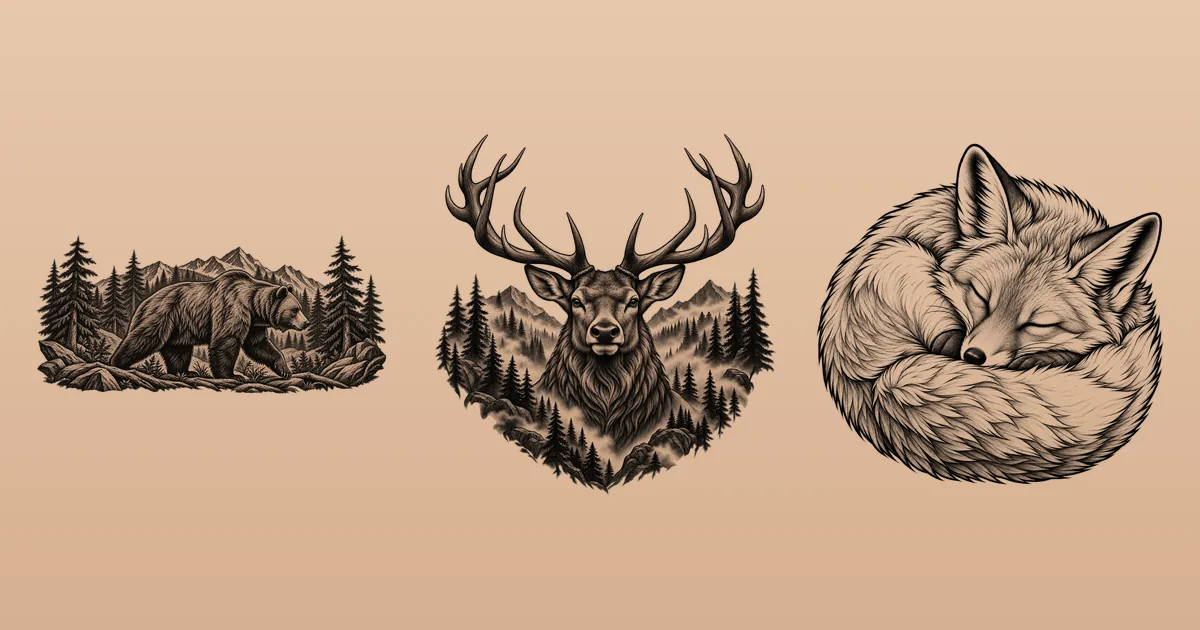
In click2ink, our own studio, you pick the spot and the style (geometric and dotwork & mandala are two of the 16), describe the animal, and the design appears on a 3D figure sized in real centimeters to your height, so you can see whether the facets still read. Too busy? The one-tap Simpler change cuts it back. The fox, stag, owl, elephant and bear shown here are in the free library.
You can then print the design at its size on the body with a 5 cm check ruler; your artist fits the final stencil. How it works shows every step.
Geometric animal tattoo questions
What does a geometric animal tattoo mean?
There is no fixed meaning. The animal usually carries the popular reading people give it, such as cleverness for a fox or family for an elephant, and the geometry adds a sense of order, balance or structure. Some people simply like the contrast between something wild and something precise. The meaning that matters is the one you bring to it.
How small can a geometric animal tattoo be?
Smaller than people expect, if the design is simplified for it: a few large facets or a clean outline can work around 5 cm. Dense faceting, fine wireframes and tight dotwork need more room, because narrow gaps can close as ink settles over the years. Ask your artist what your skin and the spot allow before shrinking a detailed design.
What is a half geometric animal tattoo?
It is an animal drawn half in one style and half in another, usually realistic shading on one side of the face and facets or a wireframe on the other. The split can be a clean vertical line or a gradual dissolve. Pick a pose where both halves show clearly, which is why front-on heads suit it so well.
Which animals work best in a geometric style?
Animals with strong, angular features: foxes, wolves, stags with antlers, owls, bears, eagles and horses. Elephants work well as hybrids, with a realistic head inside a geometric frame. Animals defined mostly by soft texture, such as a fluffy kitten, tend to lose their character when turned into flat facets unless you keep part of them realistic.
Is a geometric animal tattoo good for a sleeve?
Yes. Put one main animal on the outer upper arm, a second on the forearm, and link them with triangle bands, dotted lines and dotwork gradients that wrap around the arm. Keep the facet size and line weight the same throughout, so the sleeve reads as one design rather than several stickers.
Should a geometric animal tattoo be black and grey or color?
Black and grey suits the style well, because the shaded facets create the depth. Color can work as an accent, such as a single colored triangle or eyes, or as a full spectrum of facets. In click2ink you can try Add colour or Black & grey with one tap and compare the two versions on the figure.
Where does a geometric animal head tattoo look best?
A front-on head is symmetrical, so it wants a fairly flat, centered spot: the outer upper arm, the shoulder cap, the center of the chest or the thigh. A profile head can run tall along the outer forearm or calf. Keep the face away from sharp curves, where straight lines bend.
Where can I get a geometric animal tattoo stencil?
Your tattoo artist makes the final stencil, fitted to your body. As a starting point, you can design the animal, size it on a 3D figure and print it at real size with a check ruler. Our tattoo stencil maker guide explains what artists need from one.