Insect tattoo: how to draw a bug that still reads in ten years
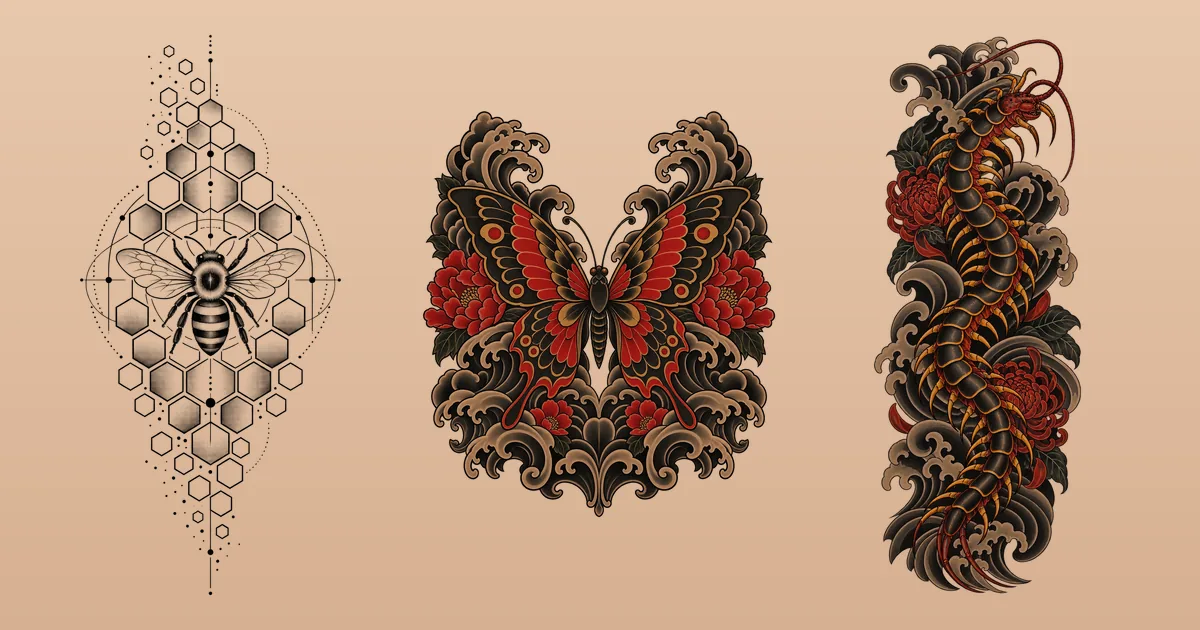
Count the legs. It sounds pedantic, but a frequent flaw in an insect tattoo is anatomy that's slightly off: four legs, eight legs, legs sprouting from the wrong segment. People notice, even if they can't say why the bee looks wrong. Get the body plan right, pick the view that suits the spot, and even a tiny bug holds up for years.
The insect body plan, for designers
Every insect shares the same blueprint. As Wikipedia's overview of insect morphology explains, the body is divided into three regions: the head, the thorax and the abdomen. The head carries the antennae, the eyes and the mouthparts. The thorax is the anchor for three pairs of legs and, in most advanced insects, two pairs of wings. The abdomen carries no legs at all.
That gives you a short checklist for any design:
- Three parts, clearly separated. The waist between thorax and abdomen makes the silhouette read as an insect.
- Six legs, all from the thorax, three on each side.
- Wings from the thorax too. In beetles the front pair is a hard shell that splits down the middle.
- Two antennae, whose shape (clubbed, feathery, elbowed) is a quick species tell.
Leaving out a joint is style; adding a fourth pair of legs is a mistake.
Bugs that aren't insects
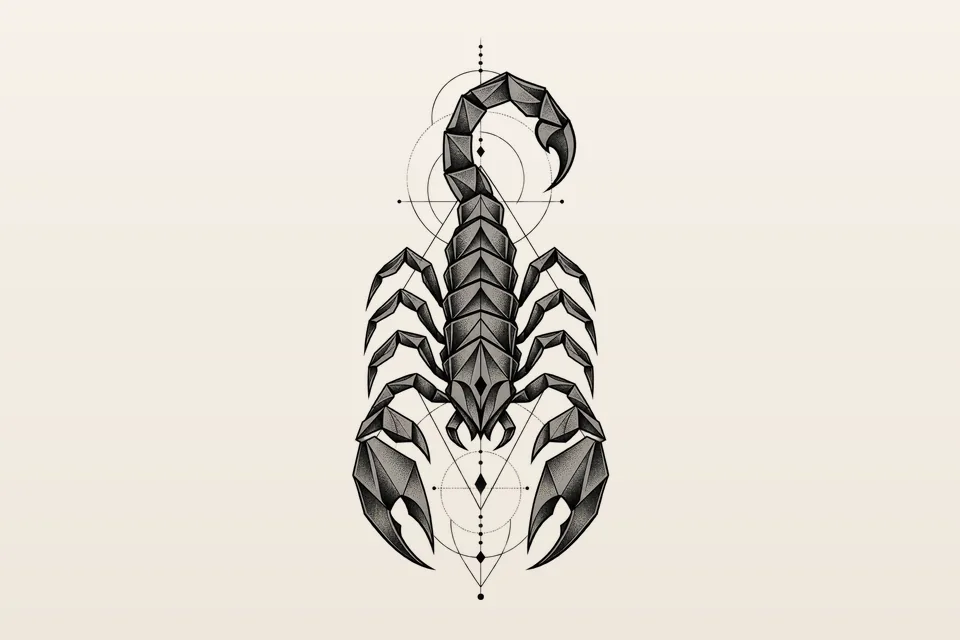
Spiders, scorpions and centipedes are not insects, but in tattoo shops and search bars they get grouped with them as "bug tattoos." Spiders and scorpions are arachnids: two body sections, eight legs, and no antennae or wings. A centipede is a myriapod with one pair of legs on every body segment, anywhere from 15 to 191 pairs.
That just changes the drawing: a scorpion needs eight walking legs, two pincers and a segmented tail; a centipede is all rhythm, a long repeating body that flows along a limb. In Japanese-style work, a centipede among flowers is a familiar motif, like the one at the top of this page.
Which insect? Ideas and how each one draws
Bees
Fuzzy thorax, striped abdomen, four clear wings. Seen from above, a bee is compact enough to go tiny, and it pairs naturally with honeycomb hexagons or a flower.
Moths
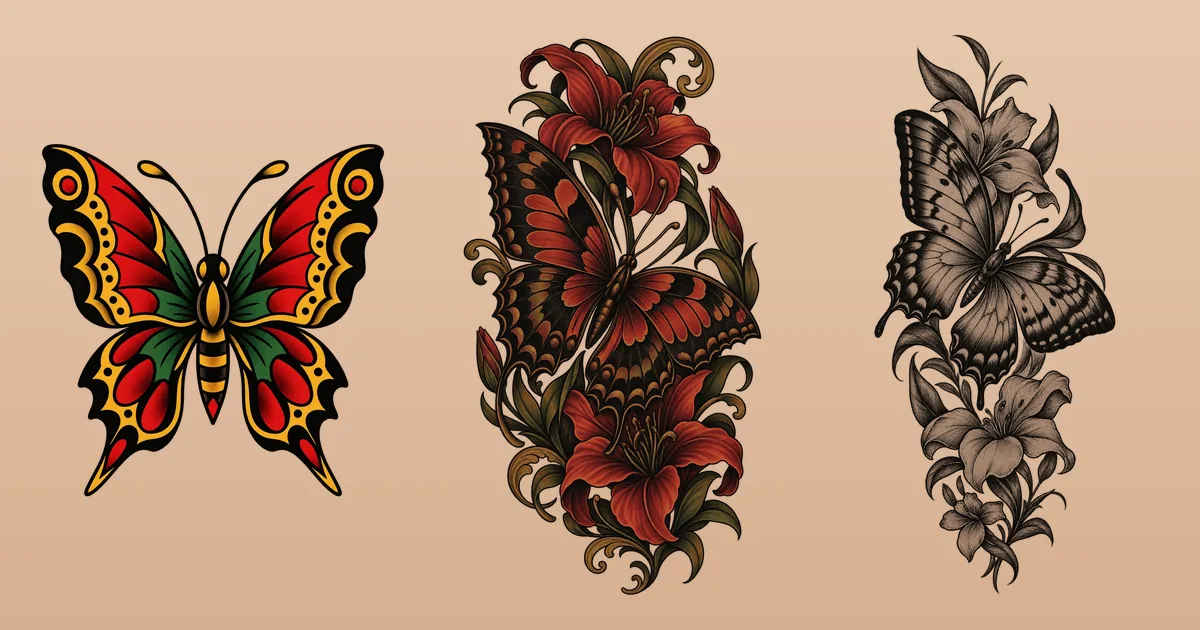
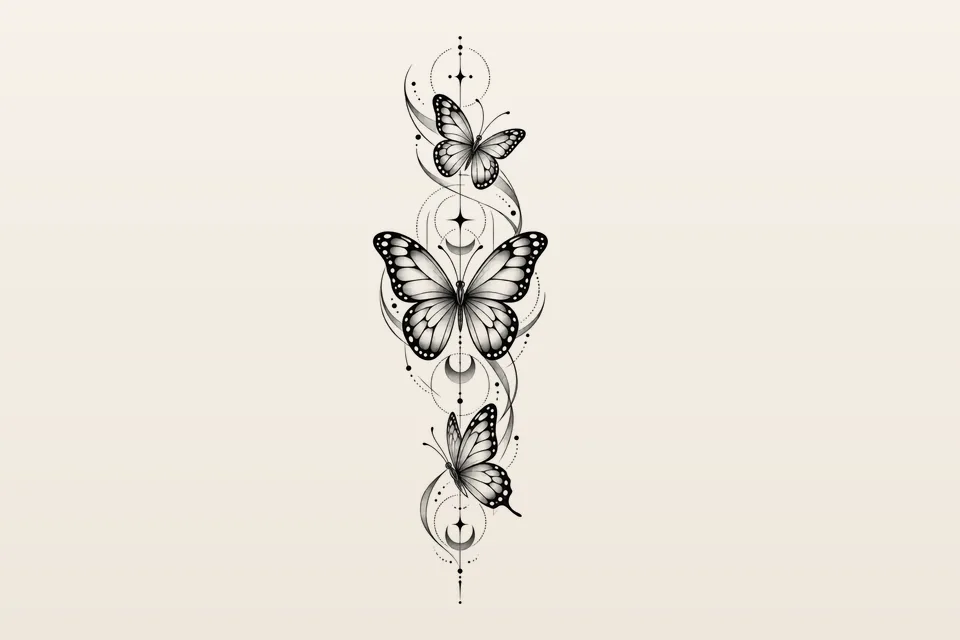
Thicker, furrier bodies than butterflies and feathery antennae. The pale green luna moth, with long tails on its hind wings, makes a tall, elegant design for the sternum or the spine. Butterflies have their own guide: see our butterfly tattoo page for species, wings and meanings.
Beetles and scarabs
Hard wing cases give beetles a bold, shield-like shape for blackwork and geometric work. The Egyptian scarab is the classic: Wikipedia's article on the scarab as an artifact explains that ancient Egyptians saw the dung beetle rolling its ball as a picture of the sun's journey across the sky, linked it to the god Khepri, and read it as a sign of rebirth and regeneration. A scarab with spread wings makes a strong centerpiece for the chest or upper back.
Dragonflies
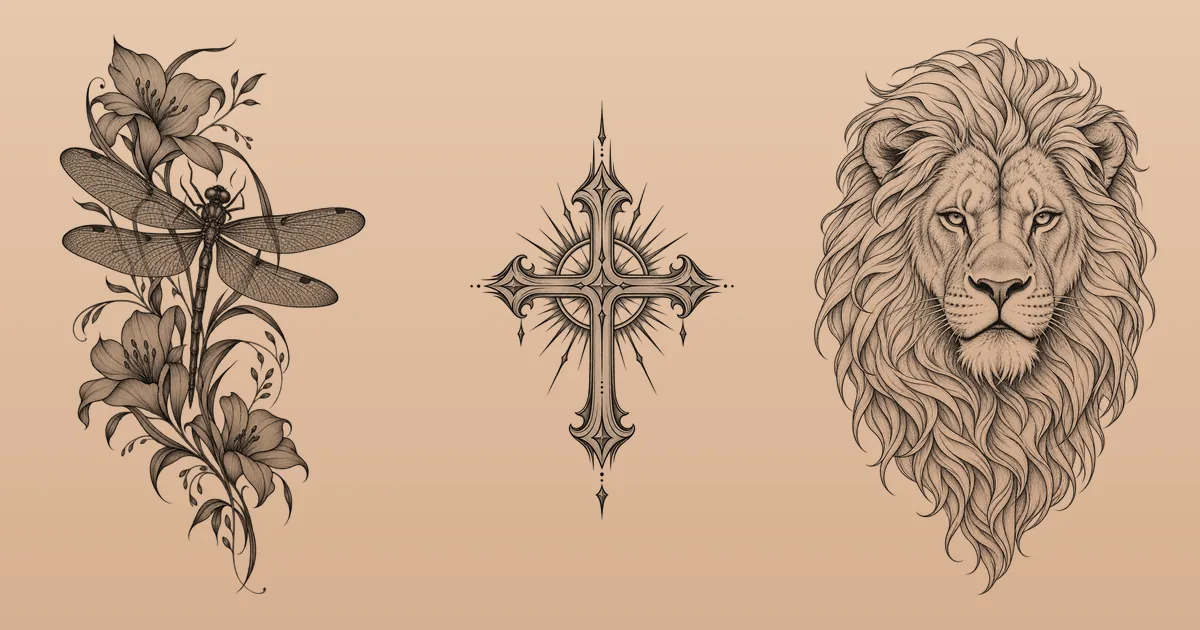
Long abdomen, four long wings held flat: a natural cross that centers well on the back of the neck or the sternum. Fine wing veins need room, so give it size or simplify them.
Ladybugs
A round dome with spots, readable at a few centimeters. The red is the point, so this bug usually wants color.
Mantises and ants
A praying mantis is all angles, folded front legs and a triangular head; in side view it fits the forearm, calf or ribs. Ants work best in numbers: a line of them marching along a collarbone or around a wrist.
Top-down or side view
The view you pick decides the shape, and the shape decides the spot.
| View | What it looks like | Good spots |
|---|---|---|
| Top-down (specimen view) | Wings spread, perfectly symmetrical, like an insect pinned in a collection | Sternum, back of the neck, between the shoulder blades, center of the forearm |
| Side view | Profile, wings folded or raised, legs gripping a stem | Inner forearm, ankle, ribs, side of the calf |
| Three-quarter or in flight | Body on a diagonal, wings in motion | Collarbone, shoulder, a spot where it can "fly" along a curve |
Symmetry is unforgiving top-down, so designers usually draw one half and mirror it. On off-center spots like the shoulder blade, tilt the insect to follow the muscle.
Size, placement and styles
Insects scale unusually well, because a strong silhouette survives when the detail goes.
- Tiny (1.5 to 4 cm): a bee, a ladybug or a simple dragonfly outline, behind the ear, on the wrist or the ankle. Keep it to a clean outline and a little solid fill. Our small tattoos guide covers what survives at this size.
- Palm-sized (6 to 12 cm): room for wing veins, stripes and light shading. Forearm, calf, shoulder, back of the neck.
- Centerpiece (15 cm and up): a winged scarab across the chest, a mantis on the thigh.
Style changes the bug's character as much as size does:
- Fine line: airy, but thin wing veins soften over the years, so allow more size; see our fine line tattoo guide.
- Realism: real textures such as fuzz and glossy shells, at palm size or more.
- Geometric: wings and shells broken into facets, like the scorpion above.
- Neo-traditional: bold outlines, rich color, a beetle or moth framed by flowers.
- Japanese: insects among peonies and waves in larger compositions; our Japanese tattoo guide covers the tradition.
The bug collection: a sleeve laid out like a specimen box
A favorite big idea: several insects, each top-down, in loose rows as if pinned in a collector's case.
- Vary the shapes: a wide moth, a round beetle, a long dragonfly, a small bee.
- Keep one style and line weight, or it looks like several tattoos, not one collection.
- Add labels if you like: small script names under each insect, as on a museum card. Check the spelling twice.
- Fill or leave open: bare skin between the insects, or leaves and dotwork joining them.
Start with two insects and let it grow; our sleeve tattoos guide covers planning a whole arm.
What insects are said to mean
These are popular readings, not rules: bees for hard work and community, moths for being drawn to the light, dragonflies for change, ladybugs for luck, ants for teamwork. The scarab's link to the sun and rebirth is the one with deep historical roots. Many people simply choose an insect they love. If you're weighing several animals, our animal tattoo hub helps you choose by meaning and by shape.
How to describe an insect tattoo to an AI or an artist
Name the insect, the view, the style, the size and the spot, and say what to keep simple:
- "A honeybee seen from above, fine line, wings with a few veins, a tiny trail of dots behind it, 3 cm, behind the ear"
- "A luna moth, top-down, black and grey with soft shading, long hind-wing tails pointing down, 16 cm tall, along the spine"
- "An Egyptian scarab with spread wings holding a sun disc, ornamental blackwork, symmetrical, across the upper chest"
- "A specimen-box half sleeve: a beetle, a moth, a dragonfly and a bee in rows, each top-down, etching style, small labels under each"
In click2ink you write that in a chat, an AI artist draws an original design, and it lands on a 3D figure sized in real centimeters to your height. Ask for one change at a time ("give the beetle six legs, three on each side") and the AI changes only that. New accounts get 3 free credits (12 messages), and the 450+ library designs, including the bugs on this page, are free; how it works shows the flow. Print the stencil at true size for your tattoo artist, who will adapt it to your skin.
Insect and bug tattoo questions
What is the difference between an insect tattoo and a bug tattoo?
Mostly the name. "Insect" strictly means six legs, three body parts and usually wings: bees, beetles, moths, dragonflies. "Bug tattoo" is the looser shop term that also takes in spiders, scorpions and centipedes, which belong to other groups of arthropods. For the design, the difference that matters is anatomy: get the leg count and body sections right for whichever animal you pick.
How many legs should an insect tattoo have?
Six, three on each side, all attached to the thorax, the middle section between the head and the abdomen. In a side view you'll often see only three, with the far legs hidden or barely showing. Spiders and scorpions need eight walking legs instead. If your design has the wrong number, ask your artist or the AI to fix it before it becomes a stencil.
Are insect tattoos good for men?
Yes. A scarab across the chest, a mantis on the forearm, a realistic beetle on the hand or a full specimen-box sleeve are all common picks, and blackwork or geometric versions read strong and graphic. Style, size and line weight shape the feel far more than the insect itself.
What insect tattoos suit women who want something small?
Popular choices include a fine-line bee behind the ear, a ladybug on the wrist, a tiny dragonfly at the ankle, a luna moth on the sternum and a line of ants along the collarbone. Larger pieces are just as common. Pick the insect you love first; at tiny sizes, keep it to a clean outline with little detail so it stays readable.
Can I get an insect tattoo stencil?
Your artist usually makes the stencil from your design. With click2ink you can print one at the exact size the insect has on the 3D figure, with a 5 cm check ruler to confirm it printed at 100%. Bring it with the design file, and expect your artist to adjust it for your skin.
Do insect tattoos look good in color?
Some do: ladybugs, luna moths and dragonflies are colorful in life, and neo-traditional styles make the most of that. Many others look best in black and grey, which keeps wing veins and shells crisp. On deeper skin tones pale greens and yellows show less, so ask your artist about the palette.
Where does a scarab tattoo look best?
A scarab with spread wings is wide and symmetrical, so it suits centered spots: the upper chest, between the shoulder blades, the back of the neck or the sternum, with its body on your center line. A scarab without wings is compact and works well on the forearm, the hand or the calf.
Can several small insects be added over time?
Yes, and insects are ideal for it. Plan a loose layout, such as a trail up the ribs or bees around a shoulder, and keep the same line weight and style each time. Gaps left on purpose make later additions look planned, not squeezed in.